
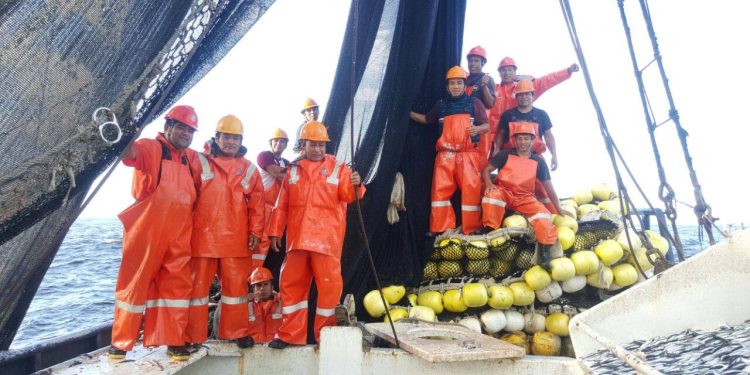





The first fishing season in Peru’s north-central region began on 22nd April – a week later than in 2024. To date, around 70% of the 3 million tonne anchovy quota has been fulfilled. This raw material is key to fishmeal and fish oil production, as Peru accounts for an average of 20% of global production.
‘IFFO’s 2025 estimates for fishmeal and fish oil are at 5.6 million tonnes of fishmeal and 1.2-1.3 million tonnes of fish oil,’ said Dr Enrico Bachis, IFFO’s market research director.
In April 2025, according to IFFO’s market intelligence reports the total cumulative fishmeal production increased by approximately 3% compared to the same period in 2024. This increase was driven by growth in all areas except for the North European countries, the only area to report a negative performance compared to January–April 2024.
For fish oil, the total cumulative output for the year through April 2025 was 14% up year on year. Similarly to fishmeal, almost all the countries reported a positive trend in cumulative fish oil production compared to January-April 2024, with the exception of the European countries.
There is an expected continued growth in China for aquaculture production, aquafeed demand, and marine ingredient usage throughout 2025, while China’s domestic production of marine ingredients in the first five months of 2025 was estimated to be lower than during the same period a year ago.
Fishing bans are now in place with most local fishmeal plants now idle. The main raw material for producing fishmeal and fish oil for the time being will come from frozen fish, imported sardines and by-products from processing facilities.
Driven by the increase in aquaculture production reported by official sources through April 2025, domestic aquafeed output is likely to grow year-on-year during the first four months of the year. Anticipated profits from harvests in the third and fourth quarters, particularly for species with high fishmeal dietary requirements, are also contributing to this positive trend.