




The innovative codend concept that has been through a long development process in New Zealand by Precision Seafood Harvesting has come to Europe and researchers at Wageningen Marine Research have carried out trials, also developing a roadmap towards implementation of what has been dubbed the Kiwi codend.
The proper name of this codend, which is designed to keep fish in water as they are brought on board, is the FloMo. But this has also been through a number of iterations during the long development process, including MHS (Modular Harvesting System).
According to a Wageningen Marine Research report, the Kiwi-codend is promising in improving catch quality, discard survival, selectivity and reducing plastic pollution from lost dolly rope compared to conventional codends.
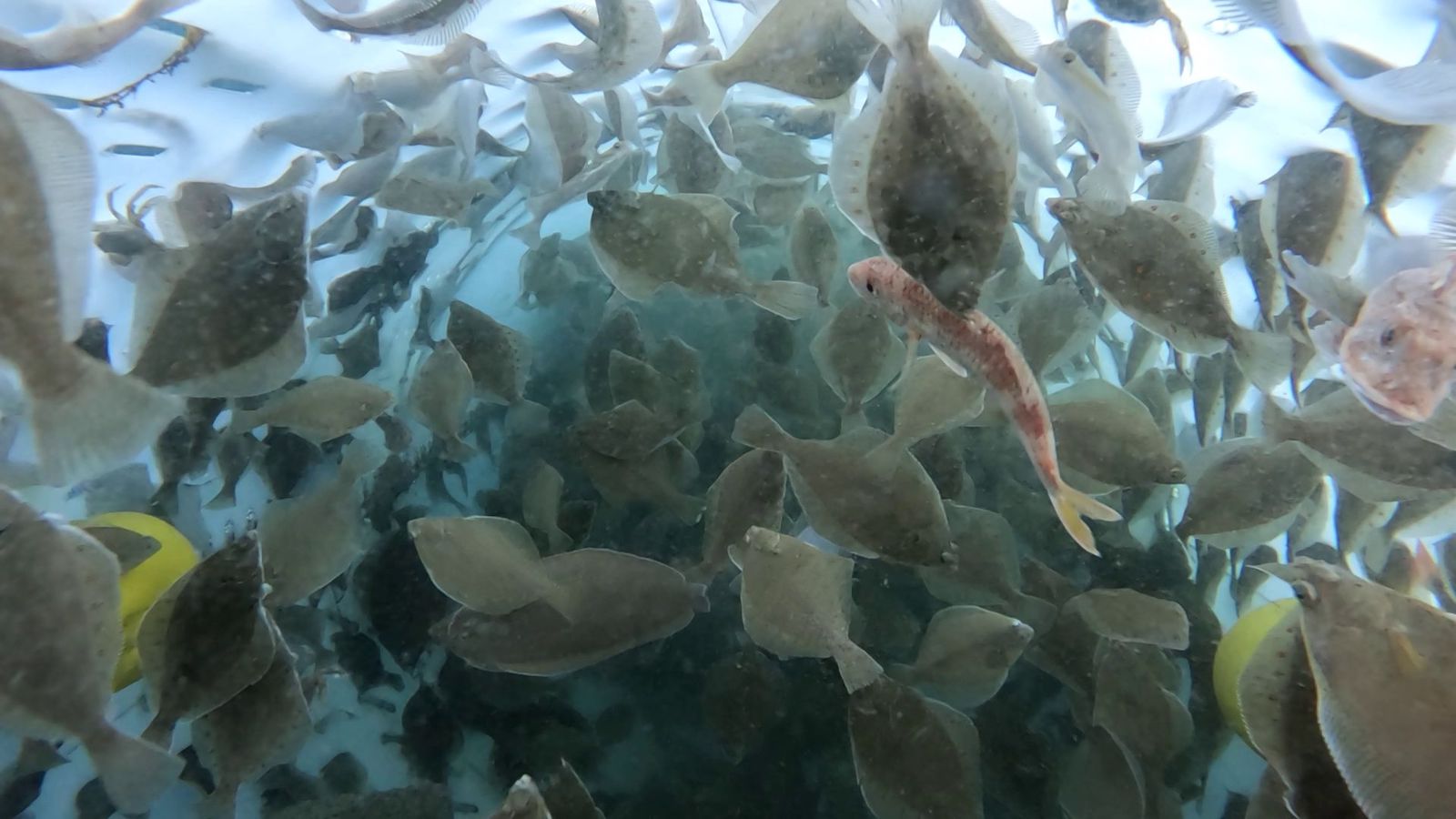
Although it clearly ticks plenty of the right boxes, there are legal, technical, social and economic challenges that need to be dealt with before the Kiwi-codend can be implemented in European fisheries. Changes to regulations would be needed, as the Kiwi codend is made from a non-porous membrane fitted with escape holes, and as there’s no mesh, it lies outside all of the current regulations.
‘Besides legal and technical considerations, there are also some social and economic aspects to take into account. The willingness of Dutch fishers to adopt the Kiwi-codend remains uncertain. Initial trials in the Netherlands have yielded positive feedback from those who tested the Kiwi-codend, but fleet-wide acceptance is still unknown,’ researchers state.
The Wageningen study set out to design and test a MHS for beam trawl fisheries targeting sole. The first MHS prototype was successfully tested in combination with small (four metre) and large (12 metre) beam trawls. Landings were comparable to traditional trawls while discards were lower.
‘Fish condition was better for fish caught with MHS, suggesting a higher survival probability for discarded bycatches and higher product quality for landings,’ researchers state.
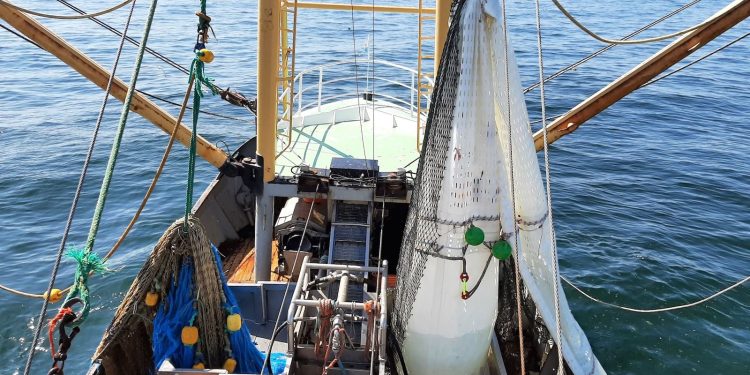
The Kiwi codend was tested using standard beam trawls, one rigged with the new codend and the other with the conventional codend.
‘Survival probabilities of plaice and turbot were significantly higher for the fish sampled from the beam trawl equipped with a MSH. On average the MHS resulted in an elevenfold increase in survival for plaice and a sixfold increase in turbot. For sole no significant effect was detected,’ the Wageningen report sets out.
‘This study confirms and provides the first quantitative insight in the potential increase in survival probability of replacing the conventional mesh codend of a beam trawl with a MHS. Further increase in discards survival probability is expected with the refinement of the fishing technique. To fully utilise the potential increase in discards survival that can be achieved by the MHS, research into the refinement of the catch sorting process to maintain the good condition of the fish while on board is recommended.’