




The Russian Crab Group of Companies released 10,000 juvenile king crabs, raised by the National Scientific Centre of Marine Biology at the Far Eastern branch of the Russian Academy of Sciences. The project marks a further stage of efforts to replenish the population of this valuable commercial species.
By combining science and responsible business, the initiative’s participants are contributing to the conservation of marine ecosystems in the Russian Far East and the development of sustainable fisheries.
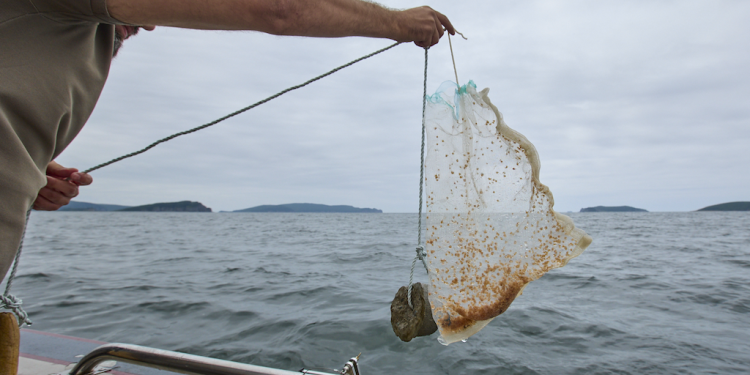
The juvenile crabs were transported in containers, then lowered into the water in special nets with a weight and a float. The nets were secured to the bottom, and the crabs gradually emerged from their temporary shelter.
It takes eight years for crabs to grow to commercial size.
‘10,000 king crabs were released into their natural habitat. We understand that the future of the industry depends on the health of the waters where fishing takes place. Therefore, it’s important not only to use the sea’s resources rationally but also to support projects aimed at studying and replenishing populations,’ said Artem Mirgorodov, director of production at Russian Crab Group.
‘For a second season, our company has supported the initiative to replenish marine resources, joining forces with scientists. It’s important to us that the sea remains as rich and vibrant for years to come, and that younger generations can enjoy its gifts just as we do today.’
Despite the scale of the release, each crab weighs only about 10 milligrams and is virtually invisible to the naked eye. However, these tiny sea creatures are the result of extensive scientific research, which begins long before they are released into the open sea.
The juvenile king crabs are raised by specialists at the Zapad biological station, located in the Livadia district of Nakhodka. Obtaining juveniles requires constant monitoring. Specialists work with berried females, after which the larvae undergo several stages of development, gradually gaining strength and adapting to independent life in the marine environment.
For the release of juveniles, scientists select areas with conditions most suitable for the species’ further adaptation. Stark Strait has become one such location thanks to its macroalgae beds – natural areas that provide shelter from predators for the juveniles and simultaneously provide food during the early stages of their life. This location combines rich macrophyte beds, which serve as a nursery ground for juvenile king crabs.
‘The release site is crucial for the subsequent survival of the juveniles. In the first hours and days after entering the sea, they need to adapt to the new environment, find safe shelter, and begin an independent life. Macrophyte thickets help mitigate risks and create a more favorable environment for adaptation. The ‘nursery effect’ is evident here, where plant thickets dramatically increase the survival rate of the juveniles, maintaining population numbers,’ said Tigran Gevorgyan, lead engineer at the National Scientific Center of Marine Biology.