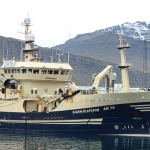






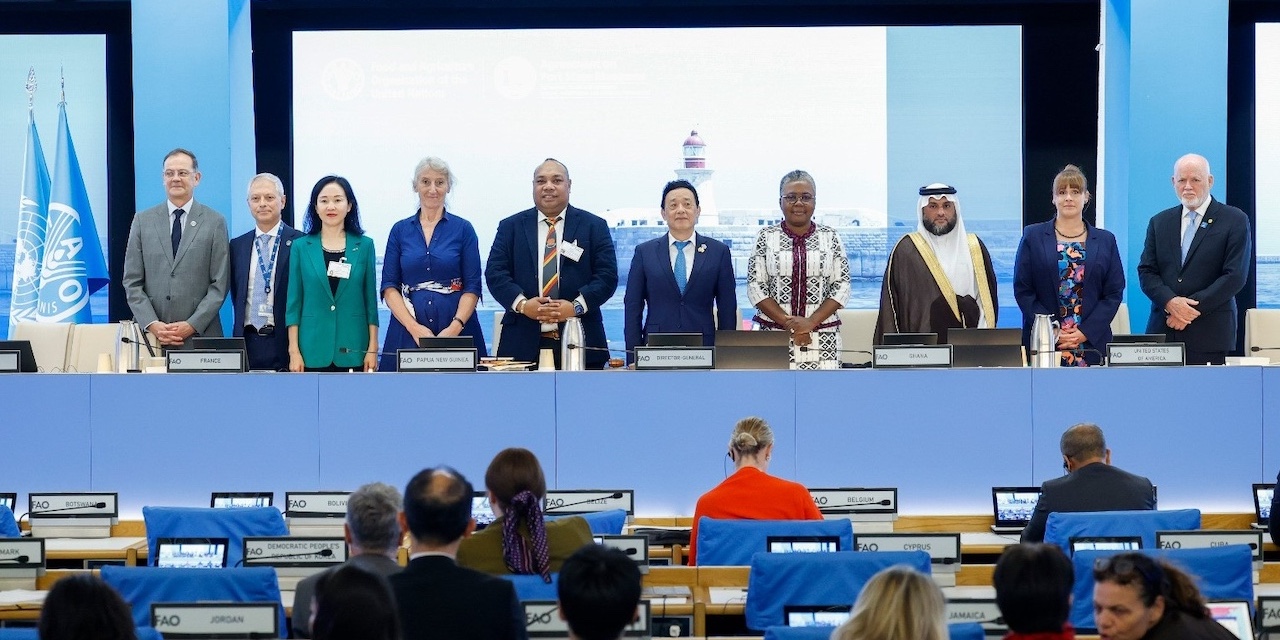
As delegates gather in Rome for the 37th Session of the Committee on Fisheries (COFI37) at FAO headquarters, the opportunity was taken to mark the tenth anniversary of the entry into force of the Port State Measures Agreement (PSMA), the first binding international agreement to specifically target IUU fishing.
The treaty has 86 parties, representing 110 FAO Members, and is designed to prevent vessels engaged in IUU activity from using ports and landing their catch. Almost three quarters of coastal states are now bound by the PSMA. Moldova has been welcomed as the latest to submit instruments of accession.
Recent membership growth ‘reflects the growing recognition that effective action against IUU fishing requires cooperation across borders and regions,’ said FAO Director-General QU Dongyu. He expressed the importance of full implementation of the Bali strategy, a 2023 roadmap aimed at convincing more countries to join the PSMA and to accelerate information exchange to swap inspection data globally.
More than 22,000 PSMA inspections are conducted annually in almost 700 designated ports of Parties. FAO has offered technical and capacity building assistance to more than 80 FAO Members.
The week-long COFI37 meeting currently in progress examines the current state of world fisheries and aquaculture against a backdrop of evolving pressures on aquatic ecosystems and growing demand for aquatic foods. The agenda spans current priorities and emerging global challenges such as IUU fishing, climate change adaptation, supporting small-scale fisheries and aquaculture, and developments in international oceans governance.
They also consider the role of FAO and Regional Fishery Bodies in supporting implementation of International Agreements relevant to fisheries and aquaculture, including CITES decisions on endangered aquatic species.
Director-General Qu emphasised the importance of COFI guidance for a sector that has grown fivefold in the past six decades. He hailed the rapid growth of aquaculture production, highlighted its potential outside of Asia, and called for COFI to provide recommendations that future aquaculture growth is environmentally sustainable, socially responsible, and economically viable.
Side and special events focus on using a value-chain approach to transform aquatic food systems, innovations in aquaculture production, the WTO Agreement on Fisheries Subsidies, the BBNJ Agreement on conserving and sustaining marine biological diversity of areas beyond national jurisdiction, and emerging technologies in the areas of data, traceability and control. Special events will focus on youth engagement and on women’s leadership for a sustainable Blue Economy.
Global fisheries and aquaculture production reached a record 235 million tonnes in 2024, generated $184 billion in trade, and supported more than 600 million livelihoods worldwide, according to The State of World Fisheries and Aquaculture (SOFIA) that FAO issued in June.