





Warning that a blanket phase-out of bottom fishing in MPAs by 2030 is policy that is incompatible with both science-based management and food security objectives, the European Bottom Fishing Alliance has welcomed the case-by-case approach advocated by commissioner Costas Kadis.
At its first official meeting with the commissioner, EBFA representatives took the opportunity to stress the sector’s contribution to food sovereignty, progress made in environmental protection and concerns regarding current policy developments and growing regulatory pressure across Europe.
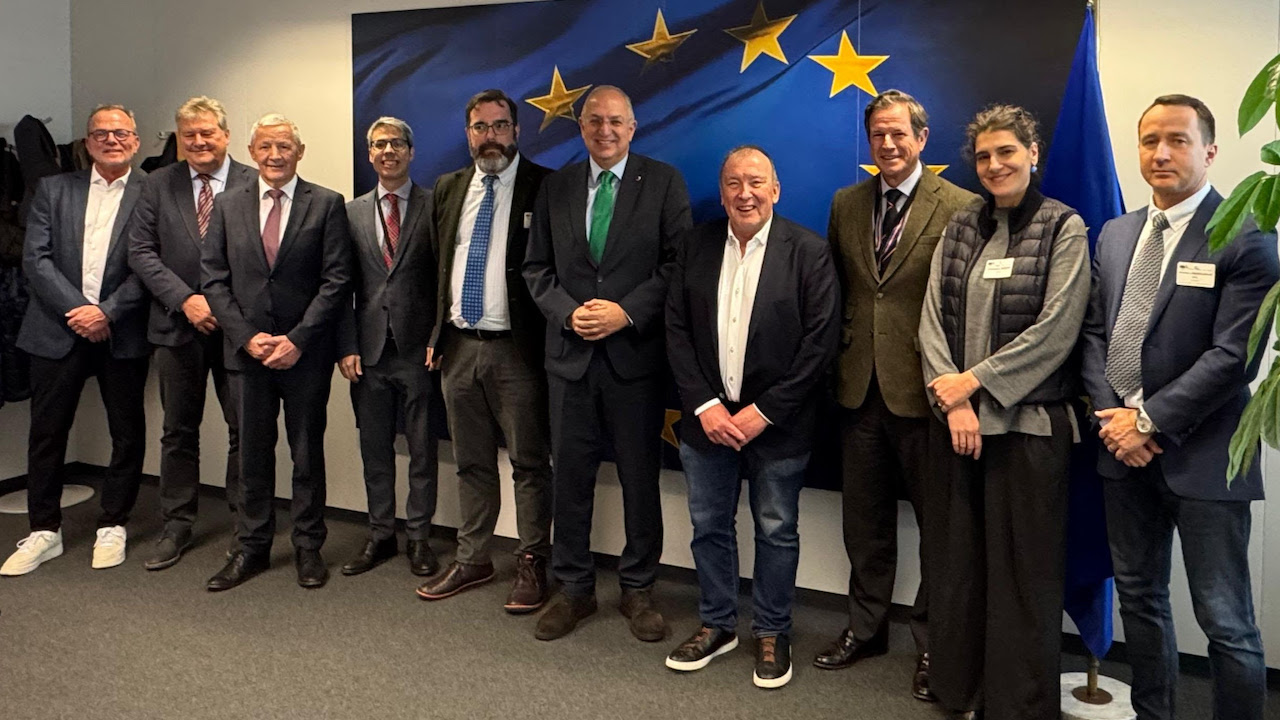
‘We are committed to responsible fishing and to constantly improving our practices through science, innovation and effective management. We stand ready to work with Commissioner Kadis to ensure that Europe’s environmental ambition goes hand in hand with a viable future for our fleets and the communities that depend on them,’ said EBFA chair Iván López.
EBFA highlighted major concerns with the United Kingdom’s unilateral MPA measures, stating that these are based on flawed data and will result in disproportionate losses for EU fleets. The Alliance urged the Commission to ensure that UK measures remain proportionate, non-discriminatory, and fully compatible with the Trade and Cooperation Agreement.
The Alliance made the point that that many MPAs aim to protect species or habitats unaffected by bottom gears. Additionally, existing EU fisheries measures – such as vulnerable ecosystem protections – already provide strong safeguards.
‘It is not because an area is not labelled ‘protected’ that it is not already highly regulated. The FAO calls for 100% management of marine areas, and the UE should be proud of already meeting this target. EU management measures must be recognised as an effective tool to achieve EU’s ‘30by30’ environmental targets,’ said EBFA secretary Margot Angibaud.
With Member States due to begin implementation in 2026, EBFA warns against poorly supported restoration measures – particularly the risk that ‘passive’ restoration becomes the default approach at sea. The Alliance called for strategies that allow coexistence with fishing, based on integrated land–sea management, careful attention to spatial constraints and full consideration of Europe’s food security needs.
Protecting vulnerable ecosystems with science
EBFA expressed concern over current regulation and scientific models that are leading to disproportionate closures. The Alliance reiterated its commitment to protecting vulnerable marine ecosystems (VMEs) while urging the Commission to adopt high-resolution mapping, proportionate buffer zones, gear-specific assessments and a revision of the Deep-Sea Access Regulation dated 2016 to ensure fair and scientifically grounded decisions.
EBFA welcomed the planned revision and the aim to simplify the Directive since some of the current environmental indicators are not workable nor aligned with the Common Fisheries Policy. The Alliance stressed that Good Environmental Status for seabed habitats must be compatible with sustainable seafood production.
‘Our fleets cannot plan for the future if the policy landscape keeps shifting under their feet. Fishers need predictability, proportionate rules and decisions rooted in the best available science,’Iván López said.
‘We count on the Commission to ensure that Europe’s environmental ambitions do not come at the cost of its coastal communities or its capacity to feed its citizens, especially since both can coexist.’