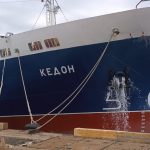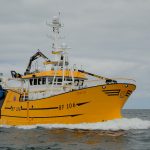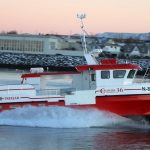




A series of large-scale energy projects planned for the waters around Shetland could have far-reaching impacts on the fishing industry without stronger safeguards, warns a new report co-developed by the Shetland Fishermen’s Association (SFA) and Voar.
The industry position is that unless decisive action is taken, offshore renewables and associated transmission cabling risk squeezing the Shetland fleet off productive grounds. The planned offshore wind farms alone could occupy space equivalent to 38% of Shetland’s land area, with cable corridors and other infrastructure set to add more, significantly contributing to the spatial squeeze being felt by the fishing industry.
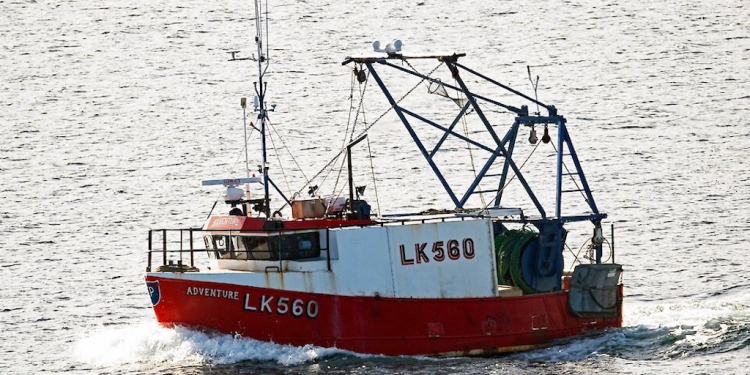
‘Shetland’s diverse, family-owned fishing fleet is being put in serious jeopardy by these projects,’ said SFA executive officer Daniel Lawson, pointing out that although Shetland waters make up only 17% of the UK’s sea area, these produces around 33% of the UK catch.
‘Government and energy industry leaders need to realise that skippers cannot just move somewhere else. Wind farms of the type and scale proposed to the east of Shetland will permanently exclude vessels from some of the most productive fishing grounds in the world.’
The report stresses that any reduction in access here would have disproportionate consequences on the Shetland fishing economy, and the UK seafood industry more broadly. It highlights the marine spatial demand of projects such as the planned Arven and Stoura floating turbine wind farms to the east of Shetland, at 458km² and 100km² respectively. These would cover areas which are currently used by both whitefish and pelagic fisheries.
‘Worst of all, unlike the fishing industry, ownership of these projects lies outwith Shetland, meaning the economic benefits derived from Shetland’s seas will shift away from local hands to outside interests,’ Daniel Lawson stated.
‘Shetland’s seas are becoming a proving ground for the so-called just transition. We support renewable energy and recognise its importance, but it cannot come at the expense of the fishing industry – an industry that provides food security, skilled jobs, and one of the lowest carbon sources of protein in the world.’
The report advocates stricter siting rules to steer energy infrastructure away from key fishing grounds and nursery areas, stronger and earlier consultation so fishermen have a real say in project design and operations, and fair benefit-sharing and meaningful compensation mechanisms to ensure local communities are not left worse off.
The SFA stressed that Shetland’s future should not be a zero-sum game between fishing and energy. With proper planning, mitigation, and respect for local knowledge, both industries can coexist to support Shetland’s long-term prosperity.
‘Our analysis shows that the key issue isn’t any individual project, but the way multiple developments or restrictions interact to narrow the sea space that fishermen rely on,’ said Daniel Gear of Voar.
‘Unless that cumulative impact is actively managed, the balance of who benefits from Shetland’s waters will shift, not by design, but by default.’