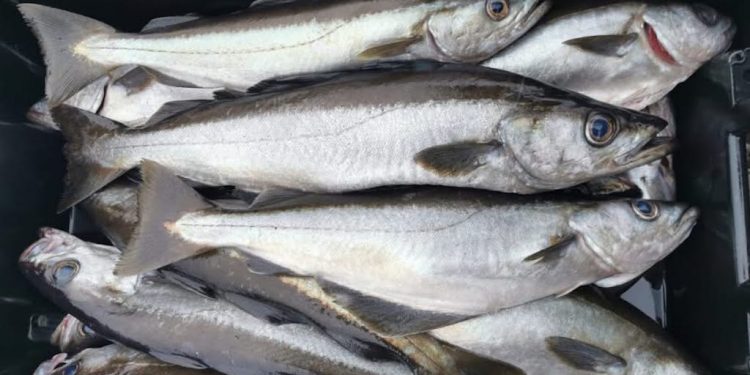





With ICES advice still for a zero quota for pollack and the by-catch advice reduced still further compared to the 2024 level, current management isn’t working the way it should – and the lack of data on recreational fisheries is highlighted as a key factor in the pollack problem facing fishermen in the South-West of England.
According to the NFFO, a recent meeting of the Southwest Regional Fishing Group focuses on how fisheries are still facing huge challenges with the lack of access to pollack, a mainstay of many fleet sectors, not least with a lack of clarity on what a longer-term strategy on how the stocks will recover – and how commercial fisheries can remain viable when access to resources is being eroded at every turn.
‘It was felt by all commercial fisheries in the meeting that the reason for this is the complete lack of control the recreational sector is under,’ an NFFO representative stated.
‘It can be assumed that the Zero TAC advice is not working, despite the overwhelming impacts to the sectors that relied on pollack as the backbone of their business. We have to ask ourselves why this stringent measure, the most restrictive advice to come from ICES, is not working.’
ICES has already acknowledged that recreational removals of pollack is likely to be a large component of the catch. This was supported by scientists (from the Pollack FISP project) presenting at the RFG as a reasonable assessment that reflects what their data shows.
Data from the Pollack FISP that was presented included the example of a single recreational charter boat landing 400kg of pollack in a single trip.
‘It’s hard to believe that this is purely for personal consumption. While this was an outlier, average catch of pollack by recreational fishers taking part in the project was 40kg/trip over 807 trips – a potential total removal of over 32 tonnes from the subset of vessels sampled as part of the project,’ the NFFO states.
‘We have to ask if pollack fisheries are truly considered to have a zero TAC when recreational removals are so great and currently uncontrolled. Defra are keen to roll out voluntary guidelines for the recreational sector to help get a handle on the issue and they wish to give the guidelines a chance to work before seeking further restrictions. The reason for this, as always, a lack of data. However, the Pollack FISP, funded by Defra to the amount of £859,400 is essentially already providing substantial evidence to the scale of the problem.’
The NFFO points out that when data is lacking, the precautionay principle is invariably applied to commercial fisheries.
‘Why is this not the same for recreational fisheries, surely this established method should be applied to all removals?’ the NFFO asks
‘There is a growing concern that commercial fisheries always feel the greatest impact when compared to the needs of the recreational sector. This is not specific to pollack but is evidenced in bass fisheries and also the fact that the recreational take of crustacean fisheries is excluded from welfare concerns that are applied to commercial fisheries. In the new world of the UK Fisheries Act and fisheries management plans, we would expect to see more effort given to understanding and controlling the recreational sector to create a level playing field with the commercial sector.’