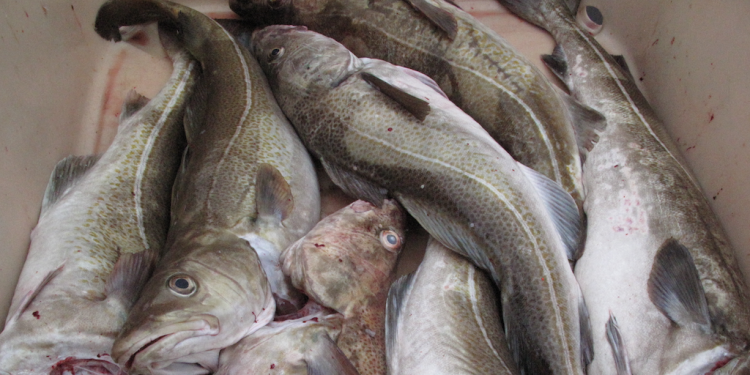





Research shows that climate change is forcing cod increasingly into northern waters, which could lead to significantly reduced cod populations during the course of the present century.
Research by the Alfred Wegener Institute, largely conducted at Nofima’s Centre for Marine Aquaculture near Tromsø, focused on effects of temperature on cod embryos, climate-testing cod larvae and backed by the the EU-funded AquaExcel network.
The Centre for Marine Aquaculture has extensive experience of cod breeding, making it an ideal testing ground for this research, which concludes that Northern cod species face spawning habitat losses if global warming exceeds 1.5°C – while if Paris Agreement targets fail to be met, changing are predicted to drive Atlantic cod further north to find suitable spawning conditions with temperatures between 3–7°C. The same is predicted to apply to Arctic cod.
Cod embryos are highly sensitive to temperature. Even a slight increase in can result in eggs dying, or in deformed larvae. Acidification exacerbates the situation further. The findings of the scientists at the Alfred Wegener Institute have been published in Science Advances.
According to Nofima senior scientist Atle Mortensen, coastal fisheries in northern Norway will change if climate changes continue.
‘The Lofoten fishery could be affected as the migration pattern of spawning skrei becomes more unpredictable as the fish go further north and end up in areas with different ocean currents,’ he said, adding that for Arctic cod, the outlook is even more drastic.
‘Arctic cod is in the most precarious situation. It is already about as far north as it can possibly go,’ he said, commenting that although there is little commercial fishing for Arctic cod, this species is integral to the Arctic ecosystem as a food source for both seals and seabirds.
Research at Nofima’s facilities showed that an increasingly acidic ocean will present a further challenge to cod, with detrimental effects on the embryonic development of cod.
‘In the regions around Norway and Iceland, up to 60% fewer cod larvae will hatch from their eggs,’ stated scientist Flemming Dahlke of the Alfred Wegener Institute in Germany.