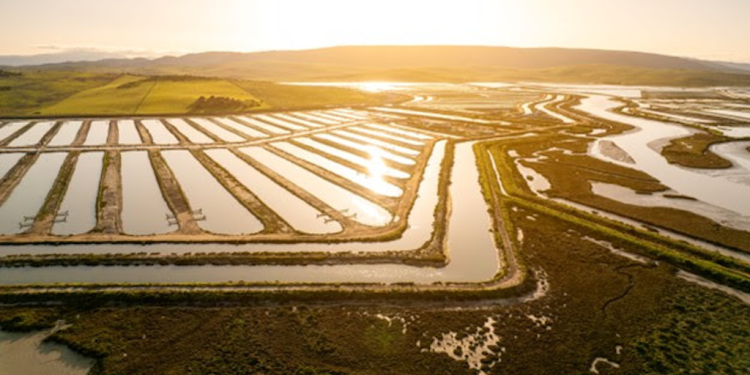





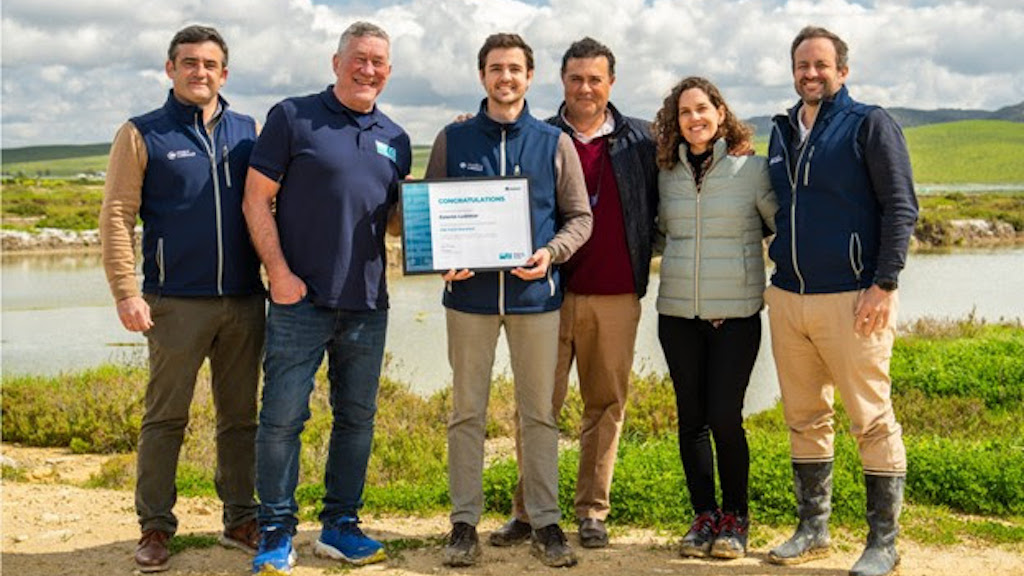
The Aquaculture Stewardship Council (ASC) is celebrating a milestone in responsible aquaculture, as CUPIBAR (Lubimar), a family-owned seabass and seabream estuary farm in southern Spain, becomes the first farm in the world to achieve certification against the ASC Farm Standard.
This is Lubimar’s first-ever ASC certification. Rather than transitioning from the existing species-specific ASC standard, the farm chose to be audited directly against the ASC Farm Standard.
Located in a protected area in the province of Cadiz, Lubimar produces around 2000 tonnes of fish annually in a unique estuarine system built on former salt pans.
Widely recognised in Spain, and sold in more than 15 countries, Lubimar is especially known for its seabass and seabream branded as Lubina y Dorada de Estero, a product closely associated with traditional estuary farming.
Lubimar operates an extensive estuarine farming system characterised by very low stocking densities, with a maximum of 3kg of fish per cubic metre of water. The farm covers 700 hectares but only 35% of the area is used for farming, with the remainder maintained as a natural zone, which is integral to how the farm operates. This natural area acts as a biological filter for farming activity, contributes natural food sources such as shrimp for the fish and supports a diverse ecosystem. The low-density model supports fish health and welfare and means antibiotics are not used.
Alongside seabass and seabream production, the site supports the growth and collection of seaweed and in the recent past also oysters. This multitrophic approach contributes to nutrient recycling and carbon sequestration. Lubimar has also installed solar panels within the production area to support renewable energy use.
‘When we arrived, these ponds were abandoned salt pans and unsuccessful aquaculture projects. Through our farming approach, biodiversity has returned, and today much of the site functions as a natural wildlife area that supports bird species such as flamingos, spoonbills and ospreys,’ said Lubimar sales manager Gontran de Ceballos.
‘Choosing an extensive, low-density model reflects our long-term approach to fish welfare and environmental responsibility. This shows how aquaculture can operate in close relationship with sensitive environments, while also playing a vital social role; providing skilled jobs in a community where employment really matters.’
‘The farm operates very much in partnership with its environment and surpasses some of the requirements of the Farm Standard,’ said ASC CEO Chris Ninnes.
‘The work they have done to regenerate the area and bring back habitats that support a vast array of wildlife really is impressive. The ASC Farm Standard represents a benchmark for the industry, bringing together ASC science-based requirements into one rigorous and transparent framework. It will drive sector-wide improvement across environmental performance, social responsibility, fish health and welfare and farm management.’
‘Choosing to be audited directly against the ASC Farm Standard was a deliberate decision for us. We wanted to demonstrate our farming credentials by being the first in the world to achieve the ASC gold standard,’ Gontran de Ceballos commented.
‘It required a deep and honest examination of how we operate, from environmental management to fish welfare and our responsibilities to people. The process was demanding, but it has strengthened our farm and our team. We are extremely proud to be the first to achieve this certification and to help set a benchmark for the sector.’