




‘Despite the Norwegian krone being significantly stronger than in the same month last year, the value of seafood exports in August reached a historic high,’ said Norwegian Seafood Council CEO Christian Chramer.
‘This is primarily due to increased salmon volumes at higher prices and price rises for cod, mackerel, herring and saithe,’ he commented.
Norwegian producers exported seafood worth NoK16 billion in August. This a 14% increase over the same period in 2025, and the first time this year that there has been an increase in export values to the US.
Seafood exports to the US have slowed sharply in 2026, and last month the punitive tariff on Norway was increased to 12.50%.
‘Although Norway has been subject to less favourable tariff conditions than several of our competitor nations, we have seen growth in salmon exports to the US for two months running. At the same time, the US is no longer in the top three of our largest seafood markets. This is mainly because other countries experienced greater growth, particularly in salmon,’ Christian Chramer said.
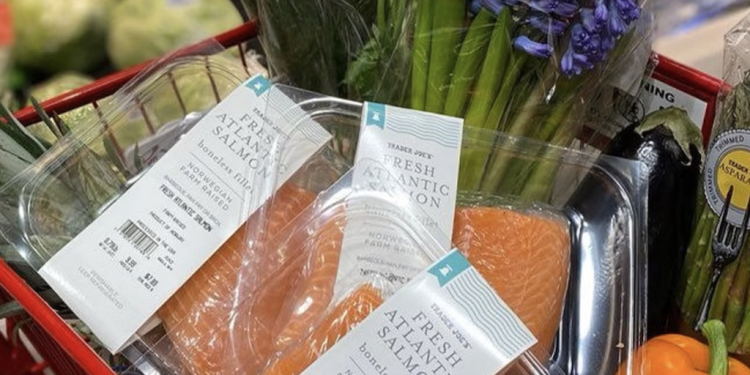
‘Favourable biological conditions this summer have given us access to large quantities of high-quality fish, which is in high demand in the lucrative sushi segment, including in the US. In addition, there is underlying growth in demand for Norwegian salmon in the global seafood market, which is driving up both prices and export value.’
Overall, Norway exported seafood worth NoK1.1 billion to the US in August, representing a 4% increase compared against August last year.
Export values last month were up for Poland (+36%), China (+34%), The Netherlands (+31%), the USA (+4%) and the UK (+16%).
Poland was Norway’s largest export market in August and also recorded the highest growth in value. The Netherlands overtook the USA in the rankings to become Norway’s third-largest market.
‘Poland and the Netherlands are traditionally regarded as purely processing markets, but we are now seeing that growth in domestic salmon consumption is strongest in precisely these two countries, as well as in Slovakia and the Czech Republic. This is a trend we have been observing for some time,’ Christian Chramer explained.