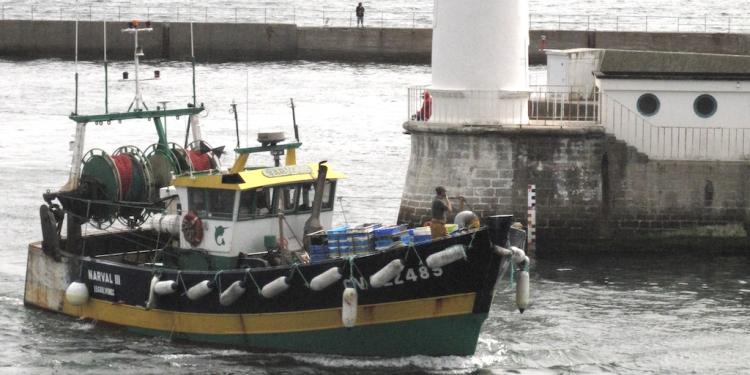





Reacting to the widespread conflict in the Middle East and its repercussions on oil supplies, the Brittany Fisheries Committees have sounded the alarm about the current situation, in which the viability of vessels depends heavily on fuel prices.
In an explosive geopolitical context, given recent developments in the Brent crude market, there are fears that the cost of diesel fuel will rise sharply to its 2022 high, around €900 per cubic metre, or even higher. This dizzying increase in fuel costs threatens to irreparably damage Breton fishing companies.
Reaching up to half of their revenue, oil weighs heavily on the energy costs of vessels, as well as on the purchase of supplies, and ultimately on the profitability of fishing companies and the wages of seafarers.
‘Support mechanisms must be implemented, not on a company-by-company basis, but for each vessel concerned. Only then will we be able to continue going to sea and maintain a regular supply at the fish market,’ said Grégory Métayer, president of the CDPMEM Côtes d’Armor and skipper of the trawler Le Pearl.
Faced with this critical situation, the Brittany Fisheries Committees reiterate that it is extremely difficult – if not impossible – to predict a global political crisis of such magnitude, as well as its human, social, and economic repercussions, while conflictand its unpredictability serve as an excuse for speculation on certain raw materials, starting with oil. In this case, the increase in certain prices is disconnected from the actual availability of many goods and services.
In conjunction with their partners and within the framework of the Strategic Sector Contract signed in February 2025, the fisheries committees mandated the Maritime Cooperation to establish an insurance fund designed to absorb the volatility of oil prices and prevent this type of crisis. Unfortunately, this fund, which required time and, above all, stability to become fully effective, is not yet operational.
‘There is an urgent need for action. We must do everything possible to allow our vessels to continue their activity, otherwise we risk the collapse of the industry,’ stated CDPMEM Finistère vice-resident Sébastien Le Prince, skipper of the trawler Magellan II.