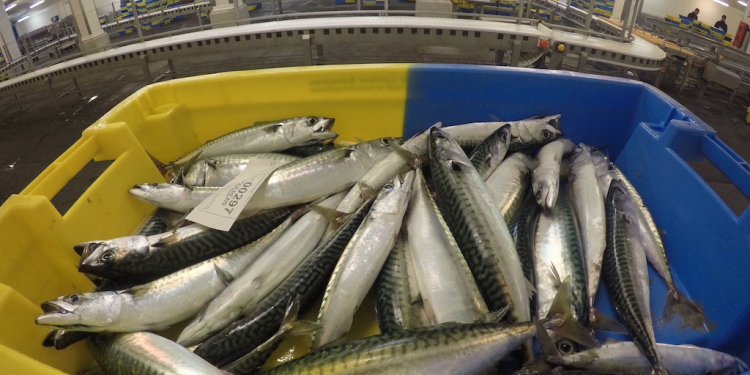



Faced with an unprecedented mackerel crisis, the French fishing industry as a whole is looking for a strong political response at a national level, both diplomatically and in terms of enhanced cooperation between the countries concerned, to restore fair and sustainable stock management.
The industry considers it essential that targeted financial support from the government be provided to the most dependent fishing companies, as the drop in quotas directly threatens businesses, jobs, and coastal areas.

‘Our fishermen work under increasingly difficult conditions. The mackerel crisis is permanently weakening the entire sector. This calls for a strong political response at the diplomatic level to preserve our businesses, our jobs and the future of our coastal areas,’ stated Olivier Le Nezet, president of the National Committee for Maritime Fisheries and Marine Aquaculture (CNPMEM), commenting that the current situation is a direct result of the inability of the coastal states (Iceland, Norway, the Faroe Islands, and the United Kingdom) to agree on the sustainable management of this stock, which is shared with the EU.
He said that France and the European Union respect all the principles of sustainable stock management established by the Common Fisheries Policy – while other states disregard these rules and allocate excessive catch volumes to themselves without consultation, jeopardising an already severely depleted stock, and directly affecting French fishing companies.
Olivier Le Nezet said that the French national quota has seen s fivefold reduction between 2024 and 2026. This drastic reduction in volume is taking place while more than 1300 vessels, from Boulogne-sur-Mer to Saint-Jean-de-Luz, are involved in this fishery.
CNPMEM and producer organisations have established a dedicated working group within the CNPMEM. In response to this exceptional situation, this group led to the collective allocation of 400 tonnes of mackerel, representing 20% of the national quota.
This operational implementation is being carried out by the industry, not the State, according to Olivier Le Nezet, and is intended to limit the impact on the most affected fleets. He outlined that that this industry-specific allocation will only partially mitigate the impact on the most dependent companies, given the decline in fishing opportunities, and that financial support for highly dependent fishing fleets, deprived of alternative fishing solutions, must be considered by the State.
‘Defending French mackerel means protecting our businesses, our ports and our jobs,’ said Bruno Margollé, President of the Federation of Artisanal Fisheries Producer Organisations (FEDOPA).’
The reduction in quotas directly affects our coastal regions and threatens the survival of many local activities.’
CNPMEM and FEDOPA are adamant that the priority is reaching a comprehensive agreement with coastal states to re-establish a stable, sustainable, and equitable management framework for this fishery.
‘Without a strong political commitment, France will continue to bear a disproportionate share of the conservation effort alone, to the detriment of its businesses, jobs, and territories,’ Olivier Le Nezet said.
‘This situation is neither equitable nor sustainable.’