




As the European Commission launches a public consultation on the sustainable import of fishery products under the EU Autonomous Tariff Quota (ATQ) Regulation, European fishing industry body Europêche is highlighting the pressing need for incorporating sustainability criteria for imported products that benefit from the tariff derogations.
‘ATQs should strengthen, not erode, Europe’s strategic autonomy in fisheries. The Commission now has a real chance – and a responsibility – to create a regime that promotes sustainable fisheries, fair trade and long-term food sovereignty,’ said Europêche president Javier Garat.
‘Right now, the EU is granting tariff exemptions to products from countries with questionable practices such as China, with no merit or justification other than to lower the price for EU importers. This has to stop.’

Europêche views the consultation as a unique opportunity to transform the duty-free regime, aligning it with the EU’s environmental, social, and food sovereignty objectives and ultimately help achieving a level playing field in the EU market.
Autonomous tariff quotas (ATQs) allow imports up to a given quantity to enter the EU market at a lower or zero tariff. For most fishery products, the in-quota tariff is set at zero. Given that tariffs can reach up to 25%, the ATQ system substantially lowers the cost of raw materials for Europe’s fish processing industry.
But Europêche Tuna Group chair Xavier Leduc highlights one of the loopholes generated under the current first-come first-served basis for specific quantities of fisheries products, with no sustainability conditions attached.
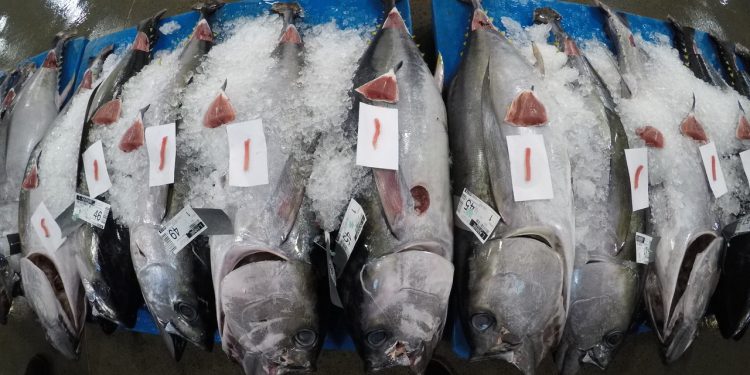
‘The case of tuna is especially shocking: the EU grants each year 35,000 tonnes of duty-free tuna loins, used essentially from Asian countries where there are well documented cases of labour abuses and illegal fishing. These imports flood the market in a matter of days, distort prices, and directly harm the competitiveness of our fleet.’

Europêche argues that while tariff derogations can and must support the EU processing industry, they must not come at the expense of fair competition or sustainable practices. Today, the ATQ regime allows duty-free access to over 900,000 tonnes of imported seafood annually – without applying the stringent environmental and labour standards that apply to the EU’s own industry.
‘EU trade policy is one of the most powerful tools to ensure fair competition and promote sustainability in global fisheries. The EU cannot preach sustainability at home while turning a blind eye to imported products that do not meet the same standards – especially when those products benefit from tariff exemptions. It’s time to close this loophole and make sustainability a prerequisite for tariff advantages,’ said Europêche managing director Daniel Voces.
‘In a new era marked by global tariff tensions, the EU must deploy its trade tools—such as the ATQ—strategically, granting tariff benefits with purpose and leveraging them to strengthen its geopolitical influence, not simply handing them out to the first applicant on a first-come first-served basis.’