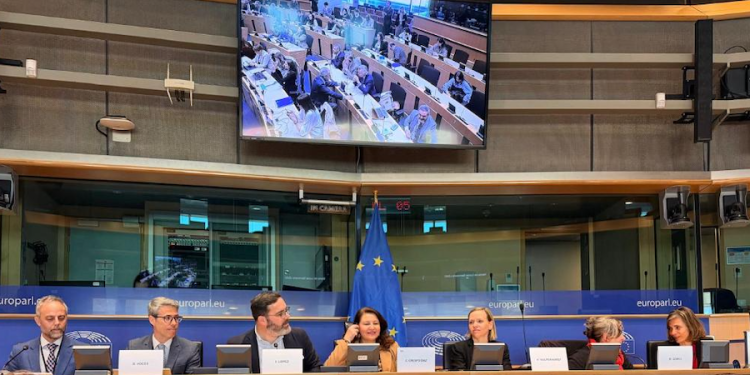



The Long Distance Fleet Advisory Council (LDAC) has presented its recommendations on the future of Sustainable Fisheries Partnership Agreements (SFPAs) at the European Parliament.
The event was hosted by MEP Carmen Crespo, Chair of the Fisheries Committee, and brought together policymakers, industry representatives, and civil society to discuss the next generation of EU external fisheries policy.
The conference was moderated by LDAC executive secretary Alexandre Rodriguez, with opening remarks from the LDAC Chair Iván López , who stressed that ‘the next generation of SFPAs must go beyond access agreements and stress the sustainability component to become true partnerships in spirit and cooperation to deliver an effective ocean governance’.
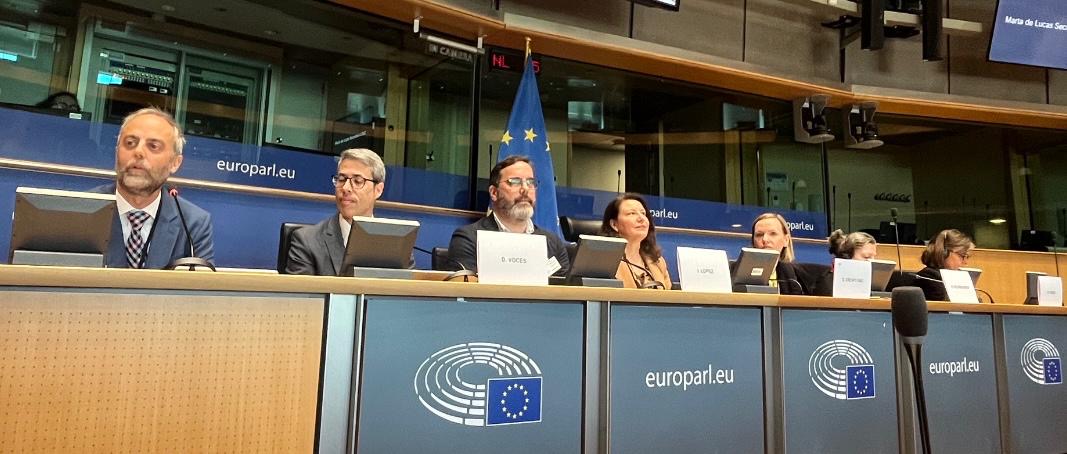
This followed by a summary of each panel made by the designated rapporteurs who were all LDAC members representing both fishing sector (Iván López and Daniel Voces) and NGOs (Béatrice Gorez, and Vanya Vulperhorst).
Three panels examined the value of SFPAs for international ocean governance and sustainable fisheries, future pathways for enhancing social, economic, and environmental sustainability in partner countries, and perational aspects of SFPAs across demersal, tuna, and small pelagic fisheries. Participants reaffirmed strong support for SFPAs as strategic tools for both sustainable fisheries and ocean governance, and a good platform for ‘blue diplomacy’.
Despite recognition as a success story, the conference also highlighted areas for improvement in the field of implementation, in particular the need to strengthen transparency, stakeholder participation, and level playing field among fleets, to enhance sectoral support to deliver tangible socio-economic benefits in partner countries, and to promote scientific-based decision making and precautionary management.
Improving monitoring, control, and enforcement systems and coordination with fight against IUU policy, and finding flexible solutions to the outstanding issue of increasing number of ‘dormant agreements’ linked to exclusivity clause while ensuring compliance with EU acquis (including SMEFF) are seen as areas that demand attention, along with fostering regional cooperation while respecting national sovereignty of partner countries and policy coherence between SFPAs and other sectoral / broader EU policies.
Support development and well-being of coastal communities, including recognition of women’s role in fisheries is also needed, plus an increase in EU budget and resources dedicated to SFPAs, and also to DG MARE staff.
Host MEP Carmen Crespo thanked the LDAC and the EESC for their work on this subject, stating that ‘these agreements are more than sectoral instruments, they are a strategic tool for the EU to ensure a fishing activity which is competitive, strengthens our food security and projects our geopolitical presence in the world, while supporting development and stability in our partner countries.’
Concluding the gathering, Charlotte Gobin (DG MARE) explained that recommendations on the new SFPA will be included in the future EU Strategy on External Fisheries Action that is expected to be published at the end of 2026. Javier Garat (NAT member of the European Economic and Social Committee) expressed the importance of increasing the profile of fisheries in the work of this European institution.