
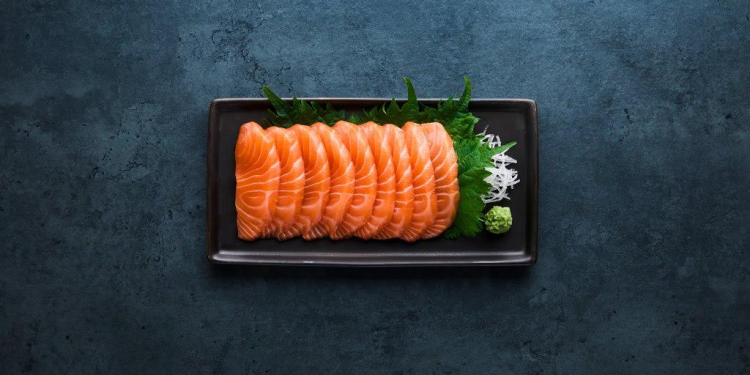





The Norwegian Seafood Council (NSC) has pinpointed sashimi as a key opportunity in China’s rapidly expanding salmon market. This is being driven by rising in-home consumption, fast delivery services and the parallel growth of factories providing sashimi-grade salmon to meet demand.
China’s imported salmon category grew 50% in 2025. Alongside this growth, one of the biggest changes in how salmon is consumed has been the post-Covid shift towards in-home consumption, particularly of sashimi.
Online retail and delivery services have helped enable this shift. Consumers can order freshly prepared sashimi from sashimi-certified factories and specialised fresh cut sashimi stores, where salmon is sliced on demand before being dispatched for delivery.
The growth of fresh cut stores and factories approved to prepare sashimi-grade salmon is helping supply keep pace with demand. This availability is no longer limited to China’s largest cities, with consumers in tier-two and tier-three cities increasingly able to access the same quality and convenience.

‘I’ve experienced first-hand how effectively China’s delivery network serves the sashimi market. Salmon ordered to my apartment can arrive within 25 minutes, carefully packaged and in excellent condition,’ said NSC Country Director for China Sigmund Bjørgo.
‘That combination of speed and care helps preserve the quality and freshness consumers expect from Norwegian salmon. It makes sashimi easier to enjoy at home and means the product can arrive as fresh as if consumers had bought it themselves at the supermarket.’
Salmon sashimi dominates China’s raw fish category – according to NSC data, about 25% of Chinese seafood consumers in Tier 1 cities report that they eat salmon sashimi once a week or more frequently.
The popularity of raw, expertly sliced salmon in China is particularly pertinent when compared with the global average of 13% for weekly sashimi consumption. The average in this case is influenced by high percentages in many Asian markets.
Before the pandemic, salmon sashimi in China was largely associated with Japanese restaurants, with consumers less accustomed to buying raw fish to eat at home or preparing it themselves. The subsequent growth in home consumption has helped sashimi become a more established part of the shopping basket. Salmon is considered an affordable luxury in China, combining premium appeal with the convenience of an at-home treat.
Affluence is the biggest enabler of seafood consumption in China, where the middle class has grown from around 300,000 people in 2000 to 184 million today – creating a growing audience for higher-value seafood.
In 2025, China emerged as the market with the highest value growth for Norwegian seafood, with an increase in export value of NoK2.9 billion (31%) compared with the previous year. China purchased Norwegian seafood totalling NoK12.3 billion and climbed from being the sixth largest market in 2024 to the third largest market in 2025.
Looking at salmon consumption in particular, and the development from 2024 to 2025, China also comes out on top with the most growth compared to the other top salmon markets.
Although Norwegian salmon is cold-chain reliant, the fact that it is favoured as a premium product by China’s rising middle class provides further evidence that it arrives fresh – and is trusted by consumers.
‘Through this new research, we’ve gained powerful new understanding of what influences the Chinese consumer. Our findings show that when purchasing seafood, freshness is a key driver, including cost. Consumers are looking for premium-grade seafood, especially when it comes to salmon sashimi – and Norwegian salmon offers the quality they are looking for,’ said NSC Consumer Analyst Lars Moksness.
With China’s middle class continuing to expand and demand for premium seafood gathering pace, the appetite for Norwegian salmon shows no signs of slowing. Looking at the newest development, the Chinese salmon import increased 43 % in first half of 2026, on top of the 50 % for the full year of 2025. In other words, there’s no indication that the trend will stop anytime soon.