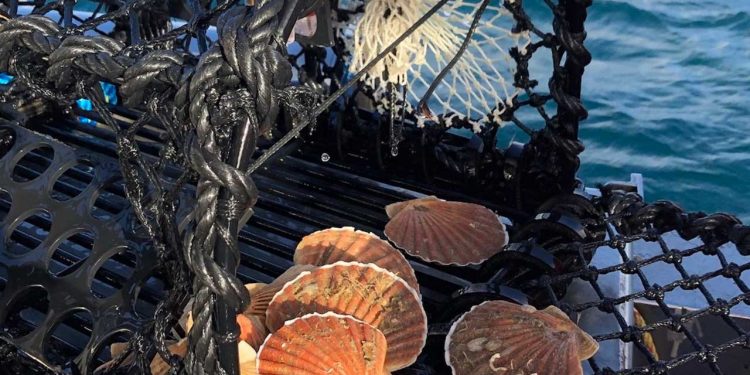





Sustainably caught Disco Scallops are on now the menu. Marine scientists working in the south of England discovered that scallops can be caught using pots equipped with flashing LED lights – hence the ‘scallop discos’ name.
Currently around 95% of scallops are caught by dredging – a controversial and high-energy method of fishing. In contrast, pot-caught scallops offer a low-impact alternative. Attracted by LED lights, scallops simply swim into modified crab pots.
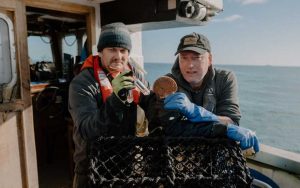
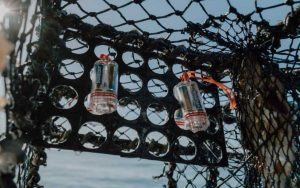
The discovery that scallops could be caught in pots fitted with LED lights was made in 2022 by scientists from Fishtek Marine, a world leader in bycatch prevention technology. This happened during trials for PotLights, designed to attract crab and lobster as an alternative to using fish to bait pots.
Working with Jon Ashworth, a fisherman based in Newlyn, Dr Rob Enever and his Fishtek Marine team discovered that the lights, combined with specially modified pots, were attracting unprecedented numbers of scallops in addition to the crabs and lobsters that Jon was targeting.
Over the last two years, with funding from Natural England the UK government’s Seafood Innovation Fund, The Crown Estate, The Esmée Fairbairn Foundation, Fishmongers Company and the Devon Environment Fund, the team at Fishtek Marine have worked with UK pot makers and colleagues from the University of Exeter to perfect the pot design and run extensive trials with fishermen.
The outcome is a new low-impact inshore fishery which offers an alternative to dredge-caught scallops. More than forty boats are now using the technology to commercially catch Disco Scallops and together with Fishtek Marine and restaurant entrepreneur Lee Cash, they have registered the brand and created the Disco Scallop Collective to market the sustainable shellfish and encourage more fishermen to access subsidised fishing gear.
‘By putting modified pots in the water, fishermen are being given a chance to diversify their catch and secure new income streams, while consumers gain access to a sustainable, seabed-safe scallops they can enjoy guilt-free. It’s exactly what environmentally conscious diners have been calling for: delicious seafood with a story they can stand behind,’ said Rachel Walker of The Disco Scallop Collective.
‘As awareness of Disco Scallops grows, the hope is that a ripple effect will extend across the UK. More crab and lobster fishermen will learn how they can diversify their existing catch, moving toward a more secure and balanced future for their livelihoods. More restaurants will join the movement toward responsible sourcing, making this ethical alternative the new standard.’
‘With rising fuel costs, post-Brexit regulatory changes, reduced catch and unstable prices the fishing industry is under strain,’ Fishtek Marine’s Robert Enever said.
‘We are also exploring new opportunities for catching scallops within offshore wind developments where dredging is restricted. For UK fishermen, pot caught Disco Scallops provide a vital opportunity to adapt and secure livelihoods, especially to diversify beyond crab and lobster fisheries that have faced increasing challenges in recent years.’

The experience of fishermen has been overwhelmingly positive. Jon Hayes, a crab and lobster fisherman from St Mawes, has had great success with the gear.
‘They’re working very well and in some I’ve had over 60 scallops out of one pot! You can’t get much better than that! They do seem to catch more in the winter, which is useful for people like me, a small fisherman,’ he said.
‘Fishing really needs to change, it’s not about catching as much as you can, it’s about catching what you can sustainably. I’ve been really excited to be a part of catching scallops with pots. It feels like I’m part of the future really! It’s made my life feel a bit more worthwhile.’
Leading seafood chef Mitch Tonks, founder of the sustainable seafood restaurant group Rockfish, has added Disco Scallops to the menu at several of his restaurants.
‘We’re incredibly excited about this brilliant innovation which offers a sustainable alternative to dredged scallops and also supports UK fishermen by helping them diversify,’ he said.
‘The scallops are high-quality, plump, sweet, and gorgeous. These really are the scallops of the future.’
‘This is a great example of how a technological innovation can deliver real and sustainable benefits for the marine environment and the communities that depend on the sea for their livelihoods,’ said Pete Kibel, co-founder and director of Fishtek Marine.