


There’s a pressing need for EU aquaculture to hit a real turning point, according to the Federation of European Aquaculture Producers (FEAP), driving home the point at the inaugural meeting of the European Ocean Board in Brussels. FEAP is looking to see a fundamental shift in how the EU supports aquaculture.
While welcoming the Board as a new high-level platform, FEAP stressed that European fish farming has made little quantitative progress since 2000, and that the Ocean Pact will only succeed if it tackles the root causes of stagnation.
Representing Europe’s finfish farming sector, from rainbow trout and sea bass to carp and Atlantic salmon, across marine and freshwater, FEAP voiced a constructive but critical position. Javier Ojeda, representing FEAP at the Board, highlighted three pillars of the Ocean Pact as particularly relevant: governance, sustainable blue economy, and ocean health. However, he warned that without real change on the ground, the Pact risks adding yet another layer of unproductive dialogue.
‘Our fish farmers are tired of layers and layers of European regulations,’ Javier Ojeda stated.
‘They are exhausted by legislative inflation and cumulative regulatory pressure, mainly environmental, that the European Commission is imposing on us. Even national competent authorities cannot cope with it. The value of current legislative simplification efforts is very limited when, at the same time, new legislation relentlessly continues to be promoted.’
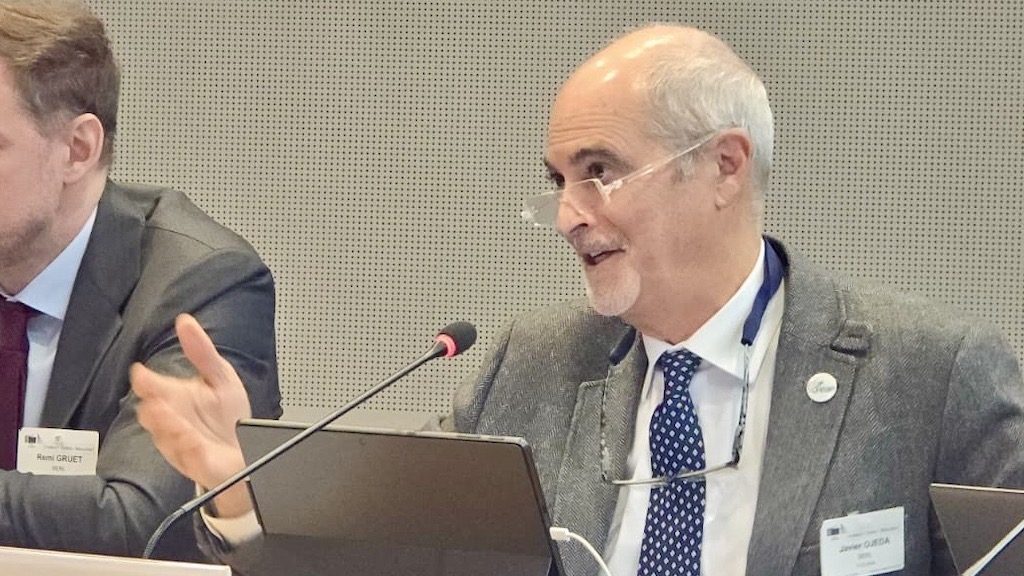
He argued that EU aquaculture needs a favourable business environment, not a regulatory nightmare, especially for micro and small undertakings – and cited the example of Norway as proof that it is possible to combine environmental stewardship with a thriving aquaculture sector.
FEAP highlighted that concrete problems need concrete solutions. Javier Ojeda gave three immediate examples where the EU has created problems without solutions, starting with fish transport boxes falling off a regulatory cliff due to the Packaging and Packaging Waste Regulation. He added that further problems are overpopulation of cormorants, requiring a European-wide management plan and organic fish farming rules that are impossible to comply with.
‘This Board will provide added value to aquaculture only if it serves to change this situation. This sector needs solutions, not more problems,’ he said.
FEAP made the point that there is a need for binding advice, cross-cutting action, and reality checks, and that the Ocean Board must not be allowed to become a silo within DG MARE. If the Board can only influence maritime policy in isolation, its value will be ‘very limited, if any.’
Instead, FEAP called for binding or at least aspirational advice from the Board, cross-cutting solutions on real trade-offs, and an early warning mechanism for legislative incoherence.
Javier Ojeda also proposed a concrete method to diagnose what is really holding aquaculture back.
‘The EC, including DG MARE, seems not to accept the real underlying reasons holding back aquaculture, namely legislative overregulation. Instead, it focuses on symptoms like licensing procedures. We insist on carrying out at least one hundred reality checks across the EU, interviewing both successful and unsuccessful aquaculture initiatives, and gathering testimonies of the real challenges farmers face,’ he said.
FEAP urged members of the Ocean Board and the Commission to make the European Ocean Board a real turning point for aquaculture, not another talk shop.
‘EU aquaculture needs an EU Aquaculture Common Policy, as clearly justified by the AAC. And the EU Mission Ocean and Waters requires a socio-economic impact assessment before continuing its implementation,’ Javier Ojeda said.