




Speaking at the Council of Ministers of Agriculture and Fisheries held in Luxembourg, Spain’s Minister of Agriculture, Fisheries and Food Luis Planas has urged the European Commission to recognise the efforts made by the Mediterranean fishing fleet in recent years and the positive results shown by scientific reports on the selectivity measures applied – stating that this carries more weight than the number of fishing days.
At the Council of Ministers, the Commission presented its first guidelines for fishing opportunities in 2027. These will be negotiated in the coming months for approval, as is customary, at the December session. Minister Planas praised the favourable situation of fish stocks in Iberian waters and the Bay of Biscay as the result of sound management based on the stability and economic viability of the sector, which must continue.
He also pointed out that the analysis of the Mediterranean does not explicitly include the progress made, and cautioned that no positions can be taken until the scientific reports on the status of the various fishing grounds and species are available.
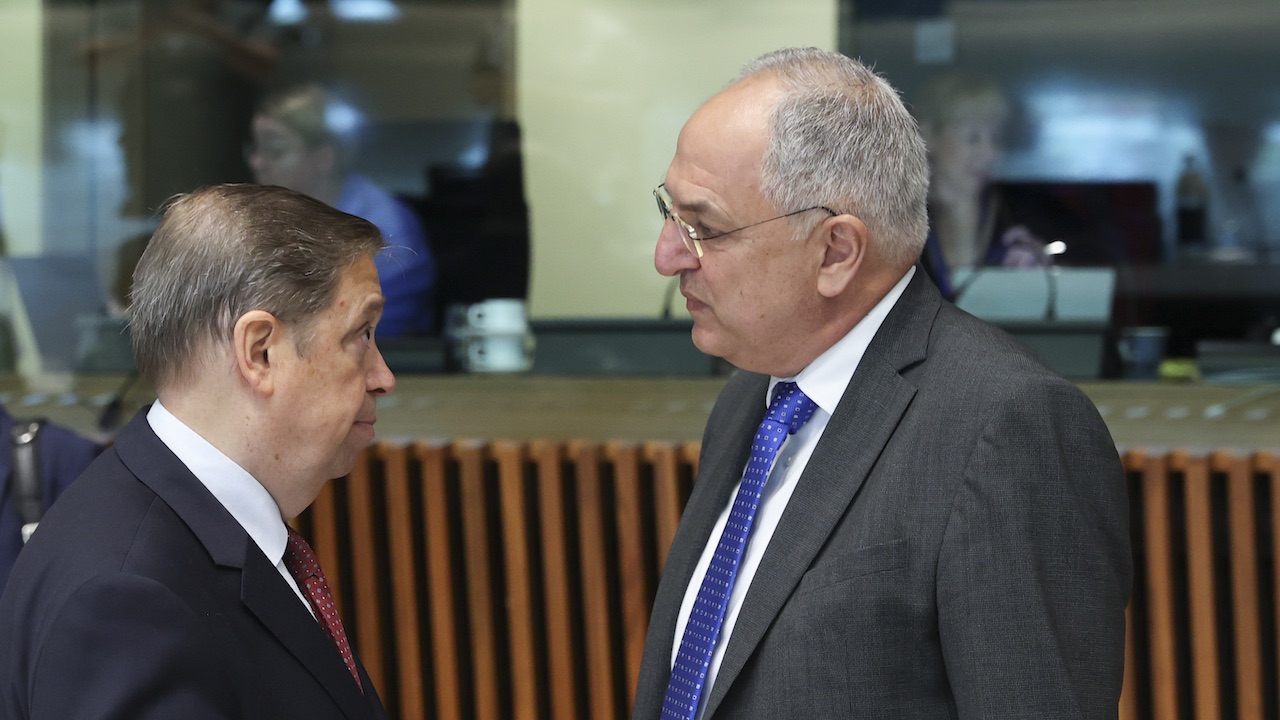
The minister also reminded the European Commission of the urgent need to review the Western Mediterranean fisheries regulations, a request jointly supported by Spain, France, and Italy, and which the Commissioner for Fisheries and Oceans, Costas Kadis, pledged to undertake last December.
He stated that this reform is essential to take into account the mixed nature of fisheries in the Mediterranean, so that they are not entirely dependent on the status of the most vulnerable species (hake), as is currently the case, and to adapt the management framework to the realities of the fleets operating in the Mediterranean. The Commission recently published a consultation to begin the review process.
Luis Planas stressed the need for extending the setting of quotas and TACs on a multi-year basis to more species, which began during Spain’s rotating presidency in the second half of 2023, because this provides predictability and greater stability to the fleet.
He commented that consolidating compensatory measures that contribute simultaneously to maintaining species and the profitability of fishing activity should also be the objective of the guidelines of the new CFP, pointing out that in the ten years since the implementation of the CFP, significant progress has been made in sustainability, with a majority of species currently operating at Maximum Sustainable Yield. ‘We have taken care of the fish, and now we must take care of the fishermen,’ Luis Planas stated, and he stated that measures must be aimed at increasing the profitability of the fleet.
The minister acknowledged the progress in negotiations for the Multiannual Financial Framework for the 2028-2034 period, noting that the initial proposal for the CFP budget has doubled from €2 billion to €4 billion. However, he warned that this is still insufficient and that the objective of the negotiations remains to maintain at least the current period’s budget of €6.1 billion, a target that is still far from being met. Spain is the largest recipient of these funds, receiving €1.12 billion, almost a fifth of the total.
Luis Planas has also reiterated his call for specific funds within the new EU framework to undertake the modernisation and renewal of the fishing fleet, one of the sector’s main challenges, in order to achieve more energy-efficient, safer, and more comfortable vessels, thus contributing to generational renewal, one of the most pressing challenges for the sector.