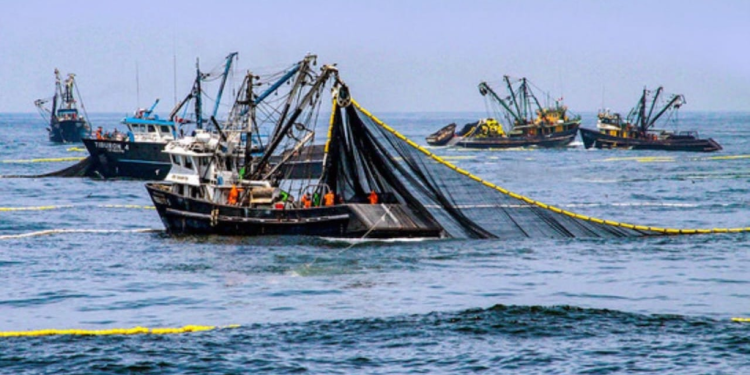





Peru’s Ministry of Production has applied a series of adaptive management measures with real-time satellite monitoring to the first anchovy season of 2026.
The cumulative anchovy landing total has already reached 439,535 tonnes, 23% of the 1,914,049-tonne total allocated quota. There is concern over the volume of juvenile fish in catches, currently estimated at 167,542 tonnes, although this figure remains within the range projected by the Peruvian Marine Institute (IMARPE).
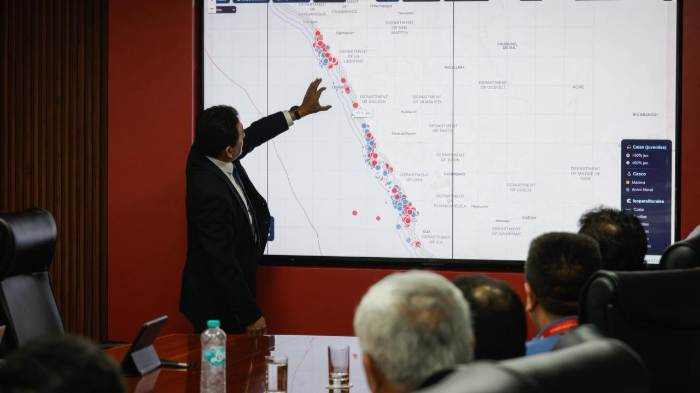
The first anchovy fishing season of 2026 in the north-central zone is being conducted under a strict management system based on scientific evidence. Through the use of cutting-edge technology, real-time reporting, and preventative closures, the Ministry of Production states that it is seeking to safeguard the sustainability of the resource and the continuity of an activity that generates thousands of jobs.
A ministry representative commented that the presence of juveniles in the catches is a recurring event in this fishery – due to the natural overlap between the distribution of juveniles and adults in Peruvian waters.
‘From a biological perspective, this scenario is not critical. On the contrary, a healthy presence of juveniles usually reflects a successful recruitment process, which contributes to the renewal of biomass for the future,’ the Ministry’s representative stated.
Peru has abandoned the previous punitive scheme which limited the presence of juveniles to 10% per landing,as this was seen as providing an incentive to discard of juveniles at sea to evade penalties, preventing IMARPE from building a true picture of the incidental catch. The new legal framework aims to incentivise transparent and mandatory reporting, allowing science to make decisions based on real data and not on figures distorted by fear of incurring penalties.
Via mandatory electronic logs, the fleet reports incidental catch in real time, allowing IMARPE to have accurate information to adjust its biological assessments and make timely decisions, contributing to the conservation of the resource and the maintenance of spawning biomass above reference levels.
IMARPE has established a maximum catch limit of 488,000 tonnes of juveniles. Should this threshold be reached, the season will be automatically closed to protect the resource’s renewal process.
‘This management model has been internationally ratified during Peru’s accession process to the Organisation for Economic Co-operation and Development (OECD). Following a rigorous evaluation of its policies, Peru obtained a formal favourable opinion from the OECD’s Committee on Fisheries and Aquaculture, which recognised the anchovy management system as a ‘world-class’ benchmark,’ the Ministry’s spokesman said.
‘OECD highlighted that Peruvian fisheries governance is based on continuous monitoring, clear biological rules, and a high capacity to respond to changes in resource availability.’
Strengthening direct dialogue
The Ministry of Production is making to strengthen direct dialogue with the country’s main fishing associations, consolidating its role as a facilitator between the State, fishermen, and the scientific community, with the aim of ensuring the sustainability of hydrobiological resources and the orderly development of an activity that is important to the national economy.
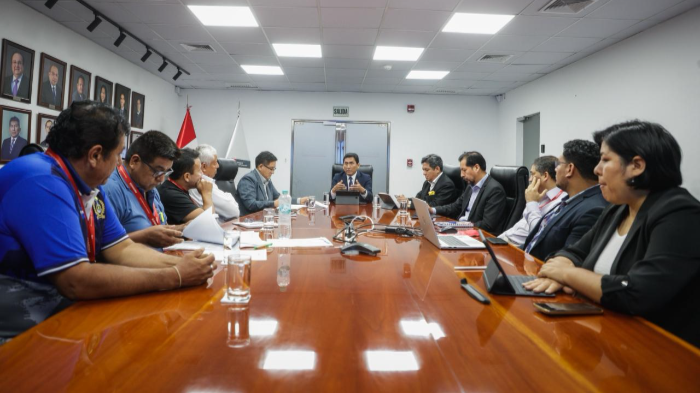
Minister of Production César Quispe Luján and the Vice-Minister of Fisheries and Aquaculture Jesús Barrientos with leaders of the SUPNEP and SUMOPP industry associations, along with congressman Elías Varas Meléndez, to report on the progress of the first anchovy fishing season in the north-central zone, clarifying that a healthy presence of juveniles typically reflects a recruitment process that contributes to the renewal of the anchovy population.
‘Management of anchovy is based on technical and scientific criteria. Protecting the resource today through this adaptive approach means ensuring employment and the livelihood of thousands of families,’ stated Minister César Quispe.
Vice-Minister Jesús Barrientos, along with specialists from the Ministry and IMARPE, held meetings with leaders of more than twenty fishing associations from the north, center and south of the country, as well as with FIUPAP, to address the problems of bonito fishing –notably discussing unfair competition, the sustainability of the resource, and strengthening oversight.
‘We are working on concrete solutions to regulate this fishery, combat informality, and ensure that the exploitation of bonito is fair and sustainable for all,’ said Vice-Minister Jesús Barrientos.