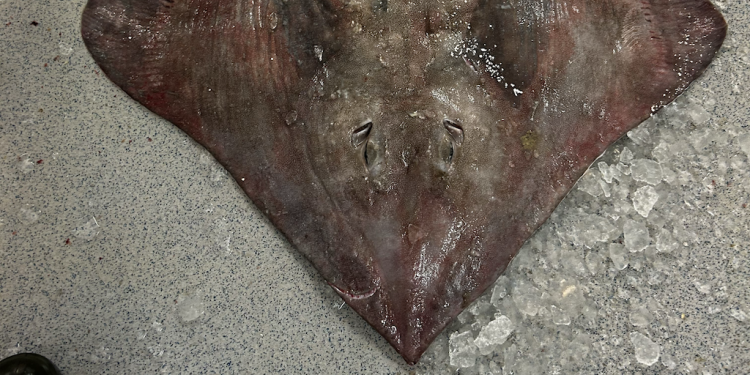





The Norwegian fleet’s catches of skate have increased significantly since 2015, especially in Eastern Finnmark – and a report identifies South Korea as a potential market.
Skate is rarely consumed in Norway, but represents a sought-after seafood product in many other countries, especially in Asia and the United Kingdom. Nofima’s report provides a comprehensive assessment of how skate, which is mainly a by-catch resource, can be turned into a profitable industry.
In recent years, nearly 1400 tonnes of skate have been landed annually, and of this, up to 90% of catches have been landed in Eastern Finnmark. International demand for skate wings has increased. Together with reduced quotas for other whitefish, this creates potential for better utilisation of skate in the Norwegian groundfish sector.
‘To succeed in selling more Norwegian skate to these markets, the industry must collaborate on better documentation of the skate fishery and more targeted marketing,’ states Nofima senior researcher Margrethe Esaiassen, commenting that South Korea is seen as a potential market because processed products such as fillets and frozen fish meat are exported duty-free to South Korea.
The project, funded by FHF with a support grant of NOK 1.0 million, covers the entire value chain from catch to market. Findings are that what is today often considered a by-catch could become a valuable resource if handled correctly.
‘Skate requires careful handling to maintain its quality. It has a special biology that means it can quickly develop an ammonia odour if it is not cooled immediately after being caught,’Margrethe Esaiassen said.
‘The storage study also demonstrates that the shelf life is relatively short, with good quality for the first 2–5 days, a clear decline in quality after day five and unsuitability for consumption by day twelve.’
Early freezing, preferably on board, as pit forward as the best measure to preserve quality.
Skate are mainly caught as by-catch in longline fishing for haddock. Landings of the species increased significantly after the Fresh Fish Scheme was introduced in 2013. From around 220 tonnes in the 2013-2014 season to around 1000 – 1200 tonnes in recent years. The Fresh Fish Scheme is a quota initiative to ensure that more fresh, non-frozen fish is delivered more evenly throughout the year. The scheme provides extra cod quota to vessels that land all their catch fresh, and the bonus is calculated based on the total amount of fresh fish delivered during a week.
Some species in the bycatch have also been included in the basis for the quota bonus, thus making by-catch more interesting.
Skate has been one of these species for several years, but was removed in 2025. As a result, skate catches no longer count towards the Fresh Fish Scheme. According to official figures, this resulted in a 70% reduction in skate catches from 2024 to 2025.
There are significant knowledge gaps related to the different species of skate and the need for better utilisation of the raw material.
The Nofima researchers conclude that Norway can significantly increase value creation from skate through better species identification, clearer documentation of sustainability, improved raw material management and targeted market development.
Image: Gustav Martinsen, Nofima