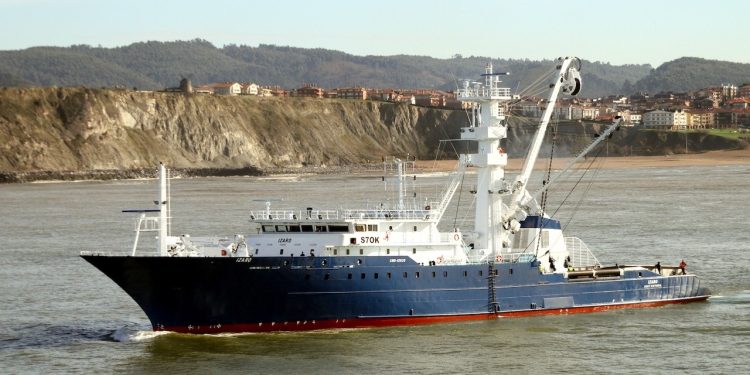





The 103rd session of the Inter-American Tropical Tuna Commission (IATTC), held last week, has marked significant steps in the sustainable management of tropical tuna stocks.
The 72-day fishing closure was reduced to 64 days, following the Scientific Committee’s June 2025 recommendation, reflecting the healthy status of skipjack, yellowfin, and bigeye tuna stocks in the Eastern Pacific Ocean (EPO). This first reduction since 2009 underscores the effectiveness of IATTC’s capacity and effort-based management system, which has successfully balanced conservation with the needs of responsible fisheries.
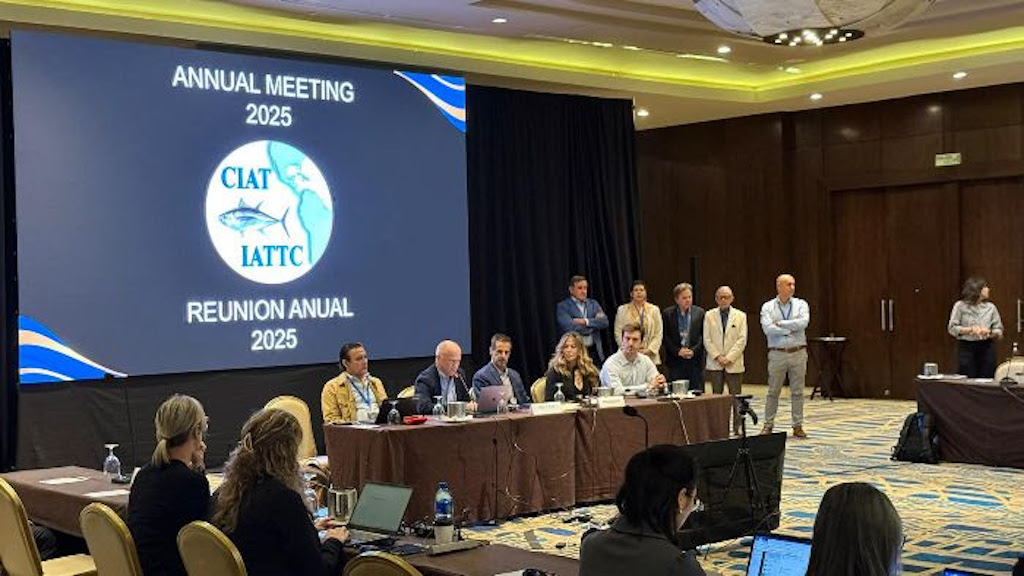
‘This session reflects years of effort from our fishermen to maintain tuna populations in optimal conditions and being able to have a sustainable way of life over time,’ said Julio Morón, managing director of OPAGAC/AGAC and Europêche’s representative at the IATTC session.
‘Fishermen are the guardians of the sea and the ones who, with initiatives with the creation of this Fund, show leadership and solutions for sustainable purse seine fisheries.’
The purse seine fleet, which accounts for 97% of EPO catches, continues to contribute funding to various programmes, including enhanced port sampling, a new tagging initiative in addition to the existing and 100% observer coverage under the Agreement for the Protection and Conservation of Dolphins (AIDCP), ensure robust data collection and stock assessments. These contributions, financed through a per-cubic-meter fee, demonstrate the fleet’s commitment to science-driven management.
A new measure, proposed by French Polynesia and supported by the fleet, makes it easier for vessels to track their FADs across borders and prevent stranding risks on Pacific islands. A landmark achievement was the launch of the International Alliance for the Recovery of FADs in the EPO, signed by four major tuna associations: ATA (American Tunaboat Association, USA), AGAC (Association of Large Freezer Tuna Vessels, Spain, member of Europêche), ATUNEC (Association of Tuna Vessels of Ecuador) and FIPESCA (International Fisheries Foundation, Panama).
This initiative, backed by the MSC-certified purse seine fleet, will finance FAD recovery and stranding prevention projects, reinforcing the sector’s leadership in mitigating environmental impacts.
On the downside, attempts by the EU to increase observer coverage – aimed in part at levelling the playing field with the Asian longline fleets, whose vessels continue to fall short of minimum coverage requirements – once again met strong opposition, particularly from China and Japan. These countries have also refused to implement the shark fins policy, which the European fleet has adhered to for the last 13 years.