



The European Association of fish Producers Organisations (EAPO) is urging the European Commission to conduct a thorough investigation into the causes of the degradation of the Baltic’s marine ecosystem, to ensure that the fishing industry does not bear the sole burden for non-fishing factors that significantly affect fish stocks.
EAPO has issued a position statement on the state of Baltic fisheries, following the recent publication of ICES advice for 2027 Baltic Sea fishing opportunities. The Baltic Sea Working Group of the organisation has analysed these recommendations and has also reiterated a previous statement on the Baltic, published after the third Our Baltic Conference held in Stockholm on the 30th September and the proposal of the European Commission for the 2026 fishing opportunities in the Baltic Sea.

‘In this statement, we recalled the very worrying state of the Baltic Sea and its marine and aquatic resources, due to climate change, anthropogenic pressures and predation. It seems obvious that, given the state of the Baltic Sea environment, as observed and assessed by HELCOM, fisheries only have a minor impact on fish stocks development and their ability to rebuild,’ an EAPO representative stated.
‘It seems that the management measures put in place are not paying off. Without doubt, non-fisheries parameters corresponding to eutrophication, land-based pollution, offshore renewable energy development, predation by cormorants and seals, among others, are playing an important role in the steady decline in cod stocks in the basin. Especially, climate change effects are of great concerns for fishers, as the water temperature is rising, the ice extent is decreasing, the annual mean precipitation is increasing over the northern part of the region leading to global impacts on biodiversity and ecosystem health, and affecting the depending fisheries activities.’
EAPO states that it is more than ever before in favour of developing a comprehensive ecosystem-based approach to fisheries that will enable to address the state of the Baltic Sea through all these factors and impacts, without placing the responsibility on fishers alone.
‘We are calling for integrated and ambitious policies and actions to restore the ecosystem, its habitats and its fish populations, safeguarding the activity and livelihoods of the fishing communities. The compelling example of both cod stocks calls for an urgent shift in the management strategy,’ EAPO states.
‘The Western stock showed relatively good recruitment recently, and the Eastern one a relatively successful spawning, however the fish disappear before reaching fishable biomass. Despite the efforts led by the fishing industry to significantly reduce catches, minimize pressure on fish stocks and allow fish populations to recover and thrive, the resource status continues to deteriorate.’
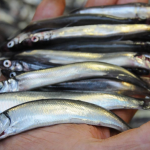
EAPO points out that the impact of Russia’s ever-increasing share of catches on the state of stocks represents a main problem and a further threat to the Baltic Sea and EU fishers. According to ICES advices for herring SDs 25 – 29, 32, and sprat SDs 22 – 32, the share of the Russian Federation through their autonomous quotas has increased in recent years, making it the leading nation in terms of Central Baltic herring catches and the second-largest in terms of sprat catches, while catches by other States are declining.
In the case of Central Baltic herring, Russian catches account for an estimation of around 21% of the total catches for 2022–2025, with no information on the quality of the assessment and the composition of the catches.