


A programme aiming to strengthen maritime and fishing training, and to boost employment and sustainable development in Mozambique, is being supported by organisations in both Mozambique and Spain as an agreeemt has been signed to launch phase two of the initiative.
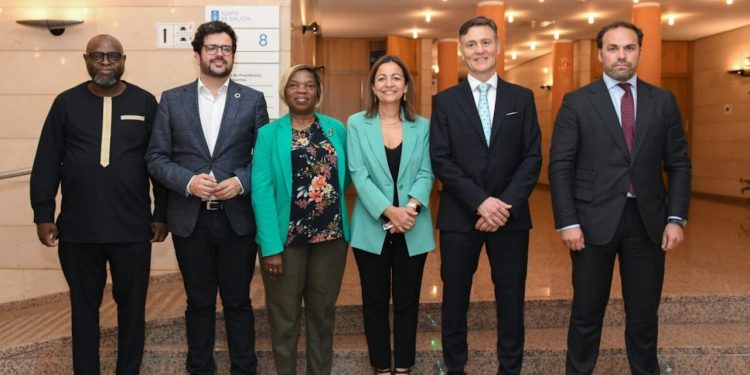
The agreement was signed in Santiago de Compostela to launch the second phase of the maritime–fishing training project, a public–private partnership for development, launched in 2019 to strengthen the capacities of the fishing sector and promote sustainable employment in Mozambique. The project, with a total budget of €346,000, will be implemented over the coming years to consolidate and build upon the achievements of the first phase (2019–2021).
During its initial phase, which has already been completed, the groundwork was laid for improving professional skills in the fishing sector, with a strong emphasis on sustainability, gender equality, and respect for human rights.
As part of this latest agreement, the programme will focus on strengthening trainer development at the Instituto de Ciências do Mar e Pescas, particularly in areas that could not be fully addressed due to restrictions imposed by the pandemic. The agreement also includes the expansion of the institute’s academic offering, incorporating new qualifications and equipment tailored to labour market demands and aligned with international standards.
It aims to extend training opportunities to other coastal regions that are critical to the development of Mozambique’s fishing sector, and to promote synergies among public, private, and educational institutions to enhance technical training and facilitate access to employment in the maritime and fishing sector.
This partnership not only promotes job creation and local development but also facilitates knowledge and technology transfer and strengthens cooperation between Galicia and Mozambique in support of more sustainable and responsible fishing, generating a positive impact on local communities.
Galicia’s participation in this programme is particularly significant given its long-standing tradition of fishing in African waters — especially in Mozambique, where Galician fleets and companies have operated for decades in the harvesting of prawns and other high-value commercial species. This institutional and training cooperation reinforces Galicia’s role as an international benchmark in maritime and fishing education, while also contributing to the development of a more professional, safer, and sustainable fishing presence abroad.
This project is also strategic for Pescamar, as it represents an opportunity to advance the generational renewal of its fleet crews in Mozambique and enhance the qualifications of professionals in the sector in the country.
The project addresses the priorities outlined in the Spain–Mozambique Country Partnership Framework, contributing to improved employability, economic growth, and stronger bilateral relations.
Representatives of the Nueva Pescanova Foundation and Pescamar (a subsidiary of the Nueva Pescanova Group in Mozambique), the Spanish Agency for International Cooperation and Development (AECID), the Maritime and Fisheries Polytechnic Institute of the Atlantic (IPMPA), the Instituto de Ciências do Mar e Pescas (Institute of Marine Sciences and Fisheries or IMARP), and the Mozambican Association of Industrial Shrimp Fishing Shipowners (AMAPIC) signed the agreement in Santiago de Compostela.