




Spanish industry body Cepesca is launching the REDISMAR, an initiative aimed at improving the management of fishing nets and gear at the end of their useful life through eco-design and circular economy solutions, working with the Automotive Technology Centre of Galicia (CTAG).
‘This project reinforces the sector’s commitment to a sustainable transition, from end-of-life management to prevention through design. We want the results to be applicable and useful for shipowners, fleets, and coastal communities,’ Cepesca secretary general Javier Garat.
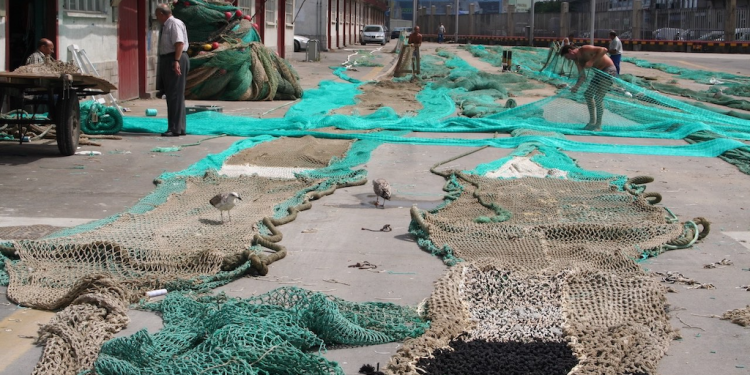
The initiative stems from one of the main challenges currently facing the recycling of this equipment – the difficulty and cost of separating materials and components for reuse or treatment. The 24-month project is to focus on combining technical analysis, industry collaboration, and solution validation. In the first phase, priority networks and rigging will be identified based on criteria such as intensity of use, component wear, and current recycling challenges.
‘This project gives us the opportunity to bring ecodesign methodologies, already being applied in the automotive industry, to the fishing sector,’ said Raquel Ledo, head of the product and materials innovation department
‘We want to put that experience at the service of the sea, promoting more sustainable and practical solutions for those who work in it. We firmly believe that sharing knowledge between sectors is one of the most effective ways to innovate and move towards more responsible production models.’
Stage two is to analyse redesign alternatives using ecodesign methodologies adapted to the fishing sector. Among the options to be studied are more modular designs, the use of a single material, and the incorporation of biodegradable materials, with the aim of facilitating the repair, dismantling, and recycling of the equipment.
The selected solutions will subsequently become prototypes, either complete or partial, which will be subjected to mechanical and environmental tests to assess their viability.
In addition, the project will carry out environmental, social and economic analyses using Life Cycle Assessment (LCA) methodologies, following the international standards ISO 14040 and 14044.
REDISMAR builds on the work developed in the Redes de España (Pleamar 2023) project, which focuses on improving the handling of disused nets and fishing gear. The new initiative now incorporates a specific line of work on the design of this equipment and its impact on the sustainability and circularity of the fishing sector.
REDISMAR is being developed in Galicia, Andalusia and Madrid, working on gear used in the North Atlantic and South Atlantic.