


A far-reaching agreement on fisheries has gone through in Denmark, and it set to hit some sectors of the industry hard. In the wake of this, the Danish Fishermen’s Association is looking for the industry to be left in peace to deal with these new challenges it now faces.
‘It is absolutely critical that fishing gets some peace. It is not sustainable for any industry to be constantly in fear new political decisions that will turn the conditions upside down,’ said DFPO chairman Svend-Erik Andersen, commenting that instability generates difficulties for investment and financing, as well as for attracting people to the industry.

‘The agreement is first and foremost a relief for the fishing industry in general. With the agreement, it becomes a reality that the introduction of the CO2 tax on fishing will be postponed until 2029. From 2029, the tax will be phased in at 50%, corresponding to DKK375 per tonne of CO2 – money that will be returned to the industry as transition support,’ he said.
‘It is a relief that a political solution has finally been found, where the parties to the agreement recognise that there are no alternatives to the fuel we use today, and which ensures that the revenue from the taxation is returned to the fishing industry when this tax is phased in.’
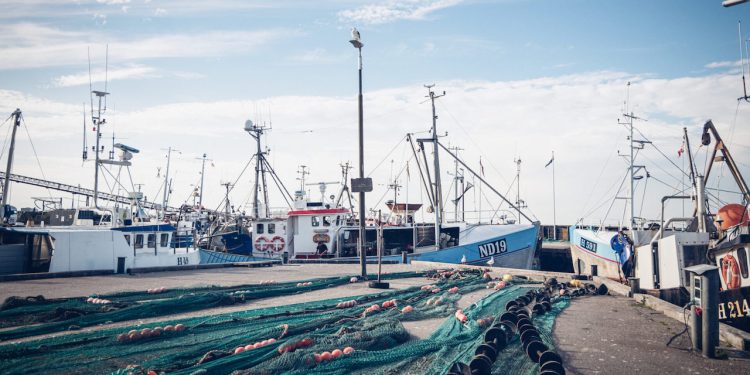
Sections of the agreement are cause for significant concern. The decision to ban all trawling in the entire Belt area and in large parts of the Kattegat will have a severe impact on coastal fishing from the smaller fishing ports such as Bagenkop, Grenå, Bønnerup, Østerby on the island of Læsø, and Gilleleje.
‘Regardless of opinions on trawl fishing, it’s the backbone of Danish fisheries. When a political decision is taken to ban fishing with demersal trawl gear, it has major local consequences. This agreement eliminates fishing opportunities from Bønnerup and Grenå – and fishing on Læsø and from Gilleleje are under pressure,’ Svend-Erik Andersen said.
‘Fortunately, the government has fought for funds to be allocated to help the fishermen who will have the rug pulled out from under them by this agreement.
He commented that the government has succeeded in mitigating consequences for Læsø – but there are still fishermen who end up losing out, and the those who are hit hardest must have the opportunity to leave the profession in a proper way.
‘According to the agreement text, the aim is to create a more diverse fishery, but the Danish Fishermen’s Association is concerned that the agreement will, contrary to the intentions, create a less diverse fishery,’ he said.
‘The agreement has a severe impact on bottom fishing in Denmark. I find it difficult to understand the parties that have fought to virtually ban the gentle bottom fishing. These are the same politicians who otherwise only have good things to say about coastal fishing,’ he said, commenting that it is important that there is now clarity about the conditions for Danish fishing – after the industry has gone through Brexit, negotiations on Denmark’s marine plan, the green tax reform and now this fisheries agreement.