


In a letter to the Pelagic Advisory Council (PelAC), responding to the Council expressing its misgivings on the state of mackerel management earlier this year, DG MARE director Charlina Vitcheva has outlined that while the four-party arrangement represents a modest reduction in fishing pressure, it does not address the issue of overfishing in its entirety.
She described it as ‘an example of a missed occasion to efficiently cooperate in the interest of the stock.’
Faced with Norway, Iceland, the Faroe Islands and the UK setting their own mackerel TAC for 2026, the EU earlier this year broke with policy to date, and raised its own quota.
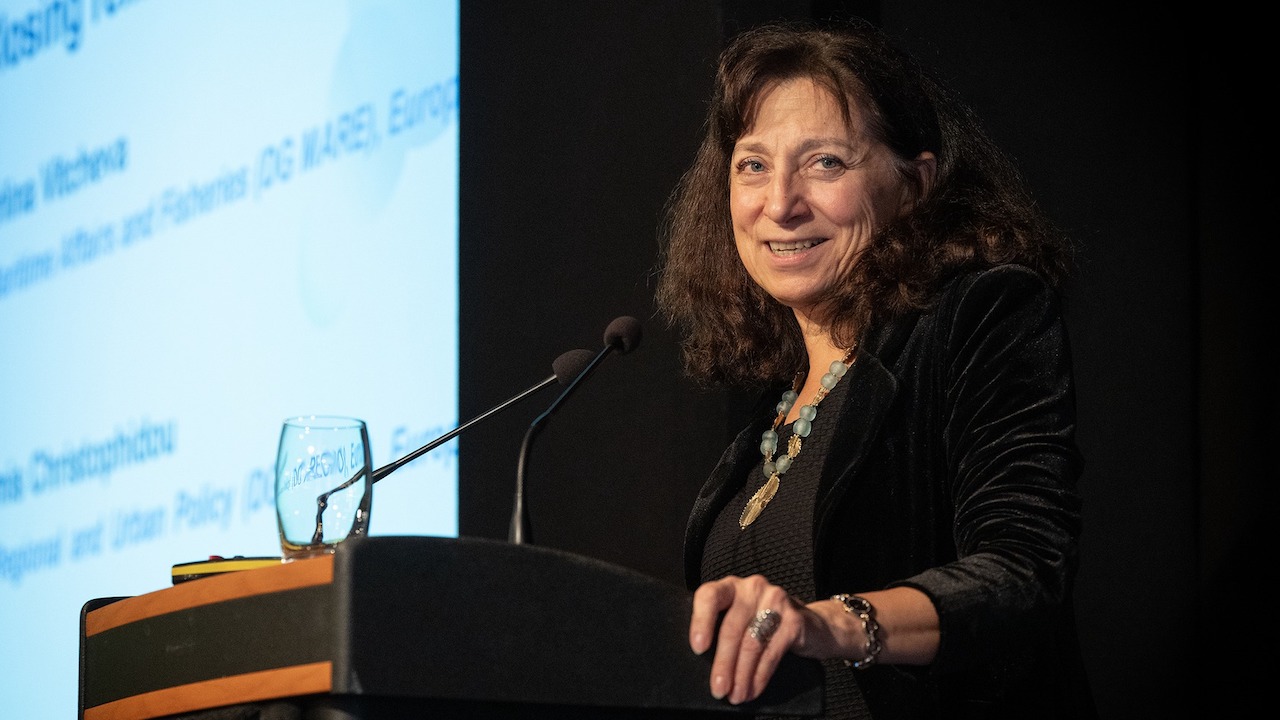
‘Regrettably, despite the Commission’s sustained efforts, in close coordination with the Member States, it has not been possible to reach agreement, neither on a TAC for 2026 nor on a comprehensive sharing arrangement,’ Charlina Vitcheva wrote.
‘This is why the Council has eventually aligned on the TAC level of 299,010 tonnes, which was set by the four mentioned parties, and set the EU quotas for the current year on that basis. This approach has been adopted to ensure a level playing field and to avoid placing EU fishers at a disadvantage compared to other fleets.’
She set out that regarding the sharing arrangement, the Commission, given the EU’s Chair position for the mackerel consultations until end March 2026, acted proactively by convening several rounds of negotiations.
‘While the four-party arrangement has been presented as a stepping stone towards a comprehensive agreement, it appears at this stage that the UK and Norway expect the EU to show flexibility downwards of its historical share. By contrast, in the four-party arrangement Norway and the UK set much higher shares for themselves than they had in 2020,’ she points out.
‘Consultations on mackerel will now continue under the chairship of Norway. In this context, it will be essential for Norway and the UK to recalibrate their increased quotas to ensure adequate scope for the EU within a comprehensive arrangement among all coastal States. The successful outcome of the negotiations will continue to depend and count on the highest political leverage and a package approach to ensure the EU strategic interests are preserved,’ Charlina Vitcheva stated, commenting that for 2026, the coastal States have set quotas amounting to a cumulative level of approximately 108% of the TAC.
It remains a concern that Russia has continued to set an annual quota of 110,000 tonnes. If confirmed in 2026, this would correspond to around 35% of the TAC for this year.
‘Such a scenario raises serious concerns regarding the sustainability of the stock. In response to these developments, the Commission recently tabled an EU proposal for a recommendation in the framework of the North-East Atlantic Fisheries Commission (NEAFC), with a view to limiting unsustainable fishing activities and mitigating the risk of stock collapse,’ she stated.