




The criticism levelled by Iceland’s Marine and Freshwater Research Institute at former Prime Minister (and acting Fisheries Minister) Bjarni Benediktsson is politely pointed, stating that ‘fishing will have a negative effect on the stock’ in reference to his decision to allocate a quota for deep redfish for the 2024-25 quota year.
Without mentioning the now former Minister by name, the Institute points out that just months before his decision in November last year, his predecessor in the role had followed scientific advice in allocating a zero quota for deep redfish.
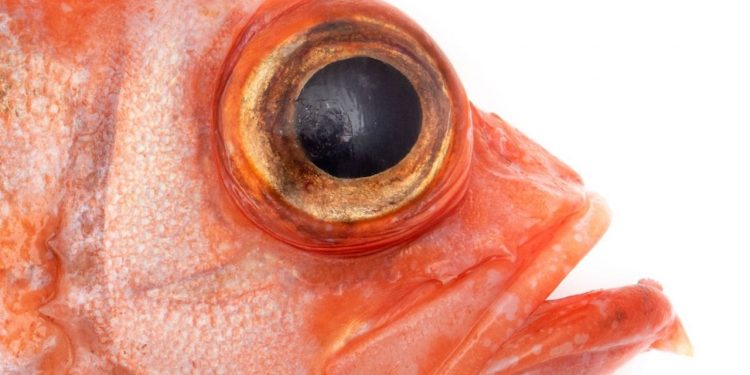
‘The deep redfish stock in Iceland is considered to be below the Limit reference point for spawning stock biomass (Blim) and it is fifteen years since there was indication of reasonable recruitment of the deep redfish stock,’ the Institute states, adding that the stock is below the MSY trigger point.
‘The Institute’s assessments indicate a long-term failure of recruitment which will in future years lead to a further decline in the deep redfish spawning stock. This situation will continue until recruitment improves. All fishing effort will therefore have a negative effect on the stock.’
Recruitment has been as good as zero for the last fifteen years, confirmed by both stock assessment and catch reports.
In November, the Minister reversed his predecessor’s decision to allocate a zero quota, by setting a 3800-tonne quota for 2024-25.
Despite a zero quota in the 2023-24 year, 2259 tonnes of deep redfish were landed, and the Institute states that it is difficult to assess how much of this was due to direct fishing effort and how much was landed as by-catch with other species. 712 tonnes were carried over from the previous quota year and 1280 tonnes became available through an exchange mechanism against other species.
By the time the Minister’s decision had been taken in November, 750 tonnes of deep redfish had been landed in Iceland during the current quota year, and with the added 3800-tonne quota, the expectation is that deep redfish landings this year will be approximately double those of the previous year.