




The Spanish fishing body Cepesca has told European Commissioner for Fisheries and Oceans Costas Kadis that the messages he has been sending since taking office five months ago need to become action to strengthen and support the European fishing fleet.
The industry’s standpoint was made clear by Cepesca president Julio Morón during a meeting held at Spain’s Ministry of Agriculture, Fisheries and Food (MAPA), voicing concern about the gap between his messages and DG Mare’s actions, a discrepancy that ‘is sowing confusion and fuelling fears that, despite the change in discourse, policies that threaten the survival of Europe’s fleets and coastal communities will continue.’
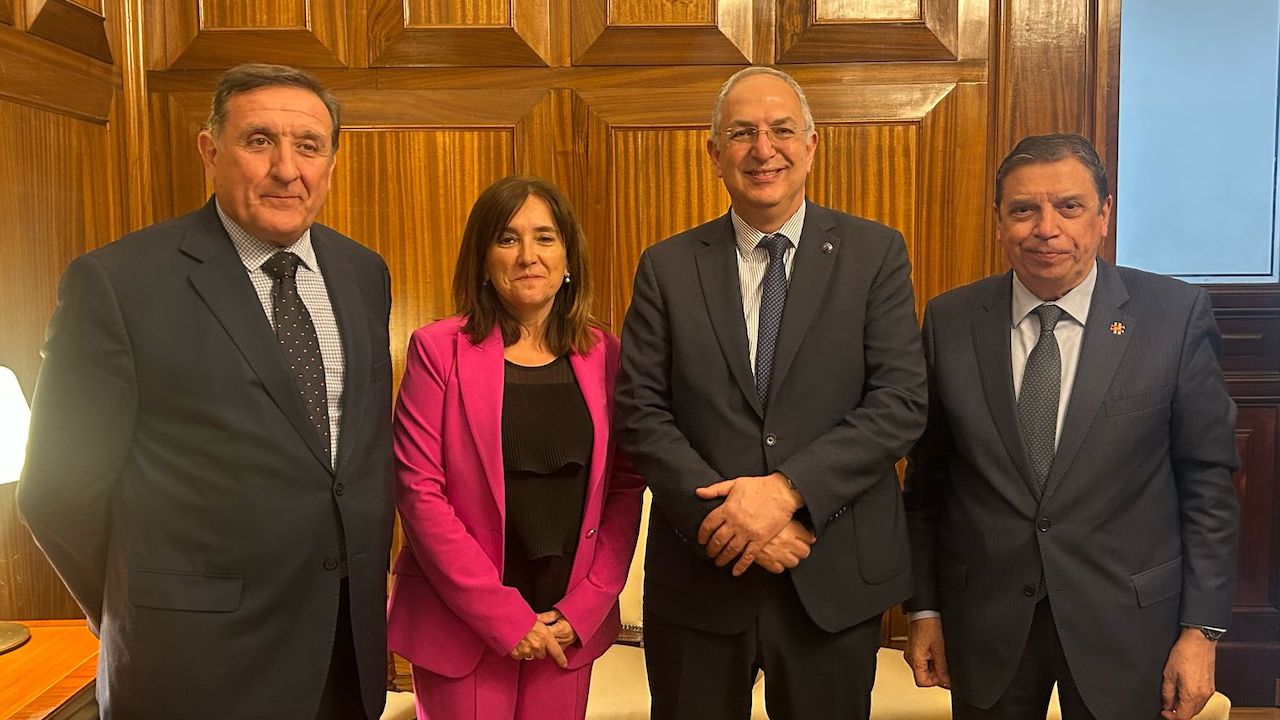
Industry representatives reminded the commissioner of the issues it considers priority to correct the current course, requesting an urgent review of the Mediterranean Regulation to avoid a further reduction in fishing days for the trawl fleet and to allow advantage to be taken of the significant sacrifices made by fishermen in recent years – instead of continuing to severely punish a sector struggling for its economic viability.
Cepesca has also requested an immediate review of the regulation that ordered the closure of 87 areas to bottom fishing gear , a measure adopted without sufficient scientific basis and which has seriously affected bottom fishing methods such as longlining, jeopardising a large part of the European fleet.
Another of the major issues raised during the meeting was the need for a review of the Common Fisheries Policy (CFP) since, although significant progress has been made in the environmental field, such as the recovery of numerous fish stocks under Maximum Sustainable Yield (MSY) parameters, in socio-economic terms, the situation gives cause for concern.
Cepesca also emphasized the need to review the landing obligation , whose practical application is proving unfeasible, as well as the redefinition of fishing capacity to allow for the modernisation of the fleet and its adaptation to the technological and sustainability challenges of the future.
The external dimension of fisheries policy was another highlight of the meeting, as Cepesca expressed its concern about the Directorate-General’s lack of human and technical resources to implement a coherent and effective foreign fisheries policy, particularly in the context of Regional Fisheries Organisations, Sustainable Fisheries Agreements, and International Ocean Governance.
In Cepesca’s view, if the EU means to defend its fisheries interests on the international stage, it must provide its technical services with more resources and capacity.