



As the month-long closure of the Bay of Biscay to a French and Spanish fishing vessels begins, the French fishing industry’s representative body has criticised the move as contributing to the ‘slow death of a sustainable sector’.
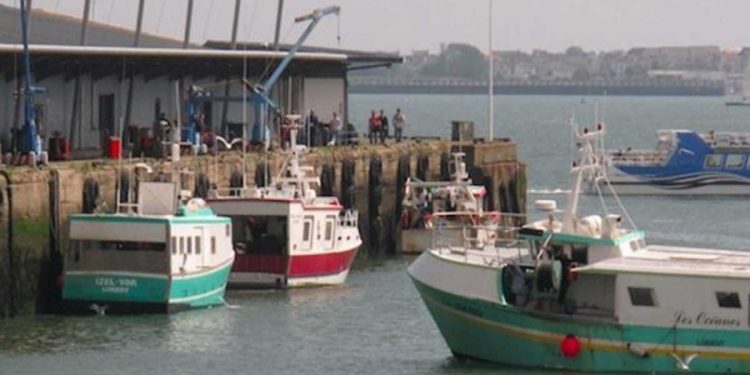
CNPMEM confirmed that the closure represents an ‘immense waste’ as more than three hundred French fishing vessels of over 8 metres in length have to remain tied up until 20th February.
‘Our priority is to achieve the fastest possible lifting of this ban, which is incomprehensible,’ a CMPMEM representative stated, adding that the industry body will also push for compensation to be paid as soon as possible.
According to CNPMEM, the Bay of Biscay closure is part of the slow process of shutting down a sustainable sector, while solutions are sought to address to the problem of by-catches of small cetaceans – even though these are not endangered in the Bay of Biscay.
‘The French fishing industry is one of the most sustainable in the world and fishermen are the first to commit to preserving biodiversity. Since 2017 fishermen and scientists have collaborated on programmes to reduce the risk of accidental captures of small cetaceans,’ CNPMEM’s representative stated, commenting that this closure and the previous closure in 2024 serve to block progress in this work.
‘Fishermen just want to do their job, which is to go to sea to feed people through sustainable fishing. While we are doing everything we can to develop devices that reduce the risk of accidental captures of small cetaceans that are not in danger in the short term in the Bay of Biscay,’ said CNPMEM President Olivier Le Nézet.
‘Right now we are forbidden from practicing our profession, from testing these solutions – and everything is decided in the courts. It is incomprehensible and we are doing everything we can to get the situation back to normal. We are pushing for all the vessels concerned to compensated as well as possible.’
The industry body’s position is that compensation is vital, but this does not prevent the fishing sector from being further weakened.
‘CNPMEM maintains a dialogue with the public authorities to ensure that the 20 million euros in compensation are paid quickly and with the least possible administrative complexity. Although this is essential, compensation is in no way a substitute for the normal functioning of a company and still weakens it. Combined with loss of turnover and loss of market outlets, this jeopardises and entire sector, as entities such as auctions and co-operatives do not receive such support.’