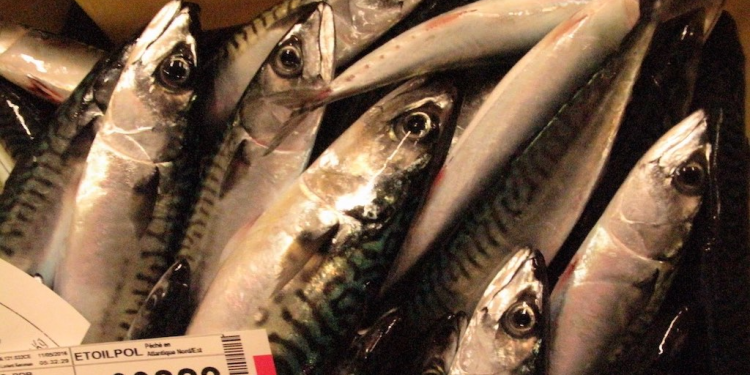



The industry body representing French fishermen, the National Fisheries Committee (CNPMEM), hasn’t held back in its criticism of the lead taken by four North Atlantic Coastal States in deciding on a 2026 mackerel TAC that significantly exceeds scientific advice, and in failing to consult with Greenland and the European Union.
‘French and European fishermen respect scientific advice, while some states disregard it through irresponsible decisions that deplete the resource. These choices pose a real risk to the recovery of mackerel stocks and prolong a critical situation,’ said CNPMEM president Olivier Le Nézet.
‘This injustice is unacceptable. Europe must act firmly to defend the resource, guarantee sustainable management, and preserve the future of the entire industry.’
Norway, the UK, the Faroe Islands and Iceland signed a unilateral agreement on 15th December setting a TAC of 299,010 tonnes, while ICES had recommended a TAC not exceeding 174,357 tonnes.
According to Olivier Le Nézet, the scandal is all the greater because these countries which overfish mackerel are free to continue to export their products to the French and European markets.
‘This is a real double whammy for our fishermen. On the one hand, they respect the rules and scientific advice, on the other hand, they face competition from products derived from unsustainable practices. Allowing seafood from overexploited stocks to enter our markets is tantamount to an insult to French fishermen.’
He commented that excluding the EU weakens international fisheries governance and deprives mackerel management of any long-term coherence. CNPMEM is calling on the European Commission to take clear and firm measures, including, effective sanctions against states that do not respect scientific advice, measures to address the damage caused by years of overfishing and decisions contrary to sustainability, and trade sanctions, potentially including bans or restrictions on imports of products resulting from overfishing into the
‘This mackerel scandal affects not only the fishermen, but the entire industry – fishing ports, fish wholesalers, processors, salters and smokers, and canneries. The fishermen are the first link in the chain, and as such, they have a duty to speak out against this major injustice,’ he said.