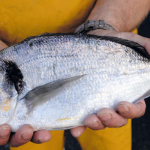
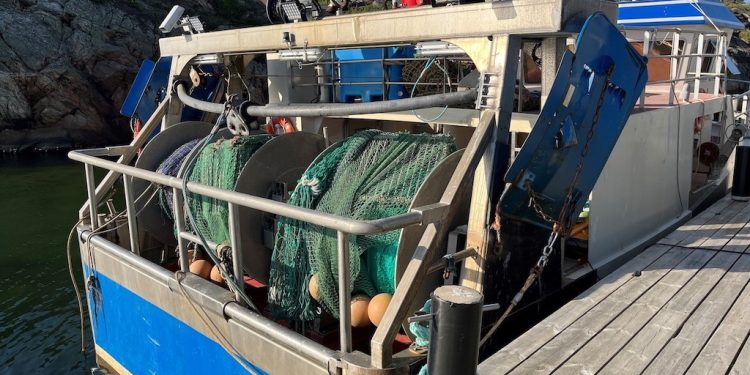





Demersal fishing in waters off the west of Sweden for groundfish, shrimp and langoustine are well regulated, with a stable increase in stocks and positive markets, according to Swedish Fishermen’s PO chairman Peter Ronelöv Olsson, who argues that what is needed is a quota system in line those of other EU Member States.
‘This is a prerequisite for functioning administration and control. The Marine and Water Authority has proposed such a system to the government, but the proposal has, according to what we have seen, on grounds we can’t understand, been stopped,’ he said.

‘On the east coast, on the other hand, the situation looks completely different. Cod fishing was stopped in 2019, and despite all the political chatter about dealing with seal and seabird populations and marine environmental problems, there has not yet been any noticeable improvement.’
He points out the crucial need for politicians to understand that the solutions proposed for Baltic are not suited to the realities of west coast fishing.
‘Conditions on the west coast are fundamentally different from those in the Baltic. On the west coast, there is primarily small-scale coastal fishing of seafood and fish, and the marine food production works well,’ he said, recalling that the Swedish Parliament recently voted to ban bottom trawling in marine protected areas, with limited exceptions.
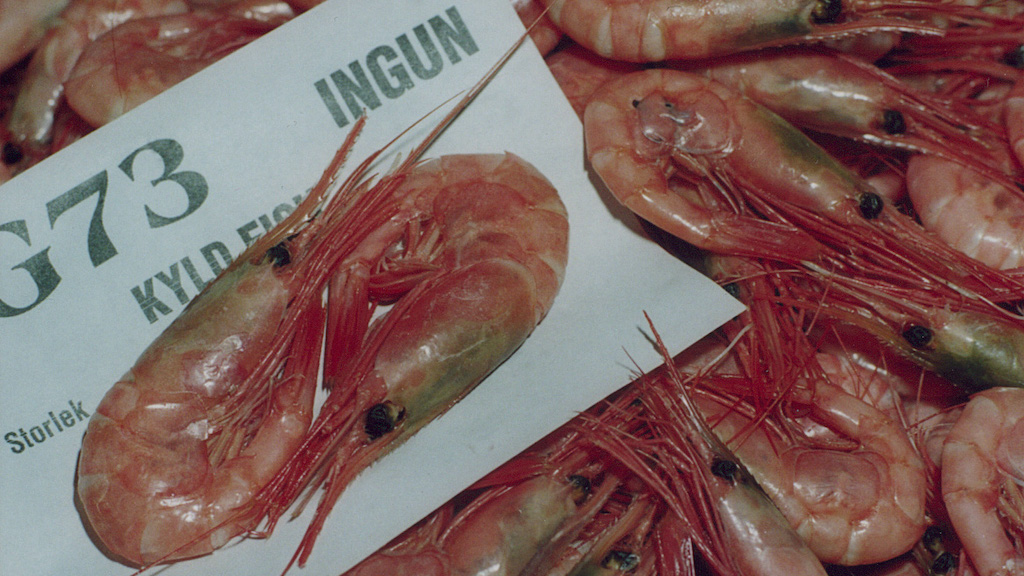
‘For many, including the EU Commissioner of Fisheries, it would have been more reasonable to apply a more nuanced assessment, where bottom trawling would be banned only in those areas where the purpose of protection is threatened by trawling. In other areas, where bottom trawling is sustainably done, fishing should be allowed. Bottom trawling accounts for most of the landings of langoustine, shrimp and whitefish. It is therefore crucial that exemptions are granted for long-term sustainable fishing areas.’
He commented that the instructions handed down to the Marine and Water Authority focus on problems that are specific to the Baltic area, and not on the west coast.
‘It is of utmost importance that the west coast’s small-scale coastal fishing is not restricted further by national decisions that do not consider local conditions. It would be disastrous for long-term sustainable fishing,’ he said, adding that despite widespread recognition for the respect shown to the environment by Swedish fishermen, the sector is repeatedly subjected to criticism from different aspects of the social debate.
‘Politicians apply restrictions and constraints in an attempt to win short-term political points, often without understanding the long-term consequences. Many claimed that cod fishing in the Baltic Sea was the main reason for the cod’s disappearance. The EU Commission and ICES now state clearly that the cod problem in the Baltic Sea is environmental,’ he said.
‘The effects of fishing were overestimated and they underestimated the importance of a prosperous marine environment and a functioning management of seal and seabird populations. There’s plenty of talk about the need for measures to deal with seal and seabird stocks, but what we need is action. Management of these species must be prioritised to protect our fish stocks and marine biodiversity.’
Peter Ronelöv Olsson commented that fishing is a key industry with strong public support.
‘At the same time, there are loud voices that often spread misleading and false information about fishing, which has an impact on the social debate and this influences policy. This leads to decisions that do not benefit either the environment or the sustainable economy,’ he said.
‘The role of fish in Sweden’s food supply is significant, especially in a time of increasing global uncertainty. During World War II, Swedish fishing played a decisive role in providing for the population. If we do not have blue food production in peace, then we certainly do not have it in times of turmoil,’ he said.
‘Politicians must understand that Swedish fishing is a resource, not a burden. It is an important part of our national self-sufficiency. To secure the future of both our marine ecosystems and fishing operations, we need measures that are adapted to local conditions, that prioritise long-term sustainable solutions and that do not threaten the small-scale coastal fisheries.’