



info@fiskerforum.com +45 60 22 09 46

Facebook Instagram Youtube Twitter Envelope
  • Dansk
Logo-FiskerForum
  • News
    • Latest News
    • Newbuildings
    • News Categories
      • News
      • Accidents – Shipwreck
      • Administration
      • Aquaculture
      • Associations
      • Economy
      • Education
      • End User – Food
      • Environment
      • Exhibitions
      • Fish Species
      • Fishing
      • Manufacturers
      • Story
      • Politics
      • Ports
      • Products
      • Regions
      • Research
      • Sponsored
      • Videos
    • News Service
    • News Archive
      • 2026
      • 2025
      • 2024
      • 2023
      • 2022
      • 2021
      • 2020
      • 2019
      • 2018
      • 2017
      • 2016
      • 2015
      • 2014
      • 2013
      • 2012
      • 2011
      • 2010
  • Vessels
    • Vessels
    • Recent Photos
    • Newbuild
    • Newbuild delivered
  • Service
    • Contact
    • Oil Prices
    • Auction Prices
    • Weather
    • News Service
    • Media Information
  • Industry Directory
  • Recent photos
  • News
    • Latest News
    • Newbuildings
    • News Categories
      • News
      • Accidents – Shipwreck
      • Administration
      • Aquaculture
      • Associations
      • Economy
      • Education
      • End User – Food
      • Environment
      • Exhibitions
      • Fish Species
      • Fishing
      • Manufacturers
      • Story
      • Politics
      • Ports
      • Products
      • Regions
      • Research
      • Sponsored
      • Videos
    • News Service
    • News Archive
      • 2026
      • 2025
      • 2024
      • 2023
      • 2022
      • 2021
      • 2020
      • 2019
      • 2018
      • 2017
      • 2016
      • 2015
      • 2014
      • 2013
      • 2012
      • 2011
      • 2010
  • Vessels
    • Vessels
    • Recent Photos
    • Newbuild
    • Newbuild delivered
  • Service
    • Contact
    • Oil Prices
    • Auction Prices
    • Weather
    • News Service
    • Media Information
  • Industry Directory
  • Recent photos

DNA modelling drives seabed sampling evolution

  • October 20, 2024
  • Quentin
  • Dato: 20/10/2024
  • kl. 00:08
  • Kategori: Aquaculture, Research
  • Tags: aquaculture, e-DNA, Research, SAIC
  • Land: Scotland
Hook&Net - Hook and Net is a trade journal for the international commercial fishing industry,
Skal din annonce være her - ring til os !
Polar Expo 2026
Trusted energy partner for the maritime industry

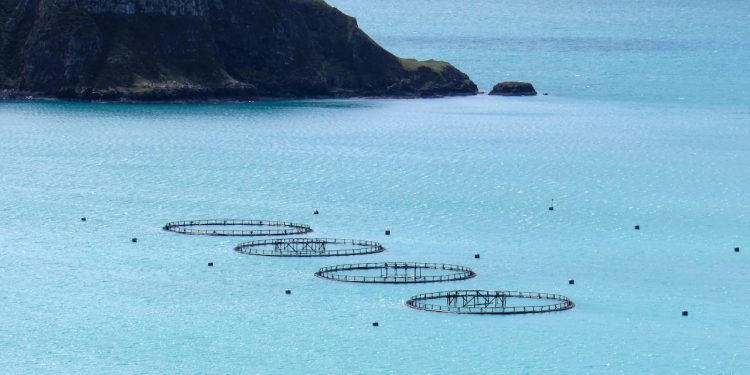
A new environmental-DNA (e-DNA) approach for monitoring the seabed conditions around marine fish farms could significantly speed up the assessment of sediment samples, enabling salmon producers and the Scottish Environment Protection Agency (SEPA) to gather timely, accurate information to demonstrate environmental impact and recovery.

Marine benthic invertebrates are essential for maintaining the natural ecosystem, helping to process biomass and protect the health of farmed and wild fish. These sediment-dwelling animals can also act as bioindicators of the effects of human activity on seabed health. Because of this, they are monitored by SEPA and operators of marine fish farms to ensure that farms are operating sustainably.
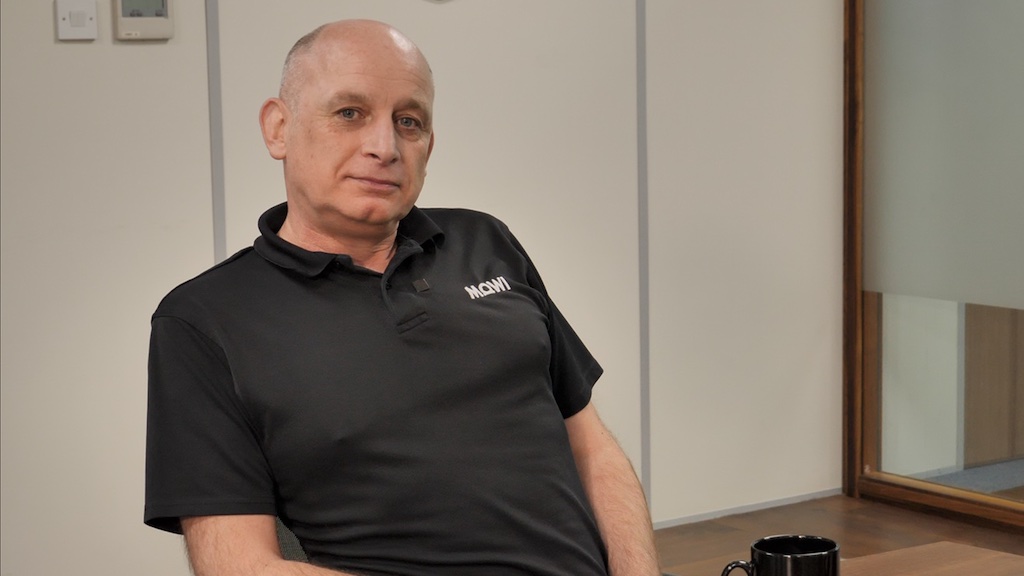
‘Demonstrating good environmental performance at our sites is critical, both for our customers and for compliance reasons,’ said Stephen Macintyre, head of environment at Mowi Scotland

Previously, benthic monitoring relied on scientists painstakingly picking out all the invertebrate animals from samples of seabed sediments and then identifying each animal with the aid of microscopes. However, the process can take up to three days for a single sample and estimates suggest that it is costing the aquaculture sector up to £1 million per year.

An alternative, faster and more cost-effective process is now available, drawing upon DNA techniques first used in human forensics to identify the organisms present in sediment samples. Scientists have used metabarcoding – a technique that cross-references samples against a sequence database to identify different species – to identify thousands of bacterial species simultaneously.

After gathering a sample, the bacteria present in the sediment is first characterised using DNA, with a machine learning model then applied to predict the health of invertebrate community based on the bacteria. The Infaunal Quality Index (IQI) – a well established ecological quality benchmark – is then used to classify the health of the invertebrate community.

Following an extensive six-year project, samples analysed using the new method are now being presented to SEPA for validation, with an open-source toolkit and standard operating procedures also being created for anyone in the sector to use.

‘Demonstrating good environmental performance at our sites is critical, both for our customers and for compliance reasons. At the moment, we sample the seabed followed by sieving and sorting sediment to identify species, but it is a time-consuming, labour-intensive process that hasn’t been updated for 30 years or so,’ said Stephen Macintyre, head of environment at Mowi Scotland.

‘As an alternative, the DNA-based approach will enable us to understand our environmental performance much quicker, almost in real time, and take action where required to improve the environmental picture. Environmental DNA is already widely used elsewhere for nature-based assessments and also has the potential to be applied to assess the wider marine biodiversity that exists around our fish farms. The practical outputs from this project are very promising, and we are now in talks with SEPA about integrating DNA-based compliance assessments into our site monitoring programme.’

Technical components of the research, including DNA sequencing, data analysis and statistics, and the development of a machine-learning algorithm to predict the IQI of samples based on their bacterial characterisation, were independently reviewed by Biostatistics Scotland.

‘This project has been years in the making and it is great to see the results of a long-term collaboration between the sector, academia, and regulators having the potential to transform a key aspect of aquaculture monitoring. E-DNA sampling could provide widespread benefits to both the aquaculture sector and its regulators, with potential for this approach to be adopted across the global by seafood producing nations. Armed with data, producers can be better informed to make decisions around key environmental and fish health factors influenced by the seabed,’ said Sarah Riddle, director of innovation and engagement at SAIC.

‘The MeioMetBar Project has been an important and successful collaboration,’ commented SEPA’s head of ecology Peter Pollard.

‘It is truly the beginning of a step change in our ability and that of fish farm operators to cost-effectively assess, manage and regulate the effects on seabed life of fish farm discharges and so help protect the health and biodiversity of Scotland’s seas. The research is an example of the rapid innovation now taking place in more efficient and effective ways of monitoring the environment. Work is already underway to expand and enhance the capabilities of the method developed by the project, with the next-generation method expected to be available in 2025.’

​The research was supported by the Sustainable Aquaculture Innovation Centre (SAIC), Institute of Biodiversity and Freshwater Conservation at UHI Inverness, Mowi (Scotland), SEPA, University of Kaiserslautern in Germany, Scottish Sea Farms, Salmon Scotland and lead research partner, the Scottish Association for Marine Science (SAMS).


 

Besøg os på
Seneste Nybygninger

Crabber ready for handover

Latest Altaire joins Shetland fleet

Macduff delivers Fraserburgh twin-rigger

New Cleopatra 36 for Lofoten fisherman

PrevForrige nyhedCalling time on coastal states’ collaboration
Næste nyhedTwelfth fish carrier order placedNext

Setting a course for modernising fisheries training across Europe

Compliance operation finds that fishermen follow the rules

Latest supertrawler hits the water at St Petersburg yard

New faces for EFFOP roles

ANNONCER

Thyborøn Havn er en spydspids på vestkysten.  Foto: Thyborøn Havn er en vækstmotor for det lokale erhvervsliv - Thyborøn Havn
Hook&Net - Hook and Net is a trade journal for the international commercial fishing industry,

ADS

Contact info

  • +45 60 22 09 46
  • info@fiskerforum.com
  • Otto Pedersvej 1
    6960 Hvide Sande
    Denmark

News

  • Latest News
  • Newbuildings
  • News Service
  • Know anything?
  • News in Danish

Service

  • Vessels
  • Classifieds (coming)
  • Jobs (coming)
  • Oil Prices
  • Auction Prices
  • Media Information

News Archive

  • 2019
  • 2018
  • 2017
  • 2016
  • 2015

News Service

Facebook-f Twitter Youtube
Logo-FiskerForum

All pictures, texts and data on FiskerForum are protected by Danish copyright law. All rights belong or are handled by FiskerForum.com on behalf of the associated photographers. It is not allowed to copy or use texts, data or pictures from FiskerForum without permission. © 2004 - 2019

Made with love by ApolloMedia

Terms and conditions Cookie & Privacy Policy

Contact info

  • +45 60 22 09 46
  • info@fiskerforum.com
  • Otto Pedersvej 1
    6960 Hvide Sande
    Denmark

News

  • Latest News
  • Newbuildings
  • News Service
  • Know anything?
  • News in Danish

Service

  • Vessels
  • Classifieds (coming)
  • Jobs (coming)
  • Oil Prices
  • Auction Prices
  • Media Information

News Archive

  • 2019
  • 2018
  • 2017
  • 2016
  • 2015

News Service

Facebook-f Twitter Youtube
Logo-FiskerForum

All pictures, texts and data on FiskerForum are protected by Danish copyright law. All rights belong or are handled by FiskerForum.com on behalf of the associated photographers. It is not allowed to copy or use texts, data or pictures from FiskerForum without permission. © 2004 - 2019

Made with love by ApolloMedia

Terms and conditions Cookie & Privacy Policy