
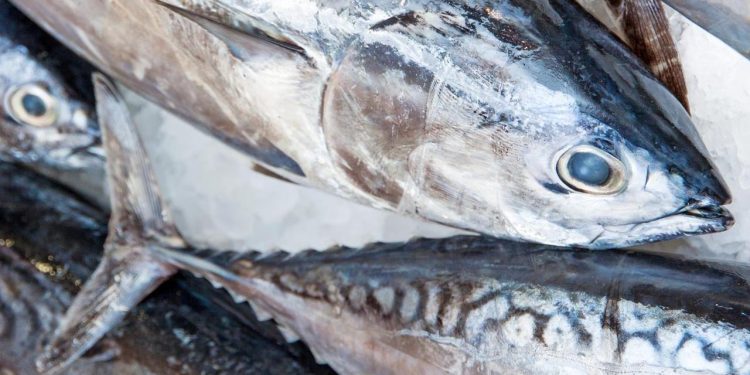





A gathering of fisheries managers, scientists, industry and civil society representatives over three days in Rome to develop a blueprint for implementation of an ecosystem approach by RFMOs with a mandate of promoting responsible tuna fisheries.
‘Integrating ecosystem considerations into fisheries management is at the heart of FAO’s Blue Transformation strategy,’ said Manuel Barange, FAO Assistant Director-General and Director of the Fisheries and Aquaculture Division.
‘This gathering is a milestone in collective effort to continue advancing ecosystem-based management in tuna fisheries.’
This FAO workshop hosted by the Commons Oceans Tuna Project with support of its partner International Seafood Sustainability Foundation brought together around 30 tuna fisheries managers and scientists, as well as industry and civil society representatives to discuss key challenges – how to make sure that ecosystem considerations inform decision-making? What is the impact of climate change, or the economic and social consequences of conservation and management measures?
‘Ecosystems support our fisheries,’ said Keith Sainsbury, a lead expert in marine ecosystems.
‘If we don’t have a healthy ecosystem, fisheries won’t be sustainable, and our children won’t have the same opportunities to enjoy the ocean as we have.’
He commented that bringing ecosystem considerations into tuna fisheries management is important for several reasons. Tuna fishing is a major industry. It is essential to understand and mitigate, if necessary, any impacts on the environment – reducing by-catch is one of the issues that has attracted attention.
In turn, changes in the ocean have impacts on tuna fisheries. Climate change-related increases in water temperatures are changing the behaviour of highly migratory species – of which tuna is one – and the consequences are of growing concern of stakeholders, including the tuna RFMOs.
Concerns over the health of the oceans and the sustainability of fisheries date back to the 1960s and 1970s, Keith Sainsbury explained. As a result, guidelines for an Ecosystem Approach to Fisheries Management (EAFM) were developed and agreed by members of FAO.
Building on progress made in previous meetings held in 2016 and 2019, the workshop looked at the drivers, challenges and benefits of an ecosystem approach to identify key elements for inclusion in planning, including actions currently being implemented, and to consider approaches to guiding future implementation in tuna-RFMOs.
‘This meeting offered a unique opportunity to exchange knowledge with experts from the world’s tuna-RFMOs,’ said Hilario Murua, Senior Scientist with ISSF, which has been instrumental in promoting the ecosystem approach.
‘Exploring progress and challenges together allows us to identify the next steps for operationalising the implementation of EAFM across global tuna fisheries.’