



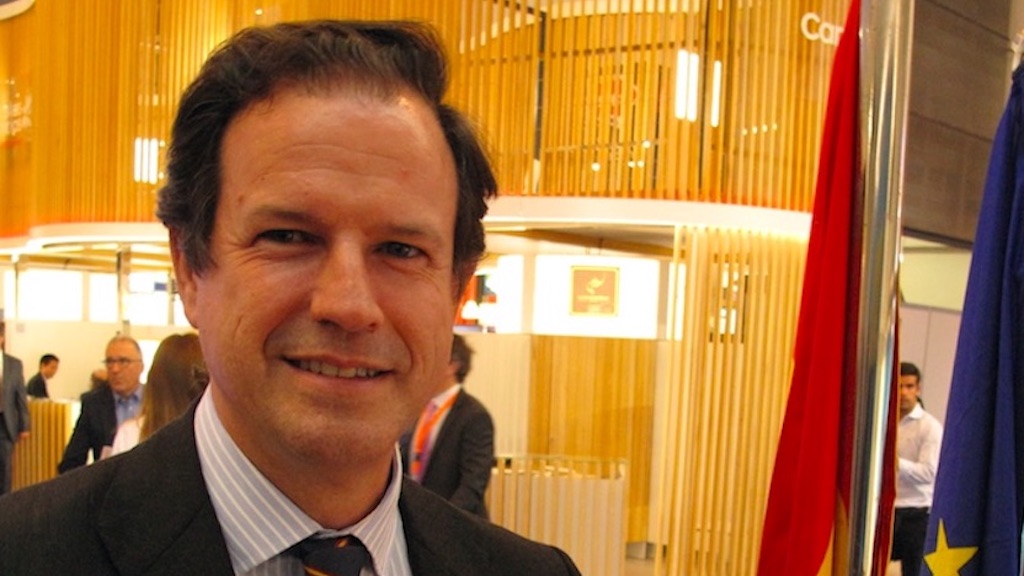
‘This is not what we were promised,’ said Europêche president Javier Garat, commenting on the European Commission’s proposals for the EU budget covering the period 2028 to 2034 – which come with disheartening news for the fisheries sector as this aims to merge EMFAF with a broader set of programmes.
Under the Commissions’ plans, various funding instruments under national and regional partnerships to support investment and reform would be consolidated, and the European Economic, Territorial, Social, Rural and Maritime Sustainable Prosperity and Security Fund would merge the European Maritime, Fisheries and Aquaculture Fund (EMFAF) with several other programmes, including those related to agriculture, cohesion and regional development.
Industry body Europêche sees this as disregarding the strategic importance of fisheries, which are disturbingly not even mentioned in the title of the new fund.
‘This clearly sends a disheartening signal to the European fishing sector and the coastal communities that depend on it,’ Europêche states.
The Multiannual Financial Framework (MFF) is the EU’s long-term budget, spanning a seven-year period. It is not just a financial tool but a political roadmap reflecting the EU’s strategic priorities and how it intends to address common challenges. The current MFF, covering 2021 to 2027, has already been revised twice – most recently resulting in a €105 million cut to the European Maritime, Fisheries and Aquaculture Fund (EMFAF).
While the Commission claims this new framework will enhance coherence, simplify procedures and increase flexibility, Europêche warns of a ‘double absorption’ of fisheries funding: first, through its merger with broader EU funds, and second, by aligning EMFAF resources with the objectives of the Ocean Pact—further diluting its capacity to address the specific needs of the fisheries sector. For example, the new fund could be used to subsidise a wide range of blue economy initiatives—such as offshore and ocean energy, biotechnology, and desalination—which may compete directly with core fisheries priorities for limited financial resources.
‘We expected an ambitious financial envelope that recognises the vital role of the fishing fleet in delivering healthy diets, food security and climate protection,’ Javier Garat said, commenting that the sector emphasises the contradiction between the Commission’s political priorities – such as competitiveness, resilience, and strategic autonomy – and the treatment of the fisheries sector.
‘Instead, we are witnessing a weakening of support for a sector already under severe strain and in steady decline.’
Pressures on the industry include soaring operational costs, global market competition, labour shortages and mounting regulatory constraints.
Europêche is also alarmed by the low ring-fenced allocation of €2 billion for fisheries, especially when compared to the total EMFAF budget of €6.1 billion for 2021–2027 – not least, taking into account the overall EU budget has increased from €1.2 trillion to €2 trillion. Javier Garat points out that the absence of defined co-financing rates for vessels over 12 metres, combined with a general lack of mandatory financial measures to address fisheries challenges, leaves Member States with full discretion over whether and how to allocate funding to the fishing fleet. This places the future of the sector at the mercy of national priorities, risking uneven support across the EU and creating an unlevel playing field that undermines fair competition and cohesion within the single market.
‘Restrictive funding policies directly undermine the EU’s food sovereignty and the development of a modern, competitive fleet. Subsidies should be more effectively targeted at incentivising sustainable production volumes, not feeding bureaucracy or research disconnected from on-the-water realities,’ he said, urging EU policymakers to change course.
‘This is not what we were promised. We will continue to work with the Council and the European Parliament to ensure the unique needs of our industry are recognised, and to secure a reinforced, independent fund dedicated to fisheries.’