



A pioneering project led by the University of Cape Town’s Department of Biological Sciences is developing artificial intelligence (AI) tools to improve onboard monitoring of fish catches in South Africa’s trawl fishery for hake.
This combines AI with video technology, aiming to deliver more accurate and transparent data. This initiative is one of three supported by a £25 000 (approximately R610 000) grant from the Marine Stewardship Council’s Ocean Stewardship Fund. The grant was awarded to the South African Deep-Sea Trawling Industry Association for forward-looking research in sustainable fisheries management.
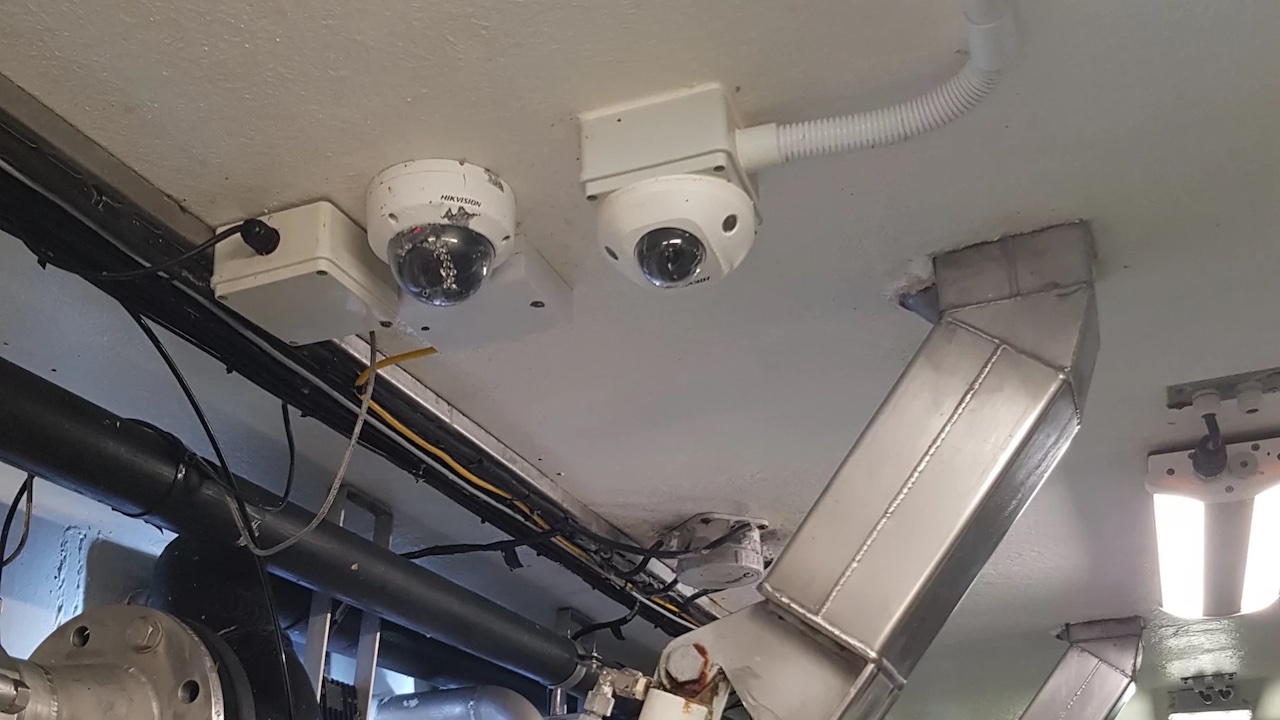
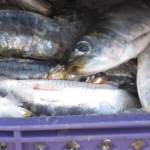
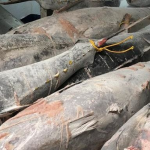
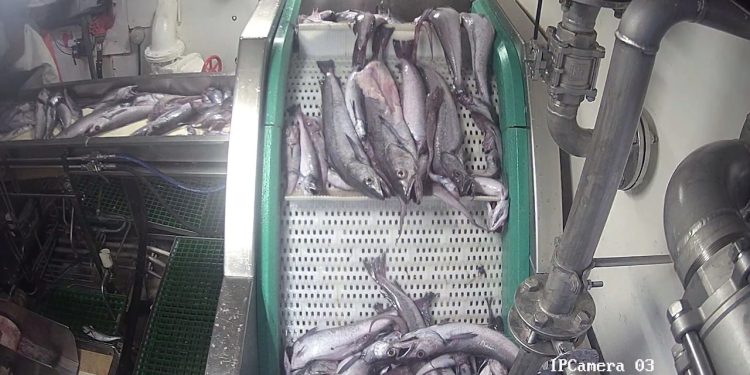
The AI software analyses footage of the catch as it moves over conveyor belts in on board. The software automatically identifies and quantifies catches of hake – the target species – and by-catch species such as kingklip, monk and horse mackerel.
Improving knowledge about bycatch will improve the management of the trawl fishery for hake as a whole, says project lead Colin Attwood, associate professor in the Department of Biological Sciences at the University of Cape Town.
‘First prize will be the improvement in the quality and the volume of the information. We want to know what is being caught. If we know what’s being caught, we can adjust the models and we can make recommendations. The more reliable the information, the better we can act on it,’ he said.
Traditionally, fisheries rely on three main sources of data: fish landed and recorded at harbours, information recorded by onboard observers, and government research surveys. Observers play a key role by sampling catches, identifying and weighing species and recording discards. But observers are human – they cannot monitor around the clock and they are often the sole data collectors on board a fishing vessel, meaning their coverage is limited and subject to bias and fatigue.
So far, the system has been trained on around ten common species, with more to be added. The advantage of AI is its consistency, full coverage and ability to process large volumes of data quickly and objectively. The videos are archived for future review, allowing for transparency and verification.
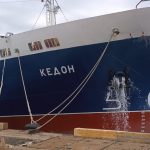
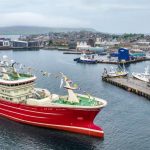
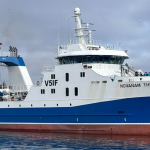
Phase one of the project has focused on factory trawlers that produce fillets and other hake products at sea. The team has recently rolled out cameras to fresher trawlers. The next step is to refine the AI’s reporting functions to produce clear summaries of catch composition.
While AI won’t replace human observers who will still perform critical tasks such as checking gear compliance and observing crew behaviour, it can reduce their workload and improve overall data quality. The long-term goal is to hand over the system to the industry and government regulators with the goal of enhancing fisheries management and sustainability through the provision of more accurate, verifiable data.
‘We want good data. The more reliable the information, the better the models, and the better the decisions. This is about improving the whole system,’ Colin Attwood said.
Although similar projects have been trialled internationally, this is the first of its kind in the South African fishing industry. With growing interest from industry and the scientific community, the project promises to set a new standard for monitoring, accountability and sustainable fishing.