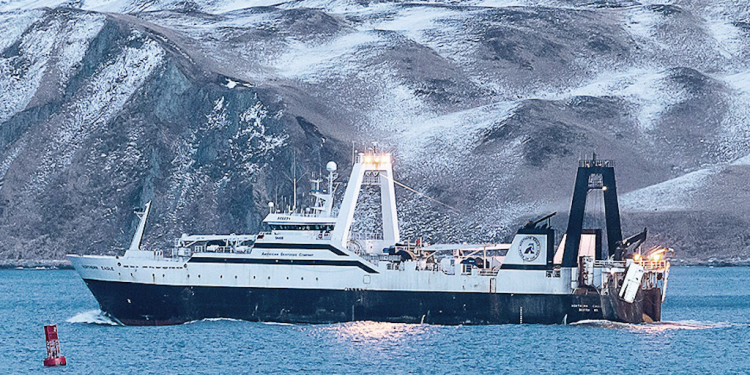




The United States Coast Guard reports the seizure of unreported pollock roe identified on board a factory trawler during a boarding north of Dutch Harbor. The trawler’s owners claim the discrepancy is due to the application of an outdated equation for determining estimated production totals.
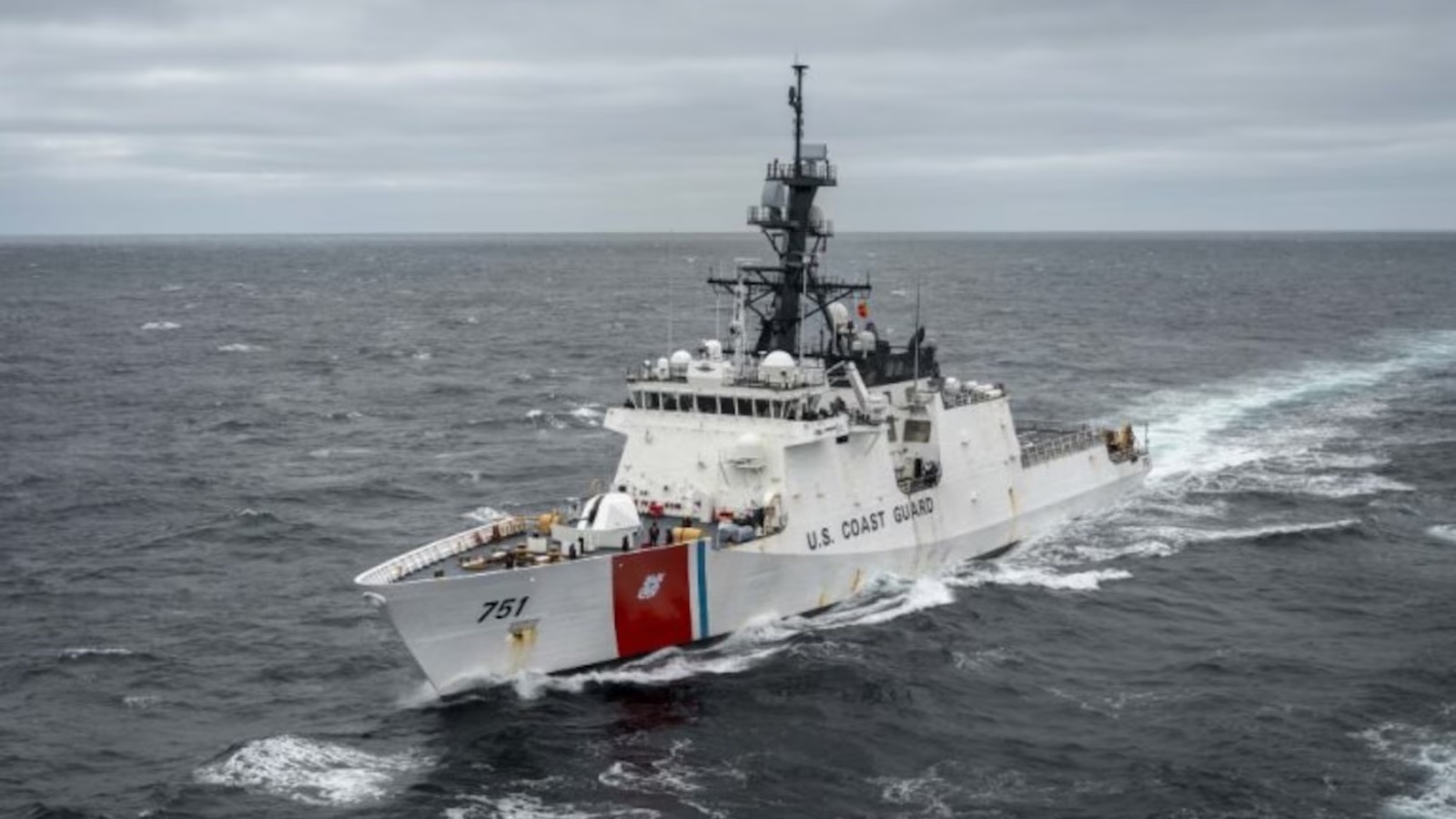
A boarding party from US Coast Guard Cutter Waesche (WMSL 751) seized approximately 5400kg of unreported pollock roe, valued at over $65,000, after uncovering what are described as significant violations of federal fishing regulations aboard the catcher-processor vessel Northern Eagle.
The boarding was initiated based on reasonable suspicion of a significant Living Marine Resources (LMR) violation, following a pre-boarding audit by the National Oceanic and Atmospheric Administration (NOAA) Fisheries Office of Law Enforcement (OLE), which revealed major discrepancies between Northern Eagle’s production reports and electronic logbook.
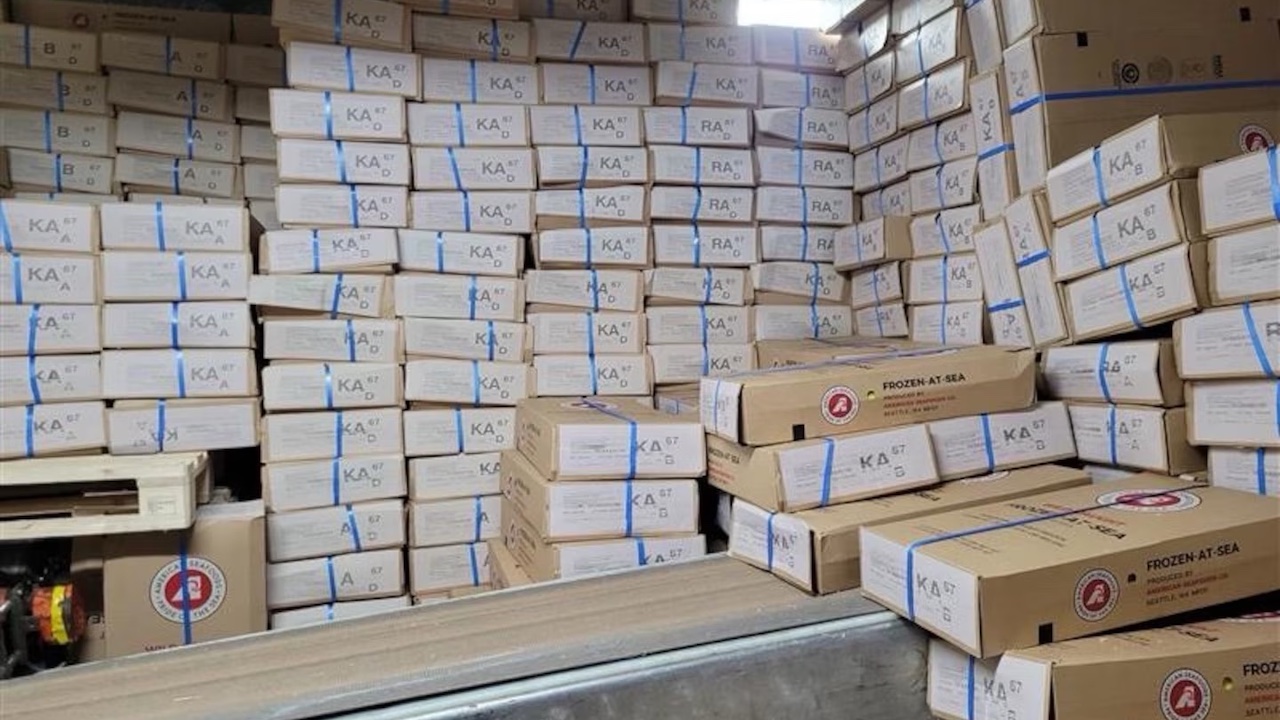
At the request of NOAA Fisheries OLE, Waesche’s boarding team remained with Northern Eagle until it reached Dutch Harbor. They observed the offload and documented 11,524 cartons of pollock roe, which was 241 more than the 11,283 declared in the vessel’s production report.
The investigation also uncovered evidence from a previous trip indicating the underreporting and offload of approximately 12,400kg of pollock roe, valued at an estimated $150,000.
‘As a cooperative enforcement partner, we collaborate closely with the Coast Guard to identify and address suspected and known violations at sea,” said Benjamin Cheeseman, assistant director of NOAA Fisheries Office of Law Enforcement, Alaska Division.
‘The Coast Guard’s support was key to uncovering these violations on the water where they occurred, and our partnership remains essential to protecting our nation from those who break the law.’
American Seafoods states that the seizure of 241 cartons of frozen pollock roe, out of a total of more than 72,000 of product, is based on differences between daily production estimates and final production reports, which have been ‘mischaracterised as a regulatory violation’.
‘We strongly reject any narrative that portrays a discrepancy in daily estimated production as an intentional breach of conservation measures that protect our fishery,’ said Inge Andreassen, President of American Seafoods.
‘There is no economic motive to report anything other than exactly what we produce.’
The company states that everything brought onboard is weighed via National Marine Fisheries Service (NMFS) approved and certified flow scales, tracked through production, and accurately accounted for.
‘The citations in question were based on daily, at-sea production estimates, rather than the final, reconciled production reports that are required by law at offload. Differences between estimated and final reconciled numbers are routine, expected, and a result of different methodologies – not as a result of any misreporting. Federal officers are attempting to criminalise minor discrepancies between these daily production estimates and official offload totals, despite American Seafoods being completely transparent regarding the difference,’ the company states, claiming that OLE is extrapolating actual finished pollock production weight to a Raw Weight Equivalent (RWE) using pollock recovery rates set in regulation over forty years ago.
‘These rates are generally much higher than actual achieved recovery rates,’ American Seafoods states.
‘These product recovery regulations were implemented over four decades ago to regulate foreign vessels and enumerate total catch. They pre-date the comprehensive and sophisticated flow scales used today to track all fish. Using ancient and ideal recovery rates to back-calculate a Raw Weight Equivalent completely ignores the actual catch totals from NMFS certified scales, where total catch is certified daily by federally trained observers.’