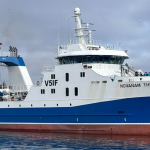



Scientific observer programmes are usually funded and coordinated by the government agencies responsible for fisheries management, as was the case in South Africa from 2002 to 2011 – when government funding for the Offshore Resources Observer Programme was withdrawn. Since then, a parallel industry-funded programme has filled the gap.
The South African Deep-Sea Trawling Industry Association (SADSTIA) has run scientific observation that has proved invaluable to the sustainable management of the country’s trawl fishery for hake. Now in its twentieth year, the SADSTIA-funded observer programme continues to generate a long-term dataset that underpins science-based fisheries management.
Its scope and scale have grown steadily, and it plays a key role in ensuring that the fishery continues to meet the rigorous standards of the Marine Stewardship Council (MSC), which has certified the hake trawl fishery as sustainable and well-managed since 2004.
SADSTIA contracts CapMarine, an independent observer agency responsible for training, deploying and supporting observers at sea. CapMarine maintains a comprehensive database of observer-collected data, which is available to support stock assessments and inform annual decisions about total allowable catch.
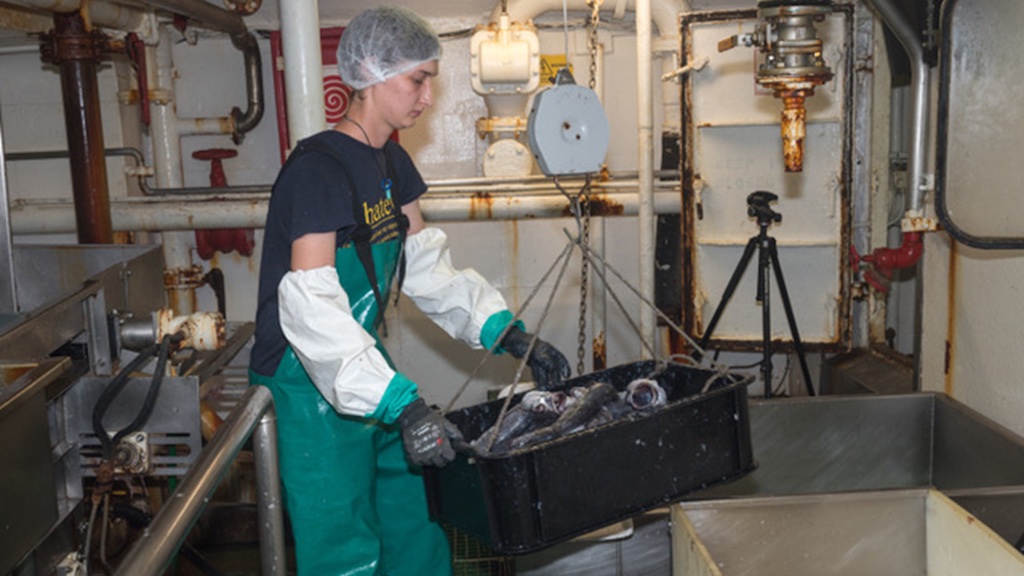
Each year, scientific observers working aboard hake trawlers sample approximately 200 tonnes of fish from the deep-sea trawl fishery and 30 tonnes from the inshore sector.
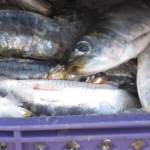
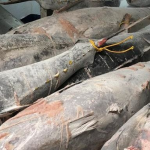
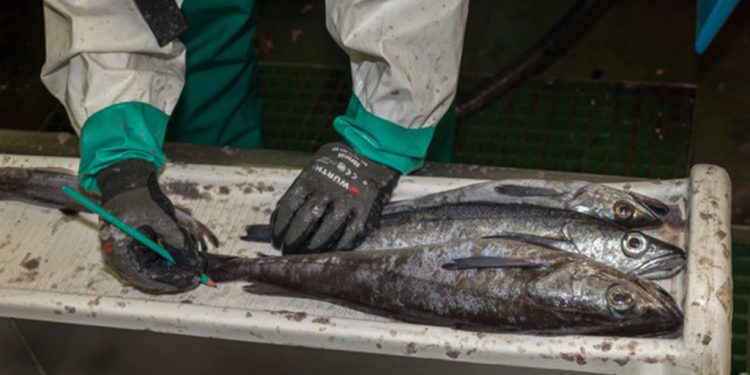
Observers take unsorted samples from each tow, identifying, weighing, and measuring every species in the catch. This information provides fisheries managers with detailed insight into catch composition – exactly which species are caught, and in what quantities.
They also record the number of deep-water and shallow-water hake, a critical input into stock assessment models that help estimate the size and health of both hake species in South African waters.
To assess the fishery’s impact on vulnerable species, observers collect large bycatch samples, which track interactions with endangered, threatened, and protected species –including sharks, skates and rays, seals and seabirds. These data not only support the MSC certification process but also contribute to a broader understanding of the marine ecosystem and support adaptive, science-based management.
On deck, observers conduct seal counts within a 50 metre radius of the vessel and document all large animals caught in the nets. If animals are dead, they are measured, weighed and sexed where possible; if alive, the method and outcome of their release is recorded.
Sampling for indicators of vulnerable marine ecosystems (VMEs) takes place once per day on a randomly selected tow. All invertebrates (excluding cephalopods) are collected, sorted by species, counted, and recorded. VME indicator species – including sponges, sea pens, bryozoans (moss-like animals that resemble plants), hard corals, bottlebrush gorgonians, and hydrozoans – are identified, weighed and preserved for further analysis.
Seabird interactions with trawl warps are also monitored. Observers position themselves at the stern of the vessel to record the number and species of birds interacting with the gear during setting and towing.
In 2024, the deep-sea trawl sector achieved an 11% seaday observer coverage rate, while the inshore fishery reached 10% – a notable achievement given the space limitations on smaller vessels. While carrying an observer may displace a crew member and affect operations, the value of the data collected is undeniable.