




European fishing industry bidy Europêche warns that an EU-Thailand free trade agreement that fails to exclude tuna products could seriously undermine the competitiveness of the European tuna sector as a whole.
A new round of discussions is about to begin as the European Union discusses free trade access with Thailand, which produced close to 450,000 tonnes of canned tuna annually, accounts for 22% of global production of canned and preserved tuna. Even with a 24% tariff on tuna loins and canned tuna, Europe has imported almost 40,000 tonnes of seafood products annually in recent years.
A key driver for Thailand as talks reopen is the Trump tariffs imposed on Thailand by the US government – which is likely to boost Thailand’s interest in achieving free access to the European market.
‘Tuna loins and cans processed in Thailand from low-standard Asian fisheries pose a direct threat to sustainable European fleets, which face higher costs due to their rigorous control, social, and environmental standards,’ said Xavier Leduc, President of Europêche Tuna Group.
‘A Free Trade Agreement with Thailand allowing duty-free tuna products into the EU would only deepen the existing imbalance, further disadvantaging European fleets and undermining fair competition.’
Europêche is calling for tuna products to be excluded from any free trade agreement, pointing out that Thailand’s processing sector imports tuna from countries with opaque practices in terms of sustainability and sanitary compliance (including Taiwan, China, South Korea and Indonesia), and that despite its having ratified International Labour Organisation’s Convention 188, it has failed to implement it and ratify other major international conventions on human rights and work at sea.
According to Europêche, the European Commission’s own 2023 audit flagged up persistent flaws in health and food safety from Thailand, highlighting failures to ensure standards that comply with European requirements.
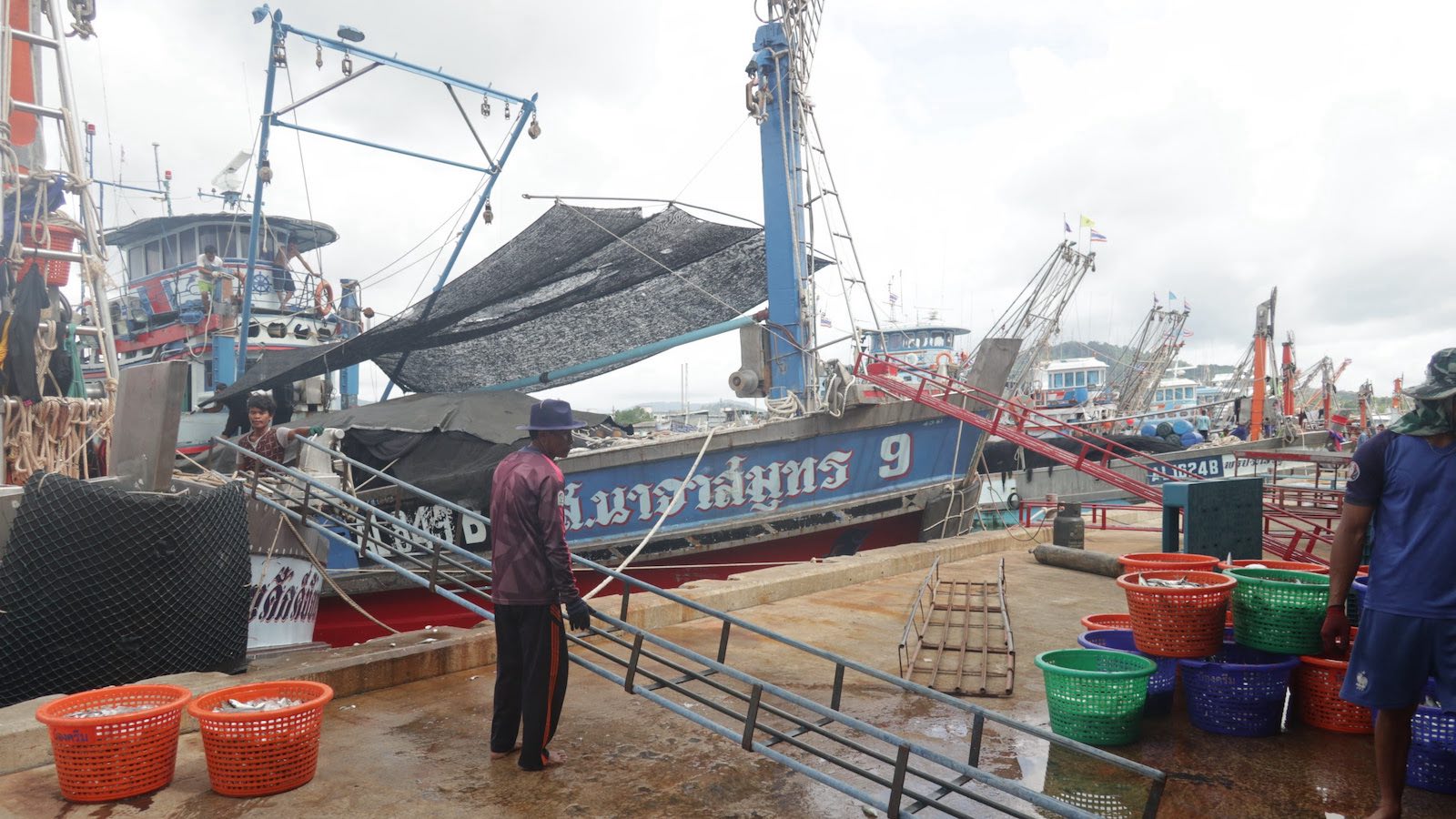
The EU tuna sector supports over 25,000 direct jobs across the EU, particularly in regions highly dependent on fishing – which Europêche claims could be jeopardised by tariff liberalisation to Thai tuna products.
‘In addition, this would undermine the EU supply chains established with West and East African partners under the Economic Partnership Agreements, including Côte d’Ivoire, Seychelles, and Mauritius,’ Europêche states.
In contrast, the European tuna sector works to strict quotas, is subject to round-the-clock VMS monitoring, has 100% observer coverage and applies stringent control, monitoring and control regulation, as well as having environmental and social standards certified by MSC, complying with the ILO C188 requirements verified by the flag state, as well as AENOR (APR) and AFNOR standards.
‘Under current regulations, the EU cannot block low-standard tuna entering EU market,’ said Europêche Tuna Group director Anne-France Mattlet. ‘But it must not let it in duty-free.’
She commented that European fisheries are coming up against the EU’s paradoxes – as while the European Union continues to impose increasingly restrictive regulations on its own companies, it simultaneously allows the import of products that do not meet these same standards.