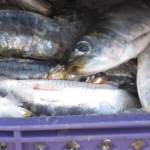






Declining fish stocks in Senegalese waters are resulting in migration to Europe along the world’s most deadly migration route, leading to over 3000 deaths in 2023 alone, according to a report from the Environmental Justice Foundation (EJF), which states that IUU fishing is at the heart of the situation.
As conditions continue to deteriorate and the work people have relied on for generations rapidly disappear, it is expected that more Senegalese people will risk this dangerous journey in search of better opportunities.
‘I get so angry when [foreign nations] complain about immigration because they are the real pirates and what they did is worse than clandestine immigration,’ said Karim Sall, President of AGIRE, a Senegalese organisation active in the Joal-Fadiouth marine protected area.
‘We are risking our life to go, but they come here to steal our fish. It’s theft – plundering our resources to feed their own inhabitants while we suffer.’
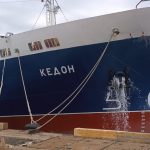
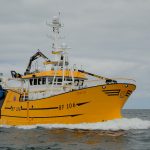
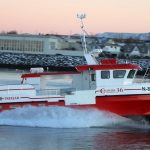
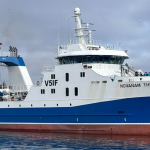
EJF’s research indicates that Senegal’s fishing sector employs approximately 3% of the workforce and is a critical source of protein, contributing 7.9% of the population’s total intake. The situation has been severely worsened by extensive overfishing and illegal fishing by European and Chinese industrial fleets.
These fleets frequently operate under opaque joint venture agreements with catches mostly exported to foreign markets, primarily the European Union and increasingly China.
This has severely affected the livelihoods of coastal communities and contributed to rising poverty, meaning migration has become a necessary coping strategy for many families.
In 2024, the number of migrants entering Spain irregularly reached 63,970, more than double the figure from 2022. A significant proportion reached the Canary Islands, with migrant numbers rising by 200% between 2022 and 2024.
‘This critical sector, which forms the socio-economic backbone of Senegal’s coastal communities, is in crisis,’ said EJF CEO Steve Trent.
‘Small-scale fishers face overwhelming competition from industrial vessels, leading to deteriorating living conditions, diminished food security, and lost livelihoods. The consequences are far-reaching, contributing to a troubling increase in migrant deaths at sea. The European authorities can and must end this now, and return Senegal’s fisheries to the people of Senegal.’
EJF’s report outlines key recommendations to end the crisis in Senegal’s fisheries and reduce the need to migrate. These recommendations are directed to the Senegalese government, the European Union, and industrial fishing entities operating in Senegalese waters, urging stronger governance and transparency to support Senegal’s fisheries and the communities dependent on them.