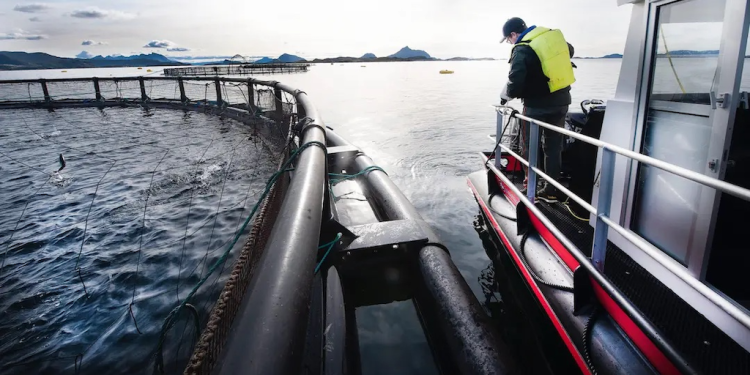




Norwegian producer Selsøyvik Havbruk is using salmon cages made from recycled nylon – something that would have been unthinkable just a few years ago.
Trials have been in progress over an extended period, but this is the first commercially produced and supplied gear made with raw material recycled from fishing and aquaculture nets. Aquaculture is one of the industries that uses high volumes of long-life plastic, along with the construction, automotive and textile industries.
‘Over the last couple of years, many people have talked about the industry needing to work on its reputation. That requires a little extra commitment, and we will do our part to show the responsibility we actually take through various initiatives,’ said Selsøyvik Havbruk’s managing director Martin Kulseng.
‘When choosing gear, it is a priority for us that this should be recycled where possible,’ he added.
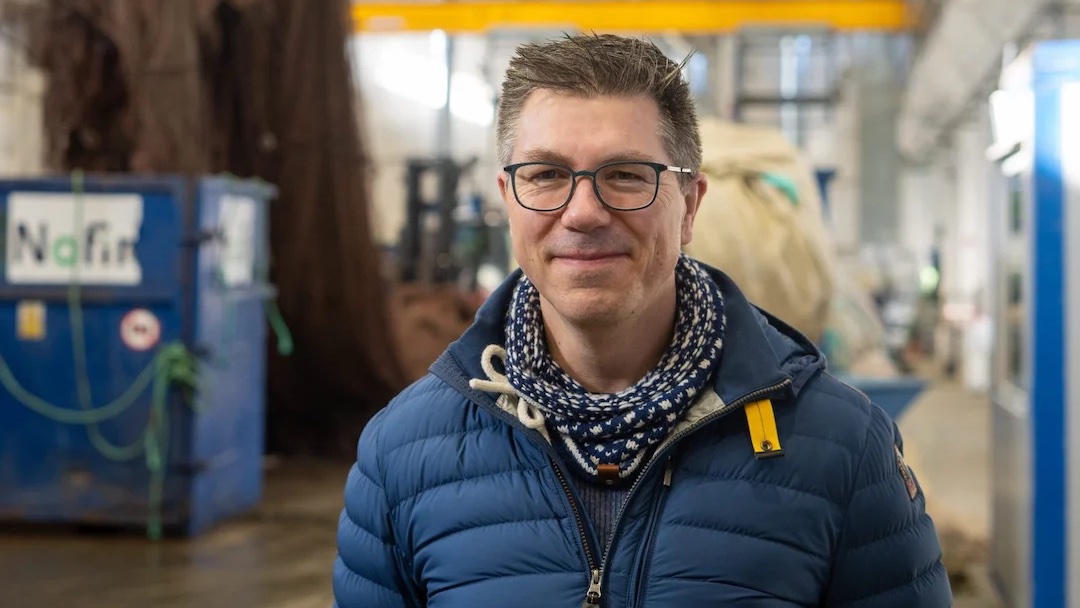
The idea grew during a visit to Aquafil in Slovenia, where a consortium consisting of players from across the aquaculture industry met under the auspices of the Bodø company Nofir. With financial support from the Norwegian Trade and Environmental Fund, the first circular nets were created , and have now become a commercial product.
‘Simply put, most things made from new plastic can also be made from recycled plastic. When brands like Norrøna and BMW already use regenerated ECONYL, so why can’t the aquaculture industry, we thought,’ said Nofir CEO Øistein Aleksandersen.
Preliminary calculations show that regenerated plastic reduces greenhouse gas emissions by around 90% compared to virgin nylon. For a net like this, the project estimates a saving of around 14,100 kg of CO₂ equivalent, equivalent to the emissions of a standard European car driving 95,000 kilometres.
‘A few years ago it was unthinkable to make new nets from old ones, now it has become a reality,’ he said.
‘This is the type of project we depend on to get off the ground and towards an even more sustainable aquaculture industry. Clearly, collaboration is the key. Because we work well from start to finish, we are able to create a closed loop for, among other things, nets from start to finish. This is big, and hopefully it’s something other industries can learn from.’