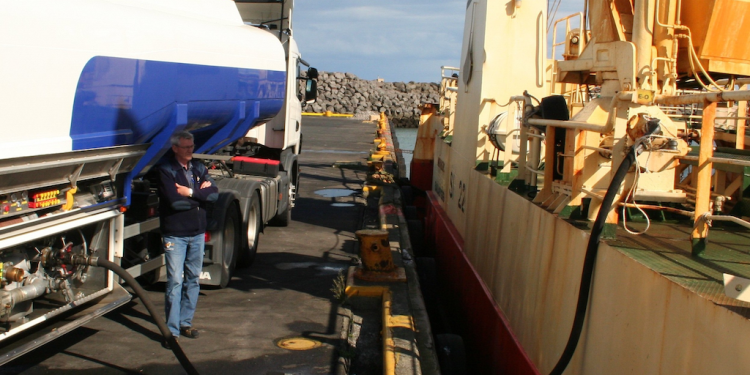





Europêche has called on the European Commission to adopt urgent measures to address the sharp rise in fuel prices that is placing severe pressure on fishing companies across the European Union.
Representating the European fishing industry, Europêche has written to Commissioner for Fisheries and Oceans Costas Kadis, warning that many fleet segments are approaching a critical economic situation as soaring fuel prices dramatically increase operating costs. In some cases, vessels are already operating at a loss, with fuel costs exceeding revenues.
The current geopolitical context, including instability in the Middle East and the resulting rise in global oil prices, is further exacerbating the situation for the fishing sector, in which fuel represents one of the largest operational expenses. Continued price increases threaten the viability of fishing operations and could ultimately lead to higher seafood prices for European consumers.
‘The situation is becoming unsustainable for many fishing operators,’ said Europêche President Javier Garat.
‘If fuel prices remain at current levels, many vessels will be forced to stop operating. This would not only affect the livelihoods of fishermen and coastal communities but could also disrupt the supply of seafood to European markets.’
To address the crisis, Europêche is urging the European Commission to consider the rapid activation of emergency support measures similar to those deployed during the 2022 energy crisis. These instruments could help provide immediate relief to fishing operators while avoiding lengthy legislative procedures.
Options are to mobilise crisis support mechanisms under the European Maritime, Fisheries and Aquaculture Fund (EMFAF) to assist fleets affected by exceptional fuel price increases, or to allow temporary and targeted support schemes, including adapting State aid rules where necessary so that Member States can provide urgent assistance to fishing fleets.
It could also be possible to ensure that aid ceilings are calculated per vessel rather than per company, enabling effective support for companies operating multiple vessels, and exceptional market measures under the Common Fisheries Policy to mitigate the economic impact of the crisis can be activated.
Looking beyond the immediate crisis, Europêche wants to see structural solutions to strengthen the long-term resilience of the sector. These could include facilitating access to strategic fuel stocks in EU ports and supporting the transition towards lower-emission fuels such as HVO and FAME biodiesel, while maintaining the sector’s capacity to invest in energy efficiency and fleet modernisation, which can help reduce fuel consumption and dependence on volatile energy markets.
‘The European fishing sector remains fully committed to sustainability, decarbonisation, food security and the resilience of coastal communities,’ Javier Garat said.
‘However, the current surge in fuel prices represents an external shock that requires swift and coordinated action at EU level.’