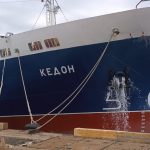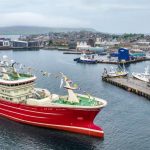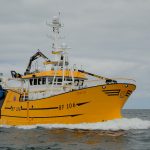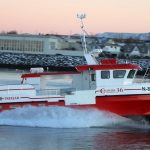
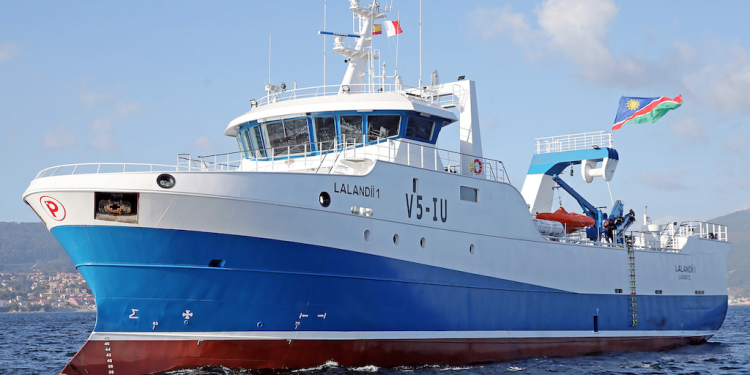



The Namibia hake trawl and longline fishery targeting two species of hake, Merluccius capensis and M. paradoxus, in 2020 became the first fishery in Namibia, and the second in Africa, to meet the MSC standard for a sustainable fishery.
Now the fishery achieved its second MSC certification after an independent assessment led by Control Union (UK) Limited, which examined the hake stocks, and the fishery’s management processes and ecosystem impacts.
‘Since Independence, the government, scientists and industry have worked hand-in-hand to rebuild the hake resource and create a profitable fishing industry that gives back to people and the environment. Achieving MSC certification, first in 2020 and now, has been a team effort and provides assurance to the world that we are committed to the sustainability of Namibian hake,’ said Matti Amukwa, chair of Namibian Hake Association.
The industry has implemented a clear harvest strategy with catch targets set in line with scientific advice. The MSC certified Namibian and South African hake trawl counterparts, targeting the same M. paradoxus stock, are required to collaborate and share information on their stock assessments.
In addition to high rates of observer coverage at sea and effective on-land monitoring and surveillance, a programme to evaluate risks to sensitive habitats has also been implemented.
‘Our hake has gained very much in popularity over the last few years, and I think one of the main reasons is that the resource is certified as sustainable and we can show this with the MSC’s ecolabel on our products,’ said Tristan Przybylski of Seawork Fish Processors.
‘Since the first certification, we have gained access to several new, high-value markets and are known in Europe, and elsewhere, for our quality hake, and good environmental and ethical practices.’
‘What I love about Namibia is the vast space and natural biodiversity. I also love the commitment by everyone to keep it that way, and I see MSC as a great role partner on this journey. Hake, the Cape fur seal and seabirds, all, have a place in our biodiversity,’ commented Kirsten Manasterny of Merlus Group.
Beyond the environmental performance of their fishery, the sector is also committed to explore other ways of ensuring sustainability. In 2024, six certified hake members, in partnership with the scientific community, launched the Namibia Ocean Cluster; a not-for-profit with the aim to maximise the utilisation of the complete harvest, promote innovation, and develop markets for fishery by-products while enhancing socio-economic benefits for the coastal communities dependent on the hake resource.