




Hampiðjan’s DynIce Data net sounder cable continues to gain popularity, increasingly replacing conventional steel sounder cables. More than 470,000 metres of this cable have been supplied to customers around the world.
The company reports that the oldest cable known to be still in operation has now been in use for around 12 years, clearly highlighting its durability compared to steel cables, which typically last only a few years, while the average service life of DynIce Data is 5–6 years.
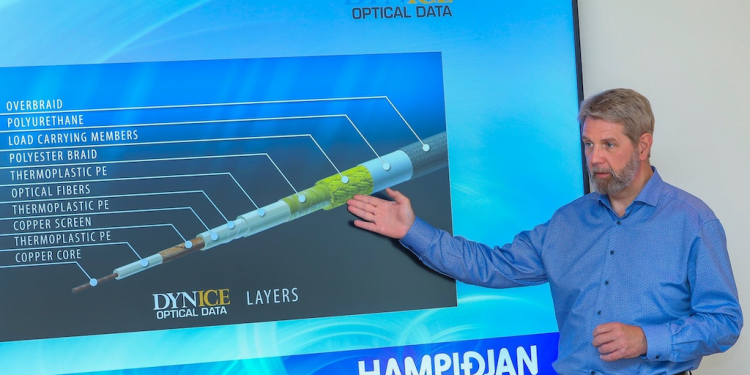
A key factor in this long opertional life is that it contains no components that are susceptible to rust. DynIce Data is constructed with a central copper conductor and a tight copper shield that prevents interference in data transmission. The cable’s strength comes from super-strength fibres braided around the copper core in a unique design.
The cable is significantly lighter than a steel wire of comparable diameter, so it lifts during a tow, contributes to a trawl’s vertical opening. During turns, it skims clear of the trawl doors, eliminating the risk of snagging.
Because its lightweight construction keeps it high in the water, it doesn’t spook fish entering the trawl by presenting an obstacle in the trawl mouth.
‘A further advantage is that there’s also no need for the cable to be shortened regularly as the last few metres suffer connectivity breaks, as is the case with a steel cable. This saves work on deck, and also means that there is no need to invest in a longer cable to take into account the need to cut it back at intervals. This makes the initial investment more cost-effective,’ a Hampiðjan representative commented.
Around a hundred vessels have now replaced their steel sounder cables with DynIce Data, including the majority of the Icelandic pelagic fleet, as well as on vessels from the Faroe Islands, Norway, Denmark, Sweden, Ireland, Scotland, the Shetland Islands, Germany, Argentina, Chile, Morocco, and the United States, where about 30 vessels use the cable—both for pelagic and bottom trawling.
Although DynIce Data comes with an initially higher price tag than steel wire, due to the high cost of materials and the complex manufacturing process, its long service life, its clearer sonar signal, greater trawl opening, clearance from the trawl mouth, and minimal maintenance are more than enough to offset the price difference.