




Iceland’s seafood exports last year were valued at ISK359 billion, which is an increase over the previous year of 4% in ISK, or 8% in foreign currency terms, thanks to a slightly more stable exchange rate in 2025.
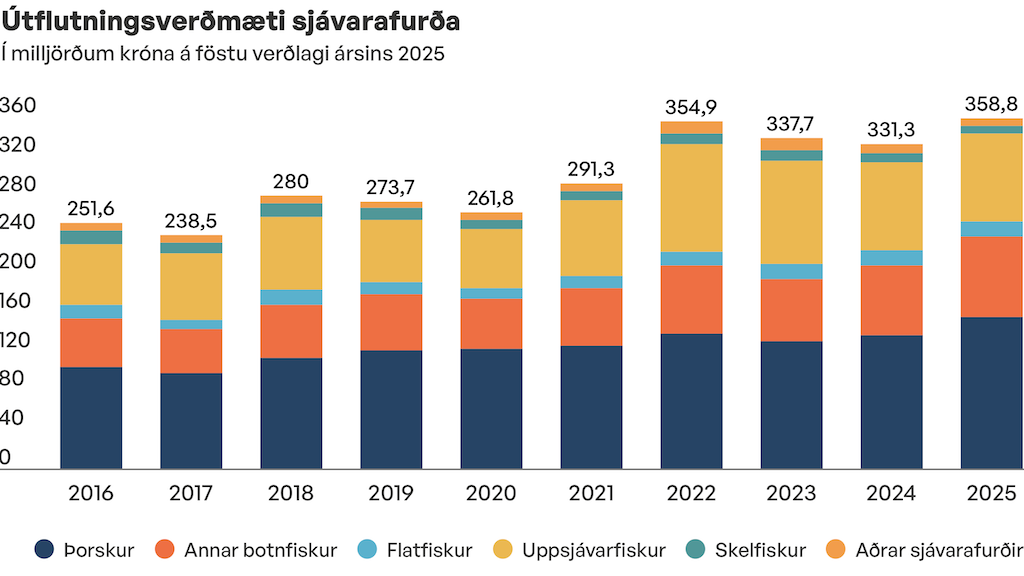
The largest export segment is demersal whitefish and flatfish, worth ISK253 billion last year, and this is up 13%. While volumes of exported cod fell by 2%, there were significant increases in the values of frozen and salted cod products, and in frozen and fresh haddock exports, while exports of haddock were also down by 4% in volume terms.
The increase in prices for groundfish products last year can be attributed to a number of factors, including reduced quotas in the Barents Sea which are reflected in higher values for cod and haddock in particular.
Last year’s exports of pelagic production were valued at ISK89 billion, practically in line with the previous year’s figures, with mackerel showing a substantial increase, alongside an increase in capelin sales last year – with a limited fishery, in contrast to the zero quota year of 2024. Export values of both Atlanto-Scandian herring and blue whiting products fell last year compared to 2024.
The prospect of reduced availability of mackerel following the ICES recommendation of a 70% TAC reduction for 2026 is a contributing factor to higher mackerel values.
Industry association SFS points out that these increases in seafood exports are due, to a great extent, to reduced fishing opportunities – which also make year-round operation and a steady supply of raw material increasingly challenging.