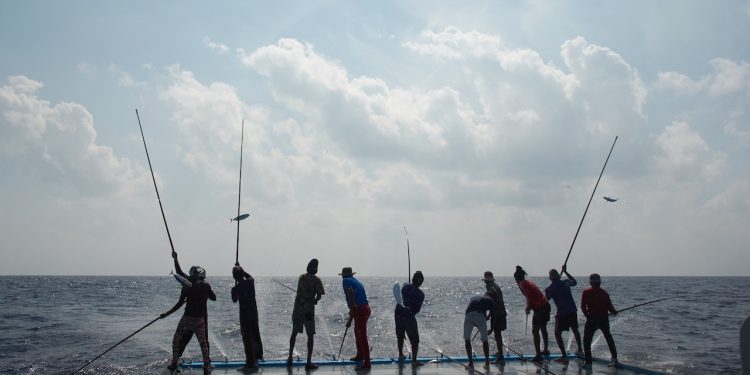




The Global Tuna Alliance (GTA) has spoken up for its Partners, global retailers and brands, in advocating for labour standards in Indian Ocean tuna fisheries with its Lives On The Line: Protect Fishers campaign at the 29th Session of the Indian Ocean Tuna Commission (IOTC) earlier this month.
‘The recent IOTC meeting has shown that regional fisheries management organisations can respond, albeit slowly and somewhat reluctantly, to changes in the world around them,’ commented GTA executive director Daniel Suddaby.
‘But the market has the power to be the catalyst for accelerating that change.’
Although a lengthy development process lies ahead, the Commission recognised market and fishing community expectations and took its first tentative steps toward developing an IOTC labour standard.
‘I am greatly encouraged that the members of the Commission have taken this important first step by tasking the Secretariat with benchmarking existing labour standards across the IOTC area,’ said Dr Wetjens Dimmlich, who represented the GTA Partners at the IOTC meeting.

‘This initiative marks a clear recognition of the need to address crew welfare more systematically. I’m optimistic that this study will lay a strong foundation for the development of a future IOTC measure that ensures decent working conditions for all those who work at sea. GTA Partners now have an important role to play in acknowledging and rewarding those fleets that proactively implement their own measures during the likely extended IOTC development process.’
One of the GTA’s Partners’ goals was for the IOTC to initiate the development of draft standards drawn from international frameworks such as the ILO188 convention as a necessary response to reported widespread human rights abuses in Indian Ocean tuna fisheries.
‘Despite disappointing resistance from some IOTC members, we were pleased that the Commission responded positively to a proposal by the European Union and tasked the Secretariat with benchmarking the current Indian Ocean labour standards,’ a GTA representative stated.
‘It is expected that the results of this study will inform the tasking of a working group by the Commission in 2026.’
The GTA has noted that a number of IOTC members, who are also members of the Western and Central Pacific Fisheries Commission (WCPFC), will be stepping in their own footprints on this journey after adopting minimum crew conditions in 2024.
‘We look to those members to continue to provide the leadership they have demonstrated in the Pacific,’ the GTA states.
Wetjens Dimmlich acknowledges the significance of the benchmarking study, noting that ‘by taking just these first steps and initiating this critical conversation and process, the IOTC has demonstrated its commitment to socially responsible tuna supply chains. This clear indication of intent is important to the GTA Partners, which source tuna from this region.’
Aside from the challenges faced on labour standards, the GTA noted the lack of traction over many years of effort on other critical sustainability issues, with negotiations on skipjack catch limits taking an excessive amount of delegates’ time away from other issues.
‘This highlights the need by the Commission to develop mutually agreed allocation mechanisms for skipjack and other tuna species. It is encouraging to note that a new timeframe through to 2027 to develop these mechanisms was agreed,’ the GTA’s representative commented, adding that uncertainty surrounding the recent yellowfin tuna stock assessment undermined progress on other key yellowfin tuna management issues, with proposals on catch limits being deferred until reviews of the stock assessment data and methods have been completed and updated Scientific Committee advice provided in December.
‘Disappointingly, the development of the yellowfin tuna management procedure (aka harvest strategy) is also delayed, with key processes seemingly stalled until the questions on the assessment are resolved. GTA and Partners continue to demand the adoption of a management procedure for yellowfin as a critical indicator of sustainable management,’ the GTA stated.
‘These persistent issues underscore the need for stronger market pressure and broader industry participation in promoting and rewarding responsible fisheries management.
To assist us and help ensure amplified market pressure, GTA urges tuna supply chain companies and retailers to join the GTA to strengthen our collective voice and drive meaningful change in the management of our oceans’ fisheries.’