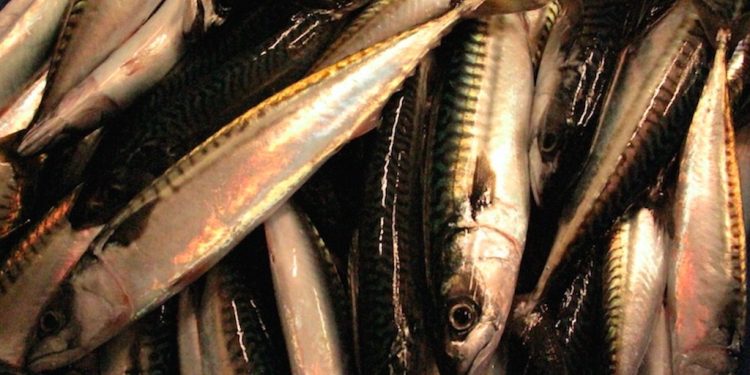




The PFA, representing the Dutch pelagic sector, has criticised the decision by the Goodfish foundation to downgrade the status of mackerel and Atlanto-Scandian herring from orange to red, warning that with this move the Goodfish VISwijzer indicator has deviated from taking scientific advice into account.
A PFA representative commented that management of the mackerel stock in particular is complex, and this has been further complicated by the lack of a distribution key among the concerned coastal states since the last agreements lapsed ater 2018.
According to the PFA, while overfishing is taking place, the mackerel and Atlanto-Scandian herring stocks are not overfished, as both are above a critical stock levels, and mackerel is above the trigger point that would demand stricter management, while Atlanto-Scandian herring catch advice was this year increased by 3%, partly due to a strong multi-year increase in recruitment.
‘If the scientific assessment is followed, the appropriate colour of the sustainability advice is currently orange instead of red. This does not alter the fact that 2025 is the year of truth, now that all the alarm bells have sounded. If overfishing is not stopped, there is a good chance that mackerel will reach the critical lower limit and the scientific advice for 2026 will be very negative,’ the PFA’s representative states, adding that the sector hopes to see Goodfish reverse the application of a red marker to these two stocks.
The management of these stocks remains problematic, not least due to the positions taken by some coastal states, resulting in a complex situation.
‘It is of the utmost importance that the parties reach an agreement, because although the joint catch possibilities are determined annually in line with the scientific advice, Norway and the Faroe Islands in particular subsequently ignore this by unilaterally determining excessive quotas for themselves,’ the PFA states.
‘They claim a larger share based on changing migration patterns, which science claims are insufficiently visible to base conclusions on. The EU is the only party that is still controlling itself and adhering to the former distribution key. The sector asks retailers to act in line with the scientific stock assessments and to recognise the differences in action between the EU and others.
The PFA’s representative cmmented that it would be remarkable if retailers consider adjusting their purchasing policy based on this decision by GoodFish, and in Germany by the World Wildlife Fund – not least because many of them are members of the North Atlantic Pelagic Advocacy group (NAPA).