




Developed in New Zealand and after extensive trials there, a prototype FloMo set of gear has been put through trials in the Irish Sea, and delivering results that look encouraging, not least with a significantly lower retention of undersized whiting.
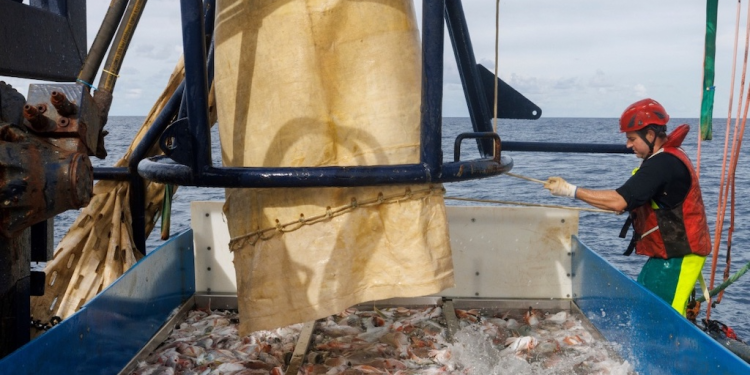
The ten days of trials were overseen by Seafish on a Northern Ireland commercial twin-rigger fishing for nephrops, with the Flomo gear towed alongside a standard set of trawl gear with a 300mm square mesh panel. Initially there was a 59% reduction in the retention of undersized whiting during the first eleven tows – although there were a few handling problems with some tows – while after some adjustments, the second round of eleven tows showed a 74% reduction in retention of sub-MCRS whiting when measured against the control standard rig.
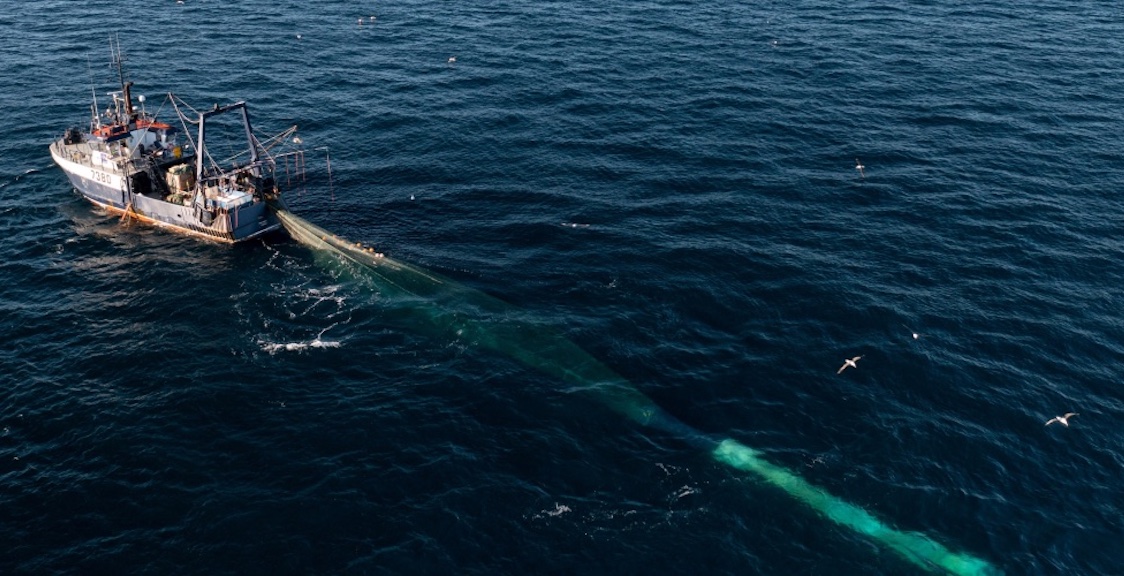
According to the Seafish report, the FloMo gear also retained larger fish when these were present in the catch.
On the downside, the retained volume of smaller grades of nephrops suitable for tailing was significantly lower with the FloMo gear.
‘As typical for any first-of-its-kind gear trial, the results provide valuable learning which could subsequently be used to inform further refinement and optimisation of this gear technology,’ Seafish states.
‘With robust trial data now available, future efforts could be directed towards improving size selectivity to achieve the desired catch rates for smaller nephrops.’
Deploying and retrieving the FloMo gear did not present any major operational difficulties during the trial, as thie vessel had plenty of aft deck space between the net drum and the stern – but most vessels in the Northern Ireland nephrops fleet have less available deck space, which could make handling this gear problematic.
‘Considering the anticipated costs associated with vessel modifications required to accommodate FloMo, alongside the reduced catch value linked to the smaller nephrops observed during the trial, the available evidence does not currently indicate a strong economic incentive for voluntary uptake of this technology by the Northern Irish commercial nephrops fleet,’ Seafish states.
‘Further assessment, including potential vessel modification and gear re-design, would be required to better understand FloMo’s practical and economic viability for the Northern Irish fleet.’
‘We acknowledge that we still have work to do with Nephrops size selectivity for tailed products but we’re confident we will be able to achieve that and deliver less unwanted catch, better selectivity and smarter fishing,’ a Flomo representative commented.
‘That’s a win for fish stocks — and a win for fishers. While retention of ‘whole’ Nephrops was similar across gears, overall catch rates with FloMo were lower than with traditional codends, the results provide a promising starting point, but as is typical for any first-of-its-kind gear trial, with subsequent trials to then refine and optimise the design to achieve the desired outcomes.’