




A first annual social report on fisheries, aquaculture and processing sectors, providing an overview of the social aspects of all three sectors, has been prepared by the Scientific, Technical and Economic Committee for Fisheries (STECF), covers the period from 2017 to 2023. This provides insights into employment, education, and working conditions.
The report identifies several challenges facing the EU fisheries sector, including declining employment, ageing workforce, and limited generational renewal. It also highlights working conditions, social security, as well as education and training opportunities.
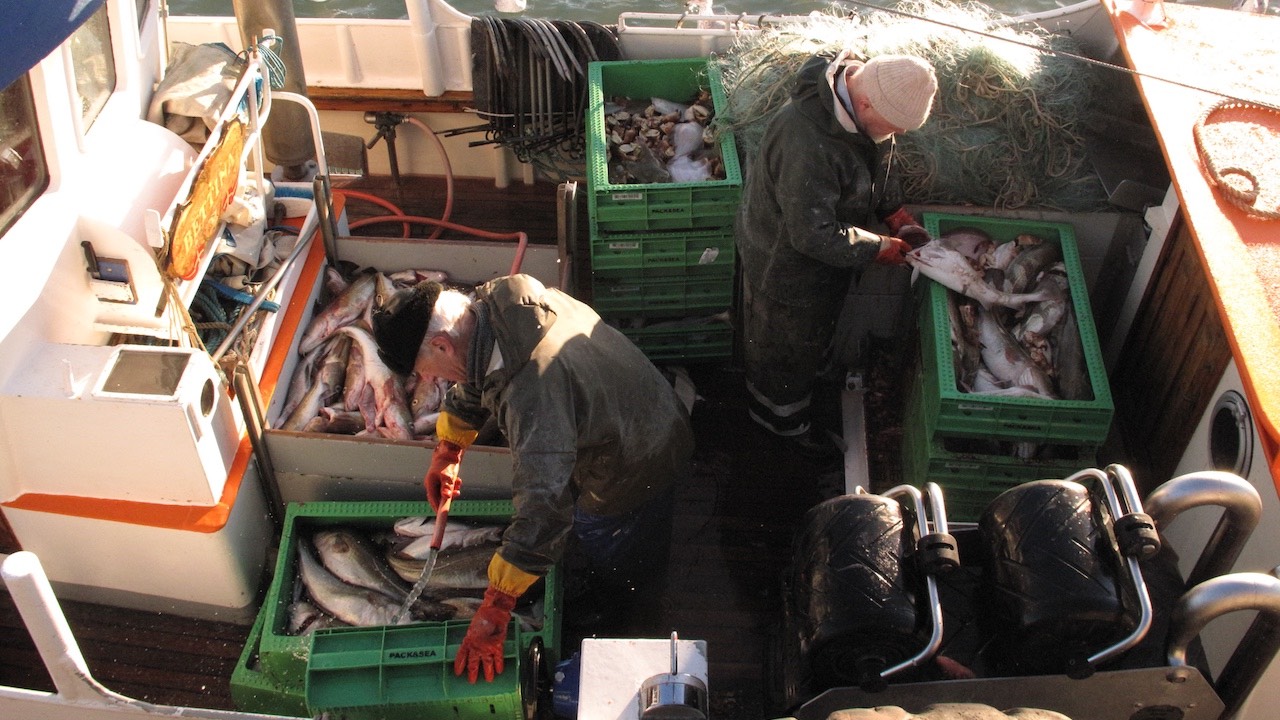
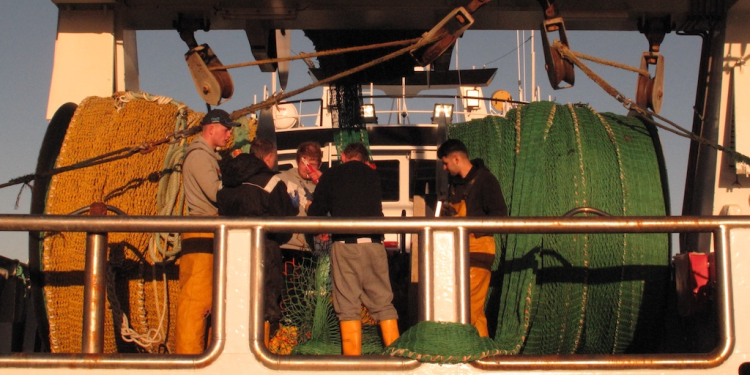
In 2023, the EU fisheries, aquaculture, and processing sectors employed an estimated 298,831 people, with 40% of these jobs found in fisheries. More than half of fishers work on small-scale coastal vessels and the report highlights a decline in employment in fisheries across the EU, with a 15% decrease between 2017 and 2023, with the exceptions of Belgium, Croatia, Cyprus, and Slovenia. Full-time employment dropped by 25%, which suggests an increase in part-time or seasonal work in fisheries.
Employment is concentrated in southern Europe, notably in Greece, Spain, France, Italy, and Portugal.
Across the three sectors, aquaculture employs 23% of the workers (67,962 people). Spain, France, Greece, and Italy together account for 64% of the EU’s total production volume. The EU aquaculture sector is diverse and represents less than 1% of the global production, yet it supplied 23% of EU’s fish and shellfish in 2022.
The fish processing sector accounts for 37% of the jobs. In 2023, 3262 enterprises across the EU employed 110,879 people. Approximately two-thirds of these enterprises are microfirms with fewer than ten employees.
The workforce in fisheries is predominantly male, with women accounting for less than 5% of total employment. Although women are active in small‑scale fisheries, as well as in shellfish and seaweed gathering, their contribution is not fully captured by official statistics.
The age profile of fishers is also a concern, with 50% of workers aged between 40 and 64 in most countries. The report notes a decline in generational renewal, with the proportion of fishers under 40 decreasing from 31% to 26% between 2017 and 2023.
Wages in the sector remain low. The average labour cost per full‑time equivalent in 2023 was €29,447 in fisheries, less than half the EU average of €61,541, and below the national average in 16 of the 22 coastal EU countries.
The report also highlights a rise in safety incidents: recorded accidents involving EU‑flagged vessels increased six‑fold from 106 in 2011, to 663 in 2023 – before stabilising at around 600 per year. Most accidents involve vessels in the 0–12m and 24–45m size classes.
On average, 86% of the fishers are nationals from their country in the EU, a figure that has remained largely stable since 2017. The most notable change at EU level is a 2.2% increase in non-EU/EEA workers, who now represent approximately 10% of the total workforce. Certain countries – Lithuania, Malta, Spain, Belgium, and Germany – and specific fleet segments, particularly the large-scale fleet and distant-water fleet, show higher dependence on non-national workers.