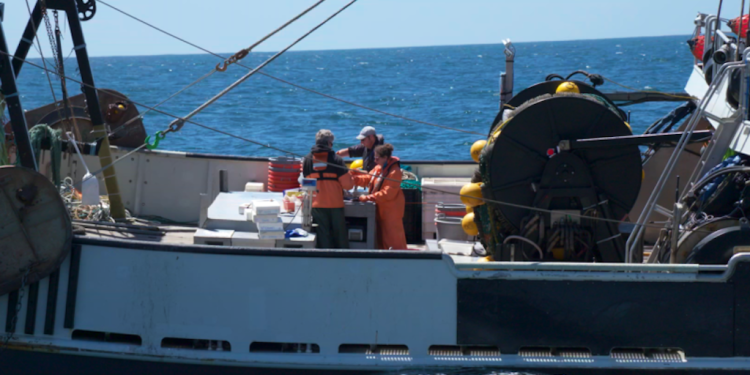





The fleet working the US west coast for groundfish is set to benefit from a new emergency rule increasing catch limits for three key species that have proved more abundant than previously thought. West Coast groundfish make up the largest fishery by volume on the US West Coast. The decision provides greater opportunity for the fishery, supplying more domestic seafood for the country.
The rule change improves the competitiveness of the groundfish fleet by increasing catch limits for each of the three species by about 10%. The fishery has rebounded from a collapse about 25 years ago.

NOAA Fisheries has issued the emergency rule, raising catch limits for shortspine thornyhead, canary rockfish and petrale sole to reflect updated projections showing that larger volumes of the species are available. The higher limits will give the fleet greater flexibility to continue fishing for these and other important species such as Pacific hake or whiting, while ensuring the catch remains sustainable.
‘We are undertaking this emergency action to change our regulations based on this new information,’ said Ryan Wulff, assistant regional administrator in NOAA Fisheries West Coast Region.
‘We looked at the science and it told us the picture had changed, so we are acting as quickly as possible to provide more opportunities for our fleet.’
Based on stock assessments in 2023, the Council had reduced 2025 fishing limits for shortspine thornyhead by 60%, canary rockfish by 56% and petrale sole by 28%. That had a greater impact on the fleet than the Council had anticipated. Industry representatives told the Council many vessels and their crews were avoiding fishing because of the risk of exceeding the catch limits.
In late 2024, vessels fishing for hake began catching more shortspine thornyhead than ever before, forcing many to stop fishing. The toll was especially severe for independent vessels with smaller profit margins that could not afford extra costs. Similar circumstances surrounded canary rockfish and petrale sole. Midwater vessels in early 2025 bypassed a large school of Pacific whiting off the Washington coast because of the risk of catching canary rockfish.

‘Facing a drastic cut for one critical species would be challenging enough, but facing drastic cuts for multiple critical species at once further reduces our options for fishing strategies, and will leave vast amounts of our target species uncaught,’ more than a hundred fishermen, charter boat owners, seafood processors and fishing organizations wrote in a joint letter to Council Chair Brad Pettinger in April.
The Council asked scientists for new catch-only projections for the species for 2026 based on catches through 2024. It showed greater biomass of the three species available to catch than estimated in the earlier stock assessments. This was not especially surprising because fisheries typically do not catch their full limit, leaving more fish in the ocean to spawn and reproduce than predicted.
In September 2025, the Council adopted the new catch-only projections as the best scientific information available. That provided a foundation for an emergency rule to address the new abundance information and the problems the fleet had faced in trying to fish.
At its November 2025 meeting, the Council meeting recommended NOAA Fisheries adopt an emergency rule raising the catch limits in 2026 for the three species to give the fleet more flexibility to continue fishing. NOAA Fisheries then developed the emergency rule increasing catch limits for each of the three species by about 10 percent, which will help keep the fleet fishing.
‘It’s unfortunate that the fleet faced the hardships that it did from the lower catch limits in 2025, but this should provide meaningful relief,’ said Keeley Kent, groundfish branch chief in NOAA Fisheries West Coast Region.
‘Affected vessels are expected to have increased access to target stocks and their co-occurring species, while continuing to protect constraining stocks from overfishing,’ stated the emergency rule issued this week.