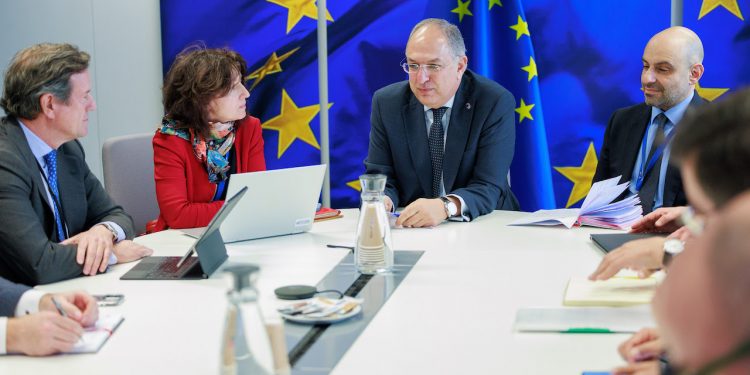




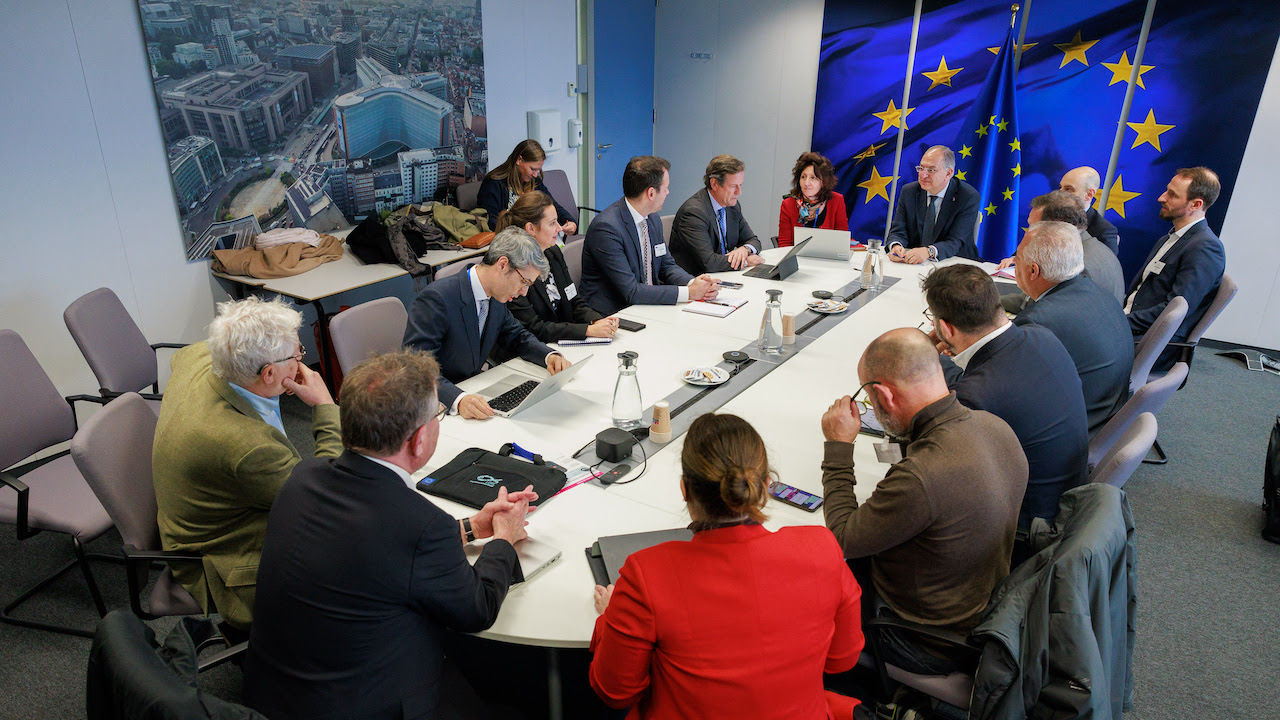
European industry body Europêche has held its first meeting with new Commissioner Kadis to address the future of the EU fisheries sector under the legislative term 2024-2029.
‘We are very pleased with the Commission’s active engagement today. Commissioner Kadis has shown a strong commitment to maintaining an open dialogue and developing practical policies and regulations for the sector,’ said Europêche president Javier Garat.
‘This is just the first of many meetings needed to tackle the significant challenges facing our industry. Our discussion with Commissioner Kadis represents an important step towards shaping a competitive and sustainable future for the EU fisheries sector. We look forward to a shift in policy direction and the CFP evaluation presents a crucial window of opportunity. Europêche remains fully committed to working closely with the Commissioner and his team.’
While the EU Common Fisheries Policy has driven significant environmental progress, Europêche stressed the need for a more balanced approach that equally prioritises environmental, socio-economic and food security goals. The association proposed revising unworkable policies, such as the landing obligation and upgrade policies to address challenges such as climate change, Brexit and the energy transition. Europêche strongly advocates for reducing the administrative burden and simplifying the thousands of rules fishers have to comply with on a daily basis.
The industry’s representatives highlighted the need for a science-driven approach to marine protection and maritime spatial planning, emphasising the importance of respecting traditional fishing grounds. With increasing spatial constraints from marine protected areas and offshore renewable energy developments, Europêche urged the Commission to secure access to squeezing fishing grounds.
Europêche advocated for greater flexibility in multiannual management plans, with a particular focus on the Baltic and the Mediterranean – and requested an urgent revision of the Western Mediterranean Regulation in line with the demands of Spain, France and Italy and the majority of political groups in the European Parliament.
It also called for a revision of policies that have unfairly led to the closure of traditional fishing grounds to bottom fishing gears. Similarly, Europêche urged the implementation of fisheries control rules within a workable timeline, respecting the principles established in the main regulation and developed in close consultation with the sector.
Europêche expressed concerns over the growing dependence on seafood imports, which account for over 70% of EU consumption. The association urged the EU to implement mirror clauses for imported seafood, requiring adherence to the same sustainability standards as EU products. This would promote fair competition and support domestic fishers.
With critical post-Brexit negotiations on the horizon, Europêche is looking to see clear political directives and early agreements to ensure stability and legal certainty for the sector.
‘Achieving a fisheries agreement before the end of 2025 is essential to maintain resource management and safeguard EU interests in shared waters,’ a representative commented, adding that there is a real need to link market access to fisheries access and compliance, advocating to take tariff and trade measures to counter unsustainable practices by neighbouring countries such as Norway.